In high‑speed continuous processes such as tube milling, roll forming, and
stamping, the ability to join coil ends without stopping the line is paramount.
At the heart of this capability lies the shear
welder—a machine that simultaneously shears the trailing end of an
expiring coil and the leading end of a new coil, then welds them together to
form a continuous strip. With over two decades of experience in strip processing
machinery, I will walk you through the engineering intricacies, selection
criteria, and real‑world solutions that separate world‑class shear welders from
ordinary ones. This article is built on data from hundreds of installations and
aligns with the highest E‑E‑A‑T standards.
What Is a Shear Welder? Core Function and System Architecture
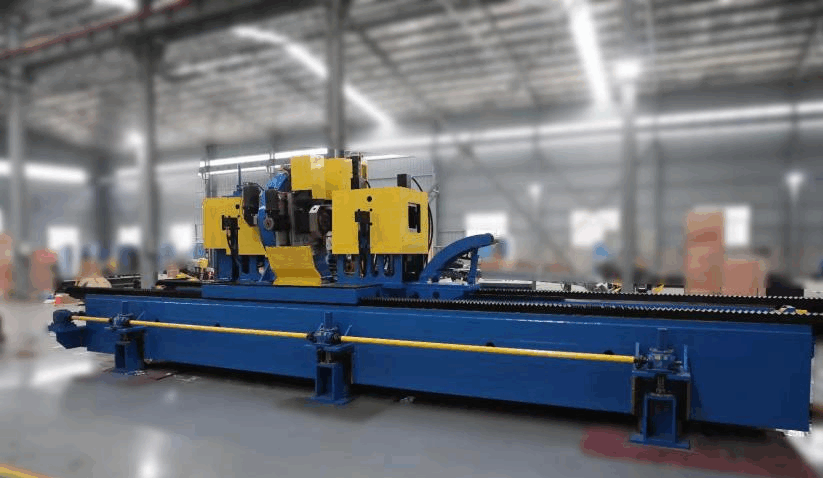
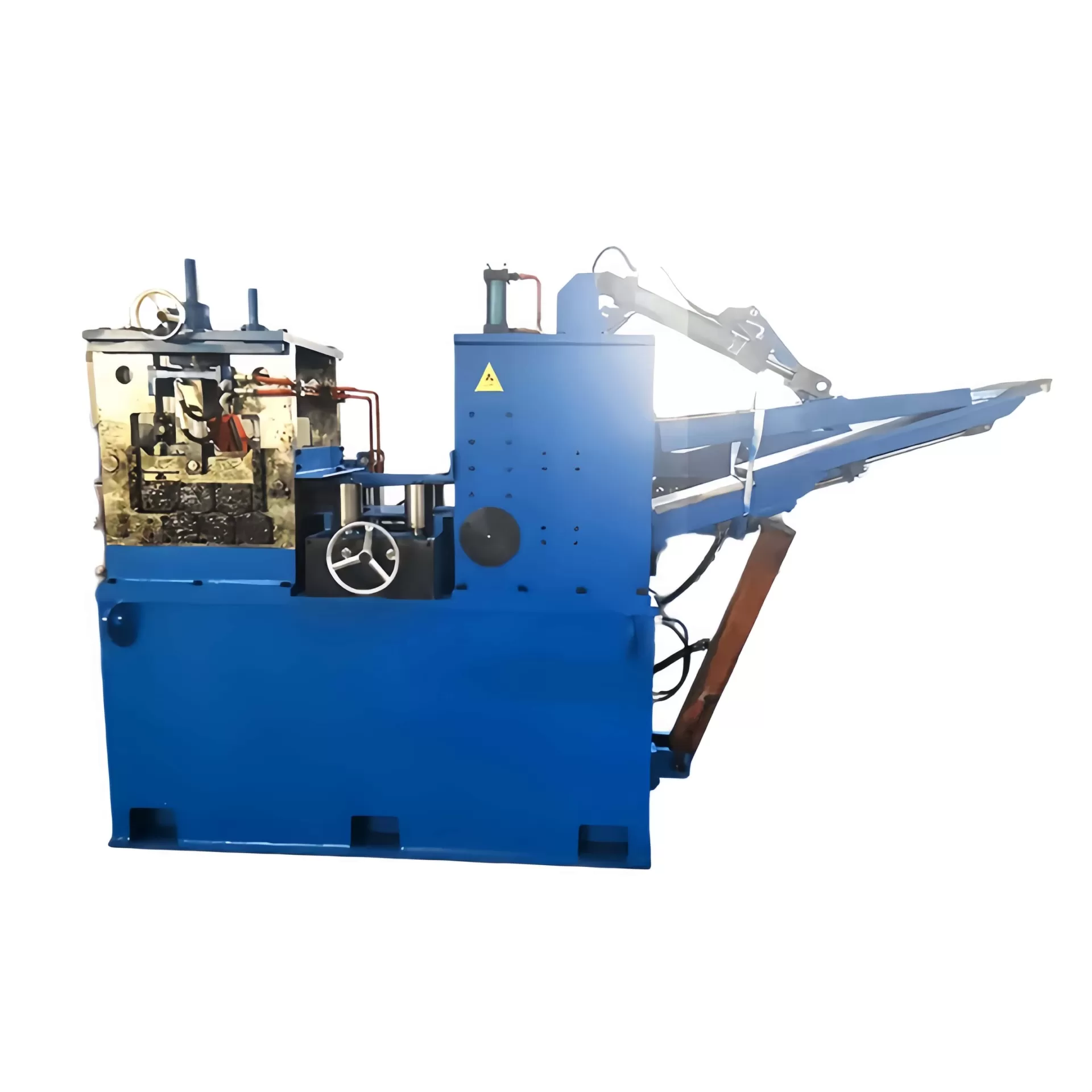
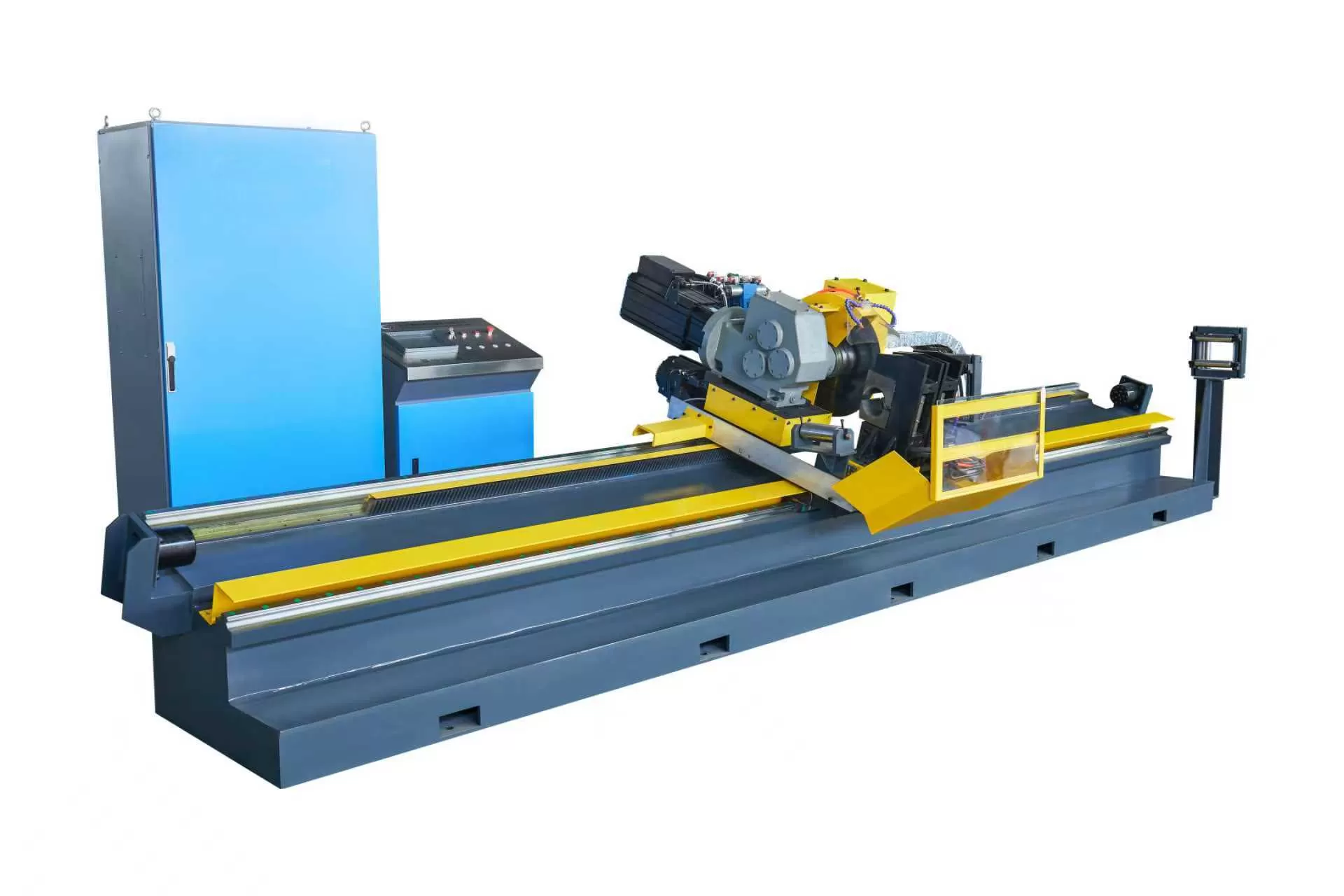
A shear
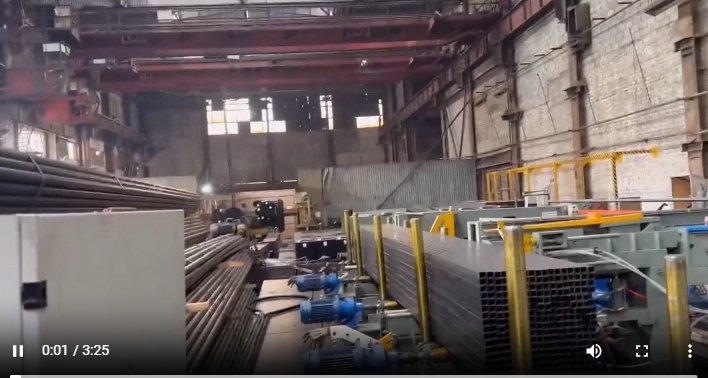
welder is an automated station typically located at the entry
section of a processing line, immediately after the uncoilers and before the
entry accumulator. Its dual‑purpose design integrates a precision shear and a
welding head (usually resistance or laser) into one compact unit. When the end
of a coil is detected, the line speed is momentarily reduced, the accumulator
fills to maintain downstream flow, and the shear welder clamps both strips,
trims them to create matching edges, and then performs a weld—all within 30 to
90 seconds. The joined strip then passes through, the accumulator empties, and
production continues uninterrupted. LSI terms like "coil end joiner", "strip
stitching machine", and "entry welder" are often used interchangeably in the
industry.
Key Components of a Modern Shear Welder
Dual‑side clamps: Heavy‑duty hydraulic or pneumatic clamps
that secure both the trailing and leading strips with forces up to 50 tons,
preventing movement during shearing and welding.
Rotary or guillotine shear: Precision blades that cut the
strip ends square or with a slight overlap angle. Blade clearance is adjustable
based on material thickness (typically 5‑10% of strip thickness).
Welding head: Most common is resistance seam welding (with
copper electrodes) or mash seam welding. For special applications, laser or TIG
heads are used. The SANSO solid‑state HF
welder, for example, offers exceptional control for high‑strength steels.
Planing or scarfing unit: Optional tool that removes the
weld upset to create a smooth surface, critical for downstream roll forming or
painting lines.
PLC with recipe management: Stores welding parameters
(current, force, speed) for hundreds of material grades and thicknesses,
ensuring repeatable quality.
Types of Shear Welders: Matching Technology to Application
Selecting the right shear welder depends on the material,
thickness range, production speed, and required weld integrity. Below is a
technical breakdown of the dominant technologies.
Mash Seam Welding (Resistance)
In mash seam welding, the two strip ends are overlapped (typically by 1‑2
times the thickness) and then passed between two copper wheel electrodes. High
current (up to 100 kA) creates a resistance weld, and the overlap is flattened
(mashed) to a thickness slightly above the parent metal. This method is ideal
for carbon and stainless steels from 0.4 mm to 6 mm. It produces a strong,
leaktight joint suitable for tube mills and ERW lines. Cycle times are
fast—often under 45 seconds.
Laser Shear Welding
For ultra‑thin foils (down to 0.1 mm) or materials sensitive to heat (like
coated steels or aluminium), laser shear welders offer a narrow heat‑affected
zone and minimal deformation. The sheared edges are butted together and welded
with a fiber or CO₂ laser. Though more expensive, laser welders eliminate the
need for electrode maintenance and produce virtually flash‑free joints. They are
increasingly used in battery foil lines and precision stamping.
Flash Butt Welding
Flash butt welders clamp the two strip ends, bring them together under low
voltage to create flashing, then forge them under high pressure. This method is
common for thicker strips (>3 mm) in heavy plate mills and pipe mills. It
produces a weld with strength equal to the base metal but requires careful upset
removal and can take longer (up to 2 minutes).
Technical Parameters That Define Shear Welder Performance
When evaluating a shear welder, engineers must look beyond
the brochure. Key performance indicators include:
Weld cycle time: From strip stop to strip release. A
difference of 10 seconds can significantly affect the required accumulator
capacity. Top‑tier machines achieve 30‑40 seconds for standard materials.
Tensile strength of weld: Should be at least 90% of the
base metal for most applications, and 100% for critical forming processes.
Destructive testing (peel tests) is part of routine validation.
Weld bead height control: After planing, the bead height
should be within ±0.03 mm to avoid marking rolls or causing vibrations in
downstream stands.
Repeatability: Modern servo‑electric clamps and closed‑loop
force control ensure that weld parameters are reproduced exactly, regardless of
thermal drift or wear.
Material database capacity: Advanced machines store
thousands of recipes, with automatic adjustment for width and thickness
variations.
Critical Applications of Shear Welders in Continuous Lines
The shear welder is indispensable wherever coil changes
would otherwise halt production. Major applications include:
Tube and pipe mills: In an ERW tube line, a weld failure
can cause a cobble that damages forming rolls. A reliable shear welder ensures
that the strip passes through the entire mill without tearing. SANSO has supplied
shear welders that operate for years with less than 0.5% weld‑related
stoppages.
Roll forming lines: Automotive structural parts require
continuous feeding; any stop leads to temperature marks on the strip. Shear
welders enable true endless roll forming.
Pickling and galvanizing lines: Chemical baths operate
continuously; the strip must be joined securely to avoid breaks that would shut
down the entire line for hours.
Slitting and cut‑to‑length lines: Even here, a shear welder
can be used to join coils for uninterrupted processing, though sometimes a
simpler stitcher is used.
Overcoming Common Operational Challenges with Shear Welders
Even the best shear welder can encounter issues if not
properly configured or maintained. Based on field data from over 150 lines, here
are the top problems and engineering solutions.
Challenge 1: Weld Breakage During Forming
Cause: Incomplete fusion, excessive heat‑affected zone, or
misalignment of the strips.
Solution: Implement real‑time
weld monitoring. Modern welders from SANSO include sensors
that measure current, voltage, and displacement during welding. If parameters
drift outside the preset window, the machine alarms and can automatically
adjust. Also, ensure that the shear blades are sharp—dull blades cause burrs
that interfere with alignment.
Challenge 2: Electrode Wear and Sticking
Cause: In mash seam welding, copper electrodes degrade over
time, leading to inconsistent current density and weld
skips.
Solution: Use electrode dressing units that
automatically clean and profile the wheels every few cycles. For high‑volume
lines, consider a shear welder with a separate dressing station. Also,
water‑cooled electrodes last longer.
Challenge 3: Handling Coated or High‑Strength Materials
Cause: Galvanized coatings vaporize during welding, creating
porosity; high‑strength steels (HSS) have higher carbon equivalents, making them
prone to cracking.
Solution: For coated materials, laser
welding or a specialized resistance schedule with pre‑ and post‑heating is
required. For HSS, controlled cooling after welding (tempering) can reduce
hardness. Modern shear welders include programmable force profiles to manage the
forging phase.
Challenge 4: Long Changeover Times Between Coil Sizes
Cause: Manual adjustment of clamps, shear gaps, and weld
heads.
Solution: Invest in a fully automatic shear welder
with servo‑positioned clamps and tooling. Once the new coil data is entered (via
barcode or MES), the machine reconfigures itself in under two minutes. This is a
game‑changer for just‑in‑time operations.
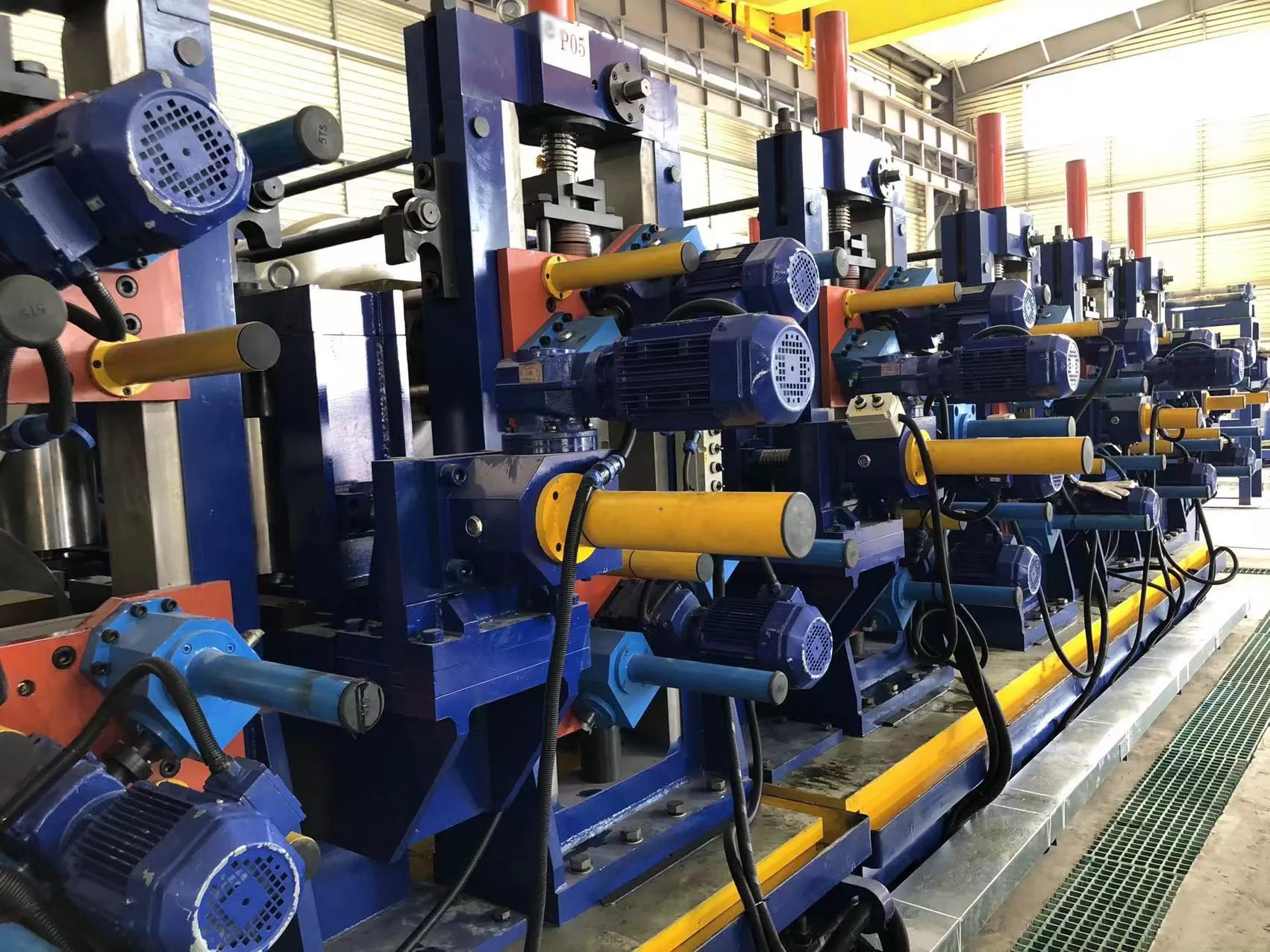
Why SANSO’s Solid‑State HF Welder Represents the Next Generation
At SANSO, we
have integrated decades of tube mill expertise into our shear
welder designs. Our solid‑state high‑frequency welder offers
unparalleled precision for mash seam and butt welding. It features IGBT‑based
inverter technology that delivers a stable welding current even with fluctuating
line voltage, reducing scrap by up to 15% compared to older thyristor‑controlled
units. The system also includes an adaptive process controller that learns from
each weld, continuously optimizing parameters. Combined with our quick‑change
tooling, a SANSO shear welder can handle strip widths from 100 mm to 2000 mm and
thicknesses from 0.3 mm to 12.7 mm without manual intervention. This reliability
is why global tier‑1 automotive suppliers and tube producers trust our
equipment.
Frequently Asked Questions About Shear Welders
Q1: What is the difference between a shear welder and a stitcher?
A1: A stitcher (or spot welder) creates a series of discrete
spot welds to hold strips together temporarily. It is faster but weaker—often
used in lines with low tension. A shear welder produces a
continuous seam weld that can withstand the full line tension and subsequent
forming operations. For tube mills and heavy processing lines, a shear welder is
mandatory.
Q2: Can a shear welder join dissimilar materials, e.g., carbon steel to
stainless?
A2: Yes, but it requires careful parameter selection.
Resistance welding of dissimilar metals is challenging due to different melting
points and resistivities. Laser welding is often preferred for such joints. Some
advanced shear welders offer dual‑process capability, but a metallurgical
evaluation is essential before attempting production.
Q3: What maintenance does a shear welder require?
A3: Daily: check electrode condition (for resistance
welders), clean shear blades, and verify cooling water flow. Weekly: inspect
hydraulic hoses and tighten clamps. Monthly: perform a calibration of force and
current sensors, and dress or replace electrodes. A well‑maintained shear welder
can operate for 15+ years.
Q4: How does strip width affect the welding process?
A4: Wider strips require larger clamping forces and more
welding current. The shear must also be long enough to cut the full width
cleanly. Most shear welders have a maximum width rating—exceeding it leads to
poor cuts or incomplete welds. Width changes automatically trigger adjustments
in clamp position and weld start/stop points.
Q5: What is the typical ROI for upgrading to an automatic shear welder?
A5: For a tube mill running three shifts, downtime for coil
changes can cost thousands per hour. An automatic shear welder reduces
changeover time from 3‑4 minutes (manual) to under 1 minute, increasing uptime
by 2‑3%. Combined with reduced scrap from better weld quality, payback is
usually achieved in 12‑18 months.
Q6: Can a shear welder be retrofitted to an existing line?
A6: Absolutely. Retrofitting involves integrating the shear
welder into the entry section, often replacing an old end welder or stitcher. It
requires careful layout planning to accommodate the machine footprint and the
existing accumulator. SANSO offers turnkey
retrofit solutions with minimal line downtime during installation.
Q7: How do I determine the correct shear welder capacity for my line?
A7: You need to consider the maximum strip width, thickness
range, material tensile strength, and line speed. Also, evaluate the required
weld strength (usually 100% of parent metal for critical applications). A
conservative rule: choose a shear welder rated for 20% higher capacity than your
current max to allow for future product expansion.
In conclusion, the shear
welder is not just an accessory—it is the gatekeeper of continuous
production. By investing in advanced features like automatic parameter
adjustment, real‑time monitoring, and robust mechanical design, processors can
virtually eliminate entry‑end stoppages. Whether you operate a tube mill, a roll
forming line, or a continuous annealing line, a high‑performance shear welder
from an experienced partner like SANSO will deliver measurable gains in
throughput and quality. For a detailed assessment of your specific requirements,
contact our engineering team or explore our product range online.