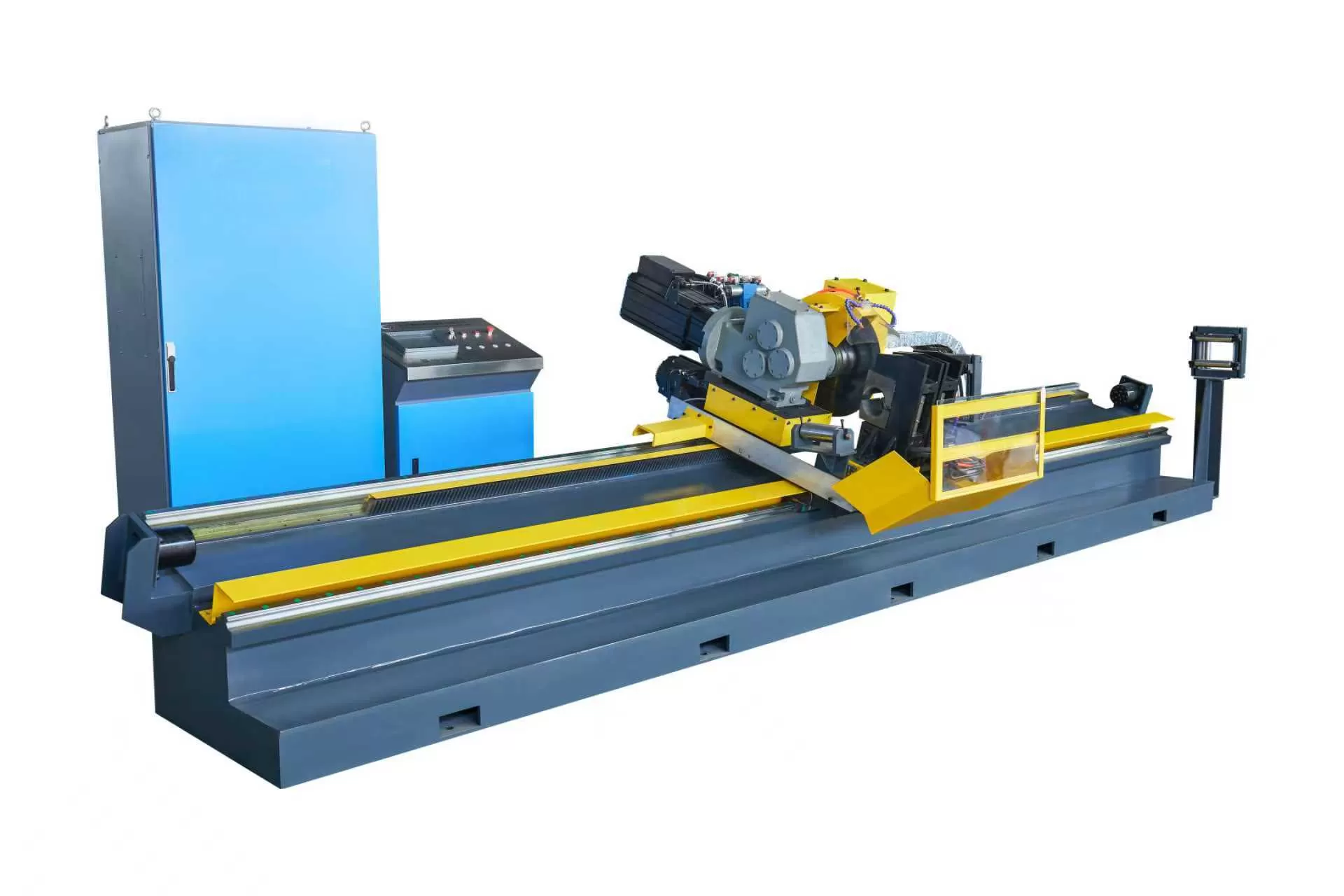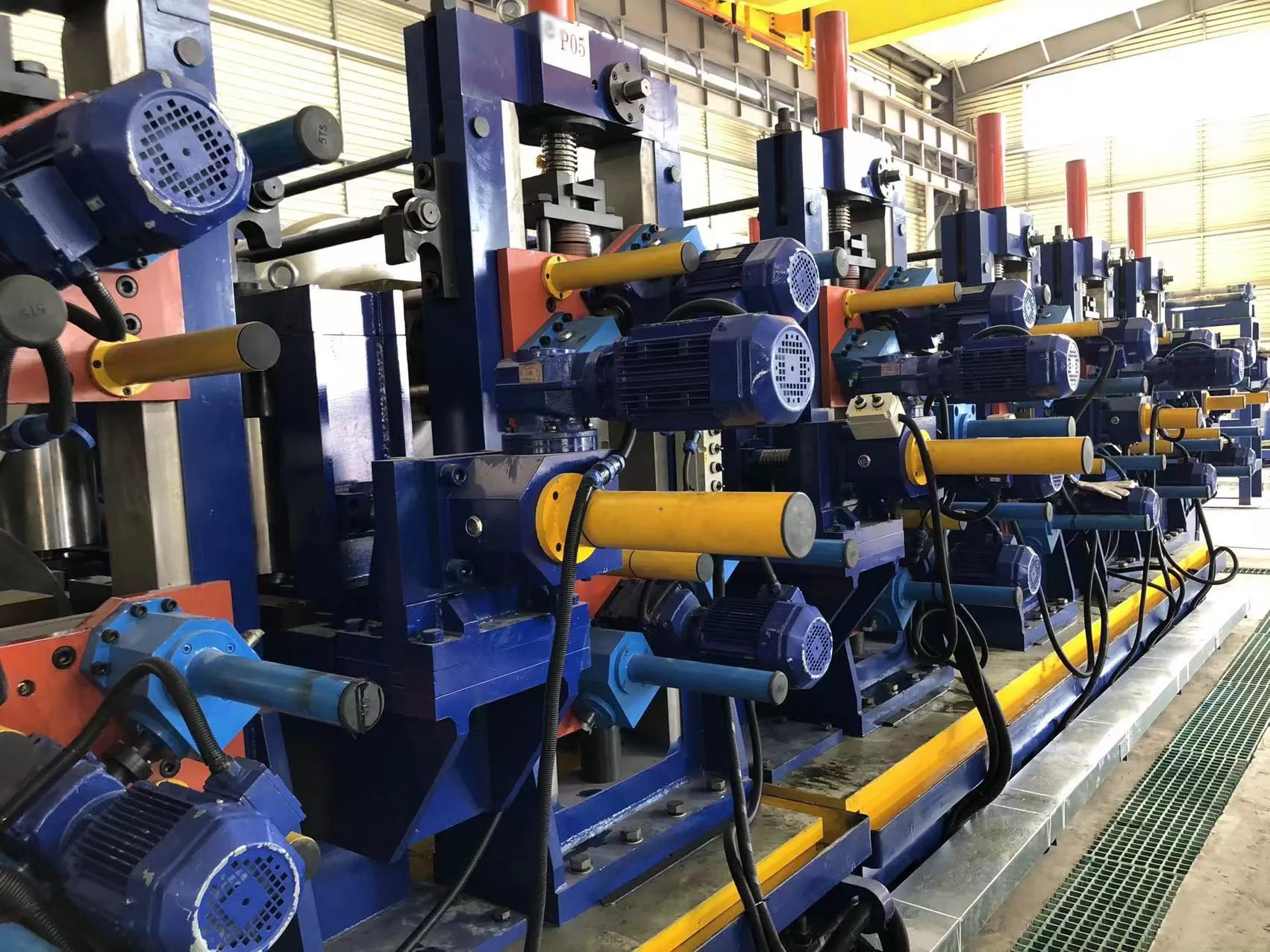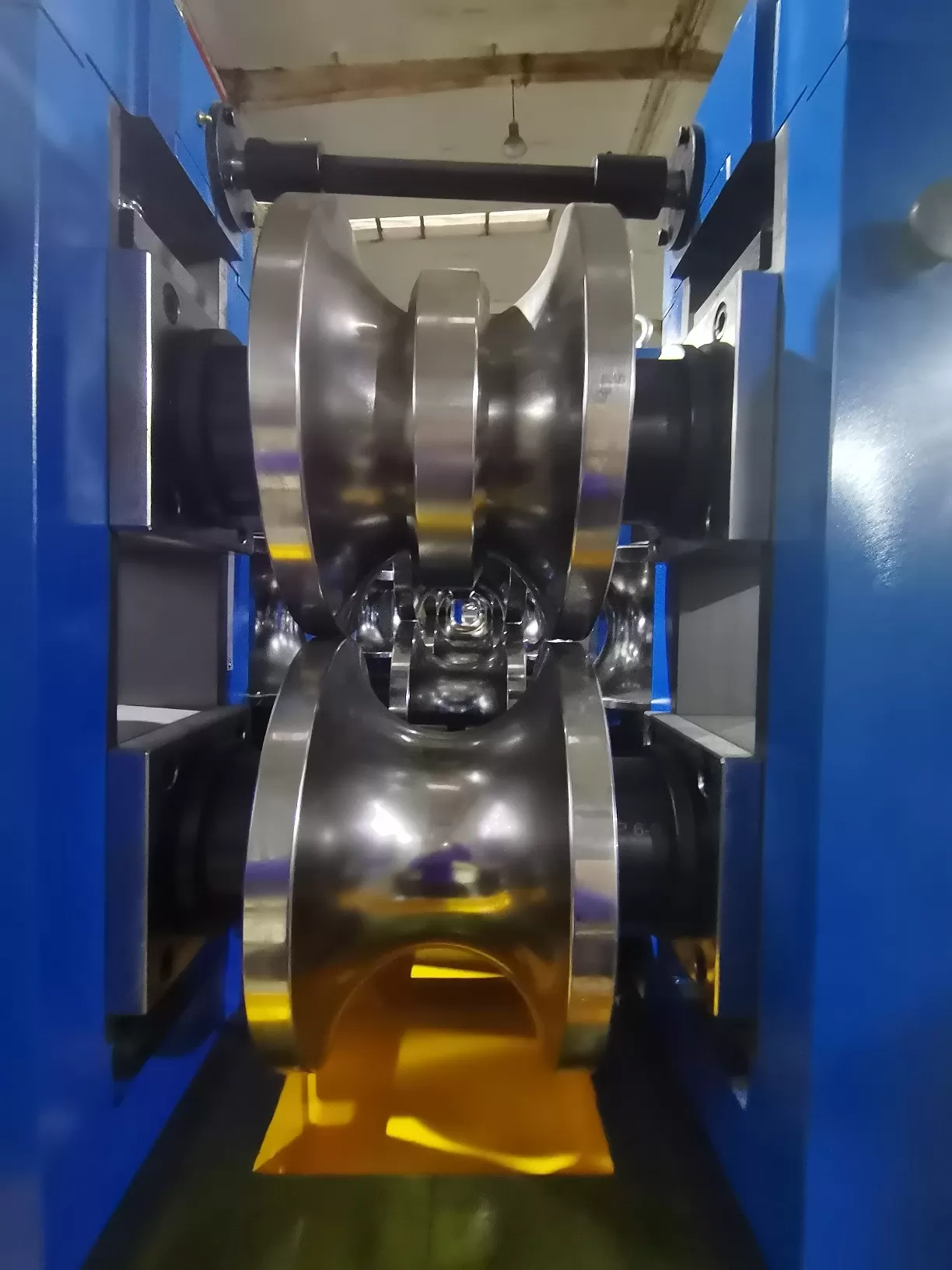
In modern tube and pipe production, the cutting station determines both throughput and end‑product quality. While high‑speed steel (HSS) blades have served the industry for decades, the increasing demand for higher cutting speeds, longer tool life, and the ability to process abrasive or hard materials has driven widespread adoption of tungsten carbide‑tipped (TCT) saw blades. This article provides a comprehensive technical overview of the tct saw blade as applied to tube mill cutoff operations. Drawing on metallurgical principles, cutting dynamics, and field data from hundreds of installations, we examine the factors that influence blade performance and offer practical solutions to common operational challenges. Throughout, we reference the expertise of SANSO, a leading manufacturer of tube mill machinery and integrated cutting systems.
Metallurgy of TCT Saw Blades: Carbide and Substrate
The performance of any tct saw blade depends on three material components: the carbide tip, the steel body, and the brazed joint that bonds them. Each must be carefully selected for the specific cutting application.
Carbide Grade Classification
Tungsten carbide is a composite of tungsten carbide particles embedded in a cobalt binder. The ratio of carbide to cobalt, along with grain size, determines the hardness and toughness of the tip:
Grain size: Fine‑grain carbides (0.5–1.0 µm) offer higher wear resistance and are used for abrasive materials like stainless steel or aluminium alloys. Coarse‑grain carbides (2–5 µm) provide greater toughness and resist chipping in interrupted cuts, such as when encountering weld seams.
Cobalt content: Lower cobalt (6–8%) yields higher hardness but lower toughness; suitable for clean‑cutting materials like carbon steel. Higher cobalt (10–12%) increases toughness at the expense of wear resistance; preferred for materials with scale, inclusions, or variable hardness.
ISO grades: Common grades for tube cutting include K10–K20 (for cast iron, aluminium, and non‑ferrous) and P30–P40 (for steel with moderate toughness requirements). Many tube mills specify a P30 grade with medium grain size for general carbon steel cutting, while stainless steel applications often use a fine‑grain K20 or K30.
The carbide tip is typically 2–3 mm thick and is brazed into a pocket machined into the blade body. Proper tip geometry ensures that the cutting forces are transmitted efficiently into the steel body without overstressing the braze joint.
Steel Body and Heat Treatment
The blade body is usually made from spring steel (e.g., 75Cr1 or equivalent) hardened and tempered to 40–45 HRC. This provides sufficient strength to resist centrifugal forces at high rotational speeds while maintaining enough elasticity to absorb shock loads. The body also incorporates expansion slots or laser‑cut features to reduce noise and dissipate heat. For large‑diameter TCT blades used in tube mills, the body must be tensioned to ensure flatness during high‑speed rotation.
Tooth Geometry and Cutting Dynamics
The cutting performance of a tct saw blade is heavily influenced by tooth geometry. For tube cutting, the following angles and features are critical:
Rake, Clearance, and Hook Angles
Radial rake angle: Typically positive (5° to 15°) for TCT blades cutting steel. A higher positive rake reduces cutting forces and power consumption but can weaken the tooth tip. For hard or abrasive materials, a smaller rake (5°–8°) is used; for softer materials, up to 15° is common.
Clearance angle: Usually 8°–12° on the tooth flank. Sufficient clearance prevents rubbing, which generates heat and accelerates wear. Too much clearance can reduce tooth support.
Hook angle: In the context of a circular saw blade, the hook angle is the inclination of the tooth face relative to a radial line. A positive hook (10°–15°) pulls the workpiece into the blade and is standard for most tube cutting. Negative hook blades are used for thin‑walled or soft materials where self‑feeding could cause buckling.
Tooth Pitch and Gullet Design
Tooth pitch (teeth per inch, TPI) must be chosen so that at least two teeth are always engaged in the cut, but not so many that chip packing occurs. For tube mills, where the cut is intermittent (the blade cuts through the tube wall twice per revolution), variable pitch blades are common to reduce vibration. Typical recommendations:
Wall thickness < 2 mm: 8–12 TPI, often with a variable pitch of 8/10 or 10/12.
Wall thickness 2–6 mm: 4–8 TPI, variable.
Wall thickness > 6 mm: 2–4 TPI, sometimes with a constant pitch for maximum chip clearance.
Gullet depth must be sufficient to hold the chip until it is ejected. A deeper gullet reduces the risk of chip welding, especially in sticky materials like stainless steel or aluminium.
TCT vs. HSS: Performance Comparison in Tube Mills
While HSS blades remain economical for low‑volume or general‑purpose cutting, tct saw blade offers distinct advantages in high‑production environments:
Wear resistance: Carbide is 3–5 times harder than HSS at operating temperature, resulting in significantly longer tool life between sharpenings.
Cutting speed: TCT blades can operate at 80–150 m/min in steel, compared to 30–70 m/min for HSS. Higher speeds translate directly to faster cycle times.
Heat resistance: Carbide maintains its hardness up to 800–1000 °C, whereas HSS softens above 600 °C. This allows TCT blades to cut with less coolant or in dry conditions for certain materials.
Surface finish: The sharper edge retention of carbide produces cleaner cuts with minimal burr, reducing the need for secondary deburring.
However, TCT blades are more brittle and require rigid machinery, stable clamping, and careful handling to avoid chipping. SANSO tube mills are designed with robust spindles and precision blade guides to fully exploit the capabilities of TCT blades.
Application Parameters for TCT Saw Blades in Tube Cutting
Optimising the cutting process with a tct saw blade requires careful selection of speed, feed, and coolant.
Cutting Speed (Vc)
For carbide blades, recommended surface speeds are higher than for HSS. Guidelines for common tube materials:
Carbon steel (up to 600 N/mm²): 100–150 m/min
Stainless steel (austenitic): 60–100 m/min
Aluminium alloys: 500–1500 m/min (though PCD may be preferred for high‑volume aluminium)
Operating at the correct speed ensures that the carbide maintains a stable cutting edge. Too low a speed increases cutting forces and promotes built‑up edge; too high a speed can cause thermal cracking of the carbide.
Feed Rate (Tooth Load)
Feed per tooth (fz) for TCT blades typically ranges from 0.03 to 0.15 mm/tooth. A lighter feed (0.03–0.06 mm) is used for hard or abrasive materials to minimise edge stress; a heavier feed (0.08–0.15 mm) improves productivity in soft materials and helps break chips. The exact value depends on tooth pitch and machine rigidity. Inadequate feed leads to rubbing and rapid flank wear; excessive feed can chip the carbide tips.
Coolant Requirements
While carbide can operate dry for short bursts, flood coolant is strongly recommended for tube mill cutting to prolong blade life and improve cut quality. A water‑miscible coolant with 5–8% concentration (for steel) or 8–12% (for stainless steel) provides lubrication and cooling. The coolant must be directed precisely at the cutting zone to flush chips and prevent recutting. In high‑speed operations, through‑spindle coolant or high‑pressure nozzles are beneficial.
Common Failure Modes and Troubleshooting
Despite their advantages, TCT blades can experience specific failure patterns. Recognising these early helps avoid unplanned downtime.
Chipping or Fracture of Carbide Tips
This is often caused by excessive feed rate, unstable tube clamping, or encountering a weld seam with inconsistent hardness. If chipping is localised to one area of the blade, check for runout or a bent blade. Solutions: reduce feed rate when the weld seam passes (using adaptive control), ensure the blade is properly tensioned, and verify that the carbide grade matches the material (use a tougher grade like P40 if chipping persists).
Flank Wear and Edge Rounding
Excessive flank wear (wear land > 0.3 mm) indicates that the cutting speed is too low, the feed is too light, or the carbide grade is not sufficiently wear‑resistant for the material. Increasing cutting speed and feed within recommended ranges often reduces wear. If wear continues, switch to a finer‑grain carbide or a grade with higher cobalt content for better abrasion resistance.
Vibration and Chatter Marks
Vibration can be caused by incorrect tooth pitch, worn spindle bearings, or insufficient damping in the machine structure. Using variable‑pitch blades breaks up resonant frequencies. Also check that the blade flanges are clean and that the blade is correctly clamped. SANSO tube mills incorporate vibration‑damping materials and precision‑ground flanges to minimise chatter.
Burr Formation
Excessive burr on the cut ends often signals a dull blade or incorrect clearance angle. If the blade is sharp, verify that the hook angle is appropriate for the material (more positive for soft materials, less positive for hard). For stainless steel, a slightly higher clearance angle (12°) helps reduce burr.
Premature Braze Failure
If carbide tips become loose or detach, the brazing process may be at fault. Brazing must be done with a high‑silver filler alloy (e.g., 50% silver) to withstand the stresses of cutting. Poor wetting or overheating during brazing can weaken the joint. Reputable suppliers use automated induction brazing to ensure consistency. SANSO works only with blade manufacturers that meet strict brazing quality standards.
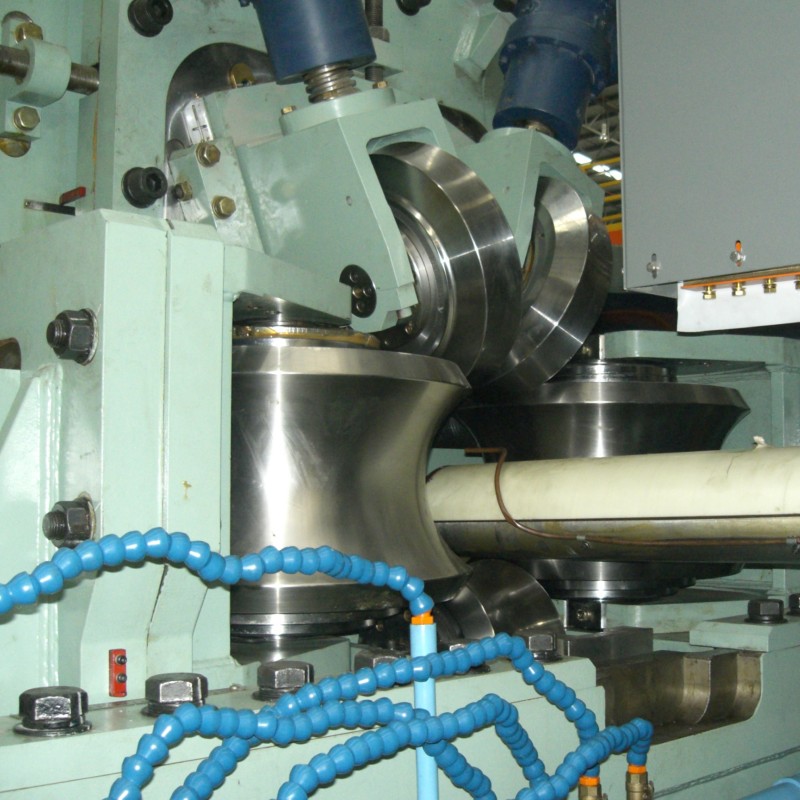
Selection Guide for TCT Saw Blades in Tube Mills
Choosing the optimal tct saw blade for a specific application involves several considerations:
Tube material: For carbon steel, P30 grade with medium grain size is typical. For stainless steel, fine‑grain K20 or K30 with increased rake angle improves cutting. For aluminium, polished gullets and special geometries prevent chip welding.
Wall thickness and diameter: Thin walls require finer pitches and often a triple‑chip grind to prevent tearing. Thick walls require coarser pitches and robust tip geometries.
Production volume: High‑volume lines justify premium carbide grades and tighter tolerances, as the cost per cut is lower.
Machine type: Flying cut‑offs impose higher dynamic loads than stationary saws; blade bodies must be thicker and more rigid. Consult with the machine builder for specific recommendations.
SANSO provides a comprehensive range of TCT blades optimised for their tube mill lines, ensuring that each blade is matched to the machine’s power, speed, and rigidity characteristics.
Frequently Asked Questions (FAQs) about TCT Saw Blades
Q1: What does TCT stand for, and why is it used in saw
blades?
A1: TCT stands for Tungsten Carbide Tipped. It refers to
blades where the cutting teeth are made of tungsten carbide, a very hard and
wear‑resistant material, brazed onto a steel body. TCT blades are used when
longer tool life, higher cutting speeds, or the ability to cut abrasive
materials are required compared to HSS blades.
Q2: Can I use a TCT saw blade on my existing HSS saw
arbor?
A2: Yes, provided the arbor diameter matches and the machine
has sufficient power and rigidity. TCT blades require a stable, vibration‑free
environment. If your machine was designed for HSS, check that the spindle speed
can reach the higher speeds needed for TCT (often 2–3 times higher) and that the
feed system can deliver the appropriate tooth load.
Q3: How do I know when to resharpen a TCT blade?
A3:
Signs include increased burr formation, a rougher cut surface, higher power
consumption, or visible wear land on the clearance face (>0.3 mm). Some
operations track the number of cuts per blade and schedule resharpening at fixed
intervals (e.g., every 15,000–20,000 cuts for carbon steel).
Q4: What is the typical lifespan of a TCT blade in a tube
mill?
A4: Lifespan depends heavily on material and operating
conditions. In a well‑optimised carbon steel tube mill, a TCT blade may last
40,000–80,000 cuts between sharpenings, and can be resharpened 10–15 times
before the carbide tips are too thin or the blade diameter is below minimum.
Proper coolant and feeds extend this significantly.
Q5: Why does my TCT blade sometimes leave burrs on the inside of the
tube?
A5: Internal burr is often caused by the exit side of the cut
where the blade exits the tube wall. This can be minimised by using a blade with
a negative hook angle (or a combination blade) and ensuring that the tube is
adequately supported. Some tube mills employ a secondary deburring station after
cutting.
Q6: What coolant concentration is best for TCT blades cutting
stainless steel?
A6: For stainless steel, a coolant concentration of
8–12% is recommended, preferably with extreme pressure (EP) additives to prevent
built‑up edge. The coolant should be monitored regularly for concentration and
pH to prevent bacterial growth and maintain lubricity.
Q7: Can TCT blades be used for cutting non‑ferrous materials like
copper or aluminium?
A7: Yes, but the blade geometry must be
adapted. For aluminium, a larger rake angle (15°–20°) and polished tooth faces
help prevent chip adhesion. For copper, a sharp edge with minimal clearance is
needed. Special TCT blades are available for these materials, often with higher
cobalt content for toughness.
In summary, the tct saw blade offers substantial benefits in tube mill cutoff operations when properly selected and applied. By understanding the metallurgy, geometry, and process parameters, and by leveraging the expertise of machine builders like SANSO, tube producers can achieve consistent cut quality, maximise blade life, and reduce overall production costs.