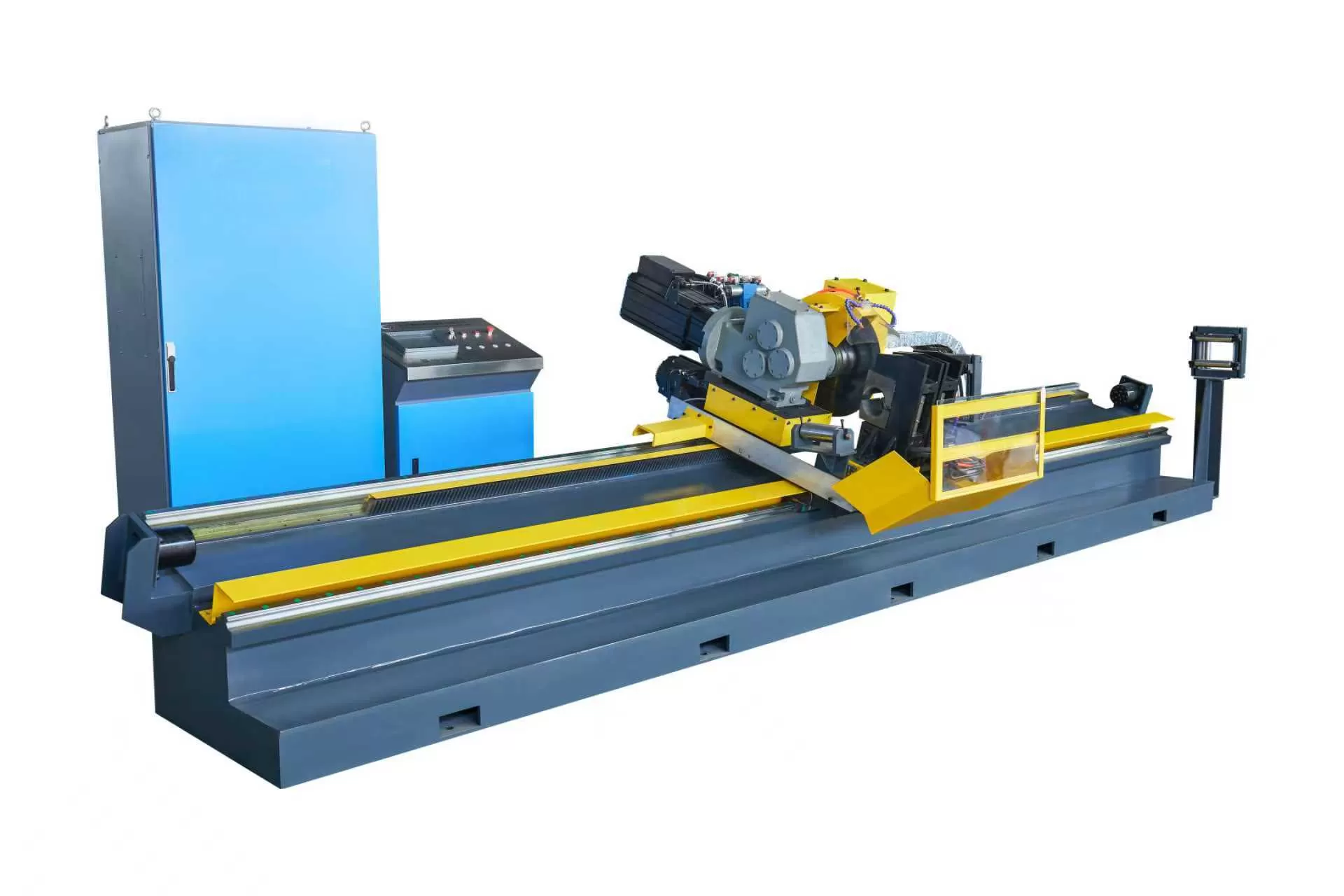
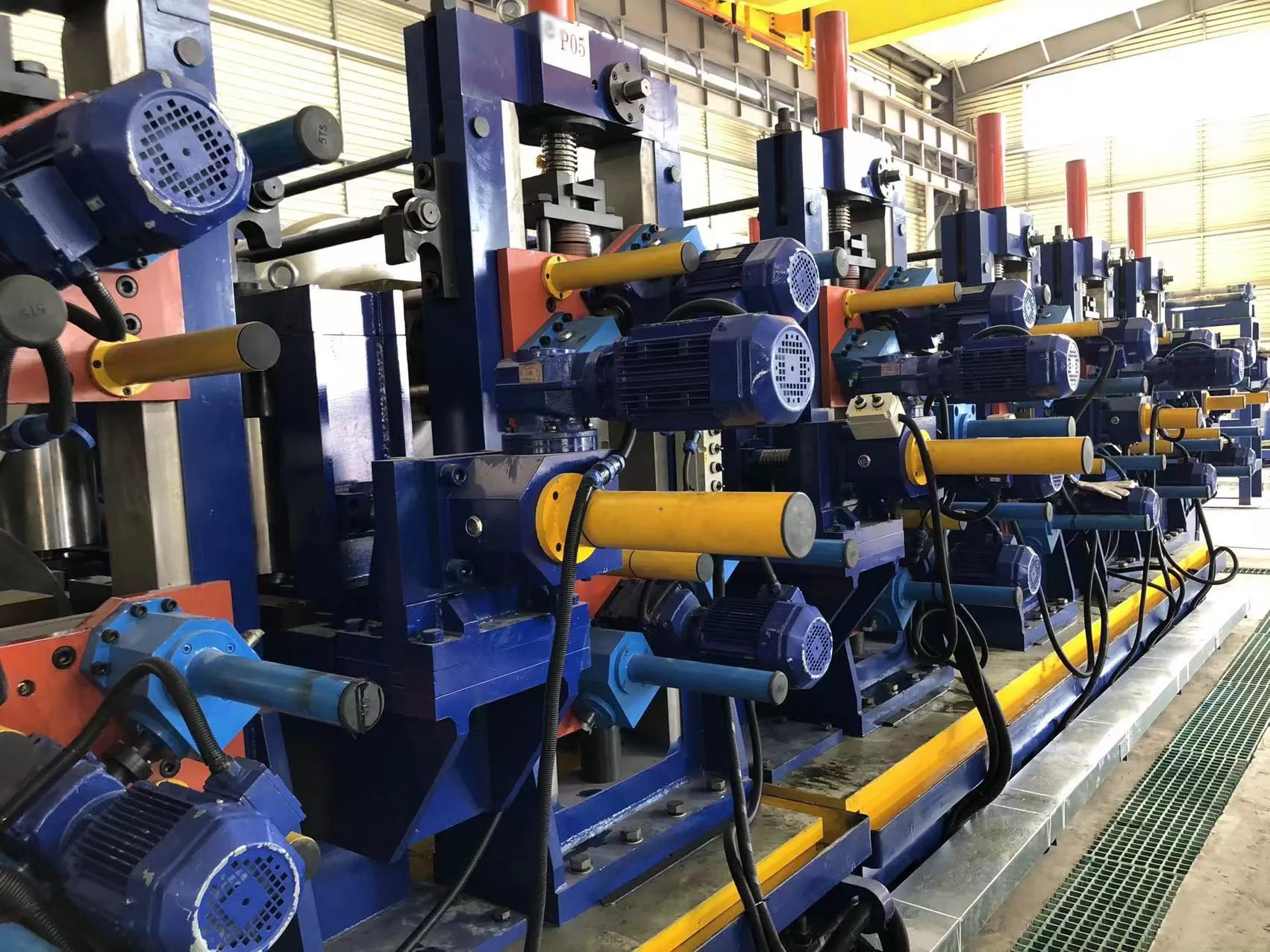
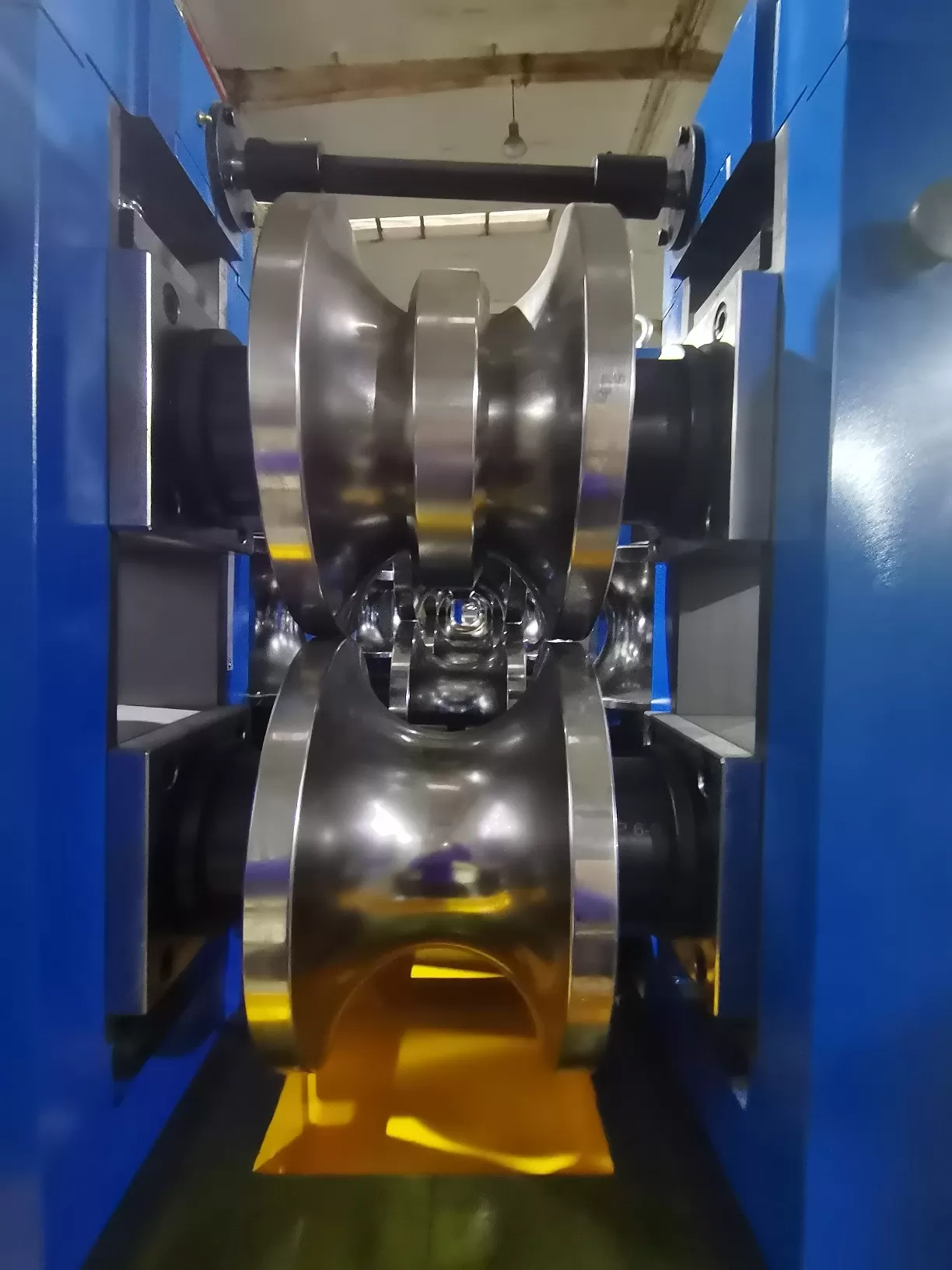
In the high-volume production of ERW and seamless tubes, the quality of the
cut is as critical as the quality of the weld. At the heart of every efficient
cutting station—from flying saws to stationary cut-offs—lies a single, decisive
component: the tct blade.
For operators of tube mills, pipe plants, and roll forming lines, selecting the
correct tungsten carbide-tipped (TCT) circular saw blade is not merely a
procurement decision; it is a strategic variable that dictates production
uptime, edge metallurgy, and cost per cut. This article provides a technical
deep-dive into TCT blade geometry, material science, and application-specific
selection criteria, drawing on best practices from leading mill builders like SANSO to offer actionable insights for maintenance and
production engineers.
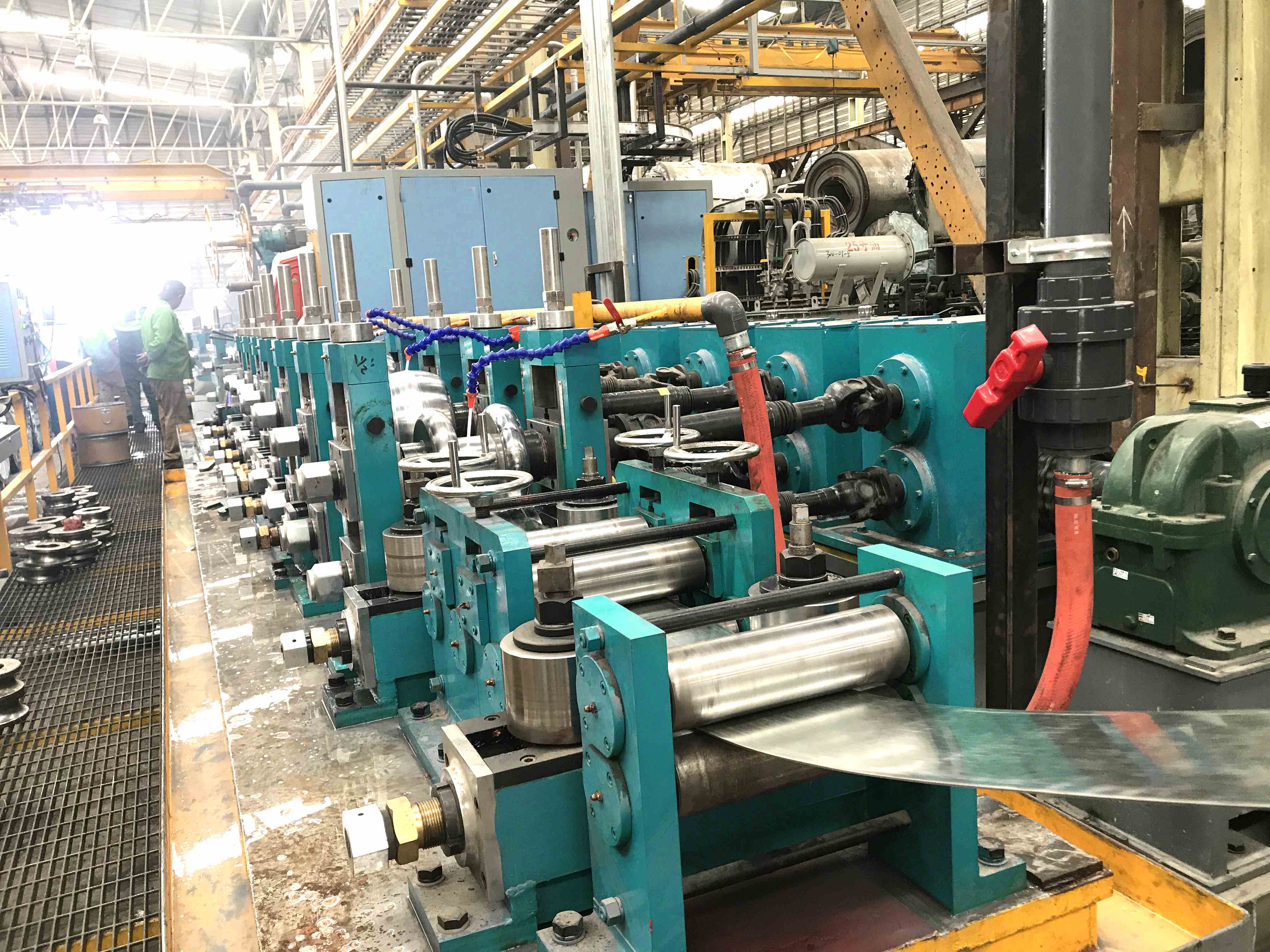
1. The Metallurgical Foundation: Why Carbide Defines Modern Tube
Cutting
The shift from high-speed steel (HSS) to tungsten carbide-tipped (TCT) blades
represents a fundamental leap in machining science. Understanding the material
properties is the first step in optimizing your cutting process.
1.1. The Cobalt-Binding Matrix and Grain Structure
A tct blade derives its performance from the specific grade
of cemented carbide used for its tips. Typically, grades with a cobalt content
between 6% and 12% are specified for tube mill applications. The cobalt acts as
a binder, holding together the tungsten carbide particles. A lower cobalt
content yields a harder, more wear-resistant tip, ideal for clean, non-ferrous
or thin-wall tubes. Conversely, a higher cobalt content provides the necessary
toughness to withstand the micro-impact forces generated when cutting thicker
walls or larger-diameter structural pipes. The grain size of the carbide—fine,
medium, or coarse—further fine-tunes this balance between wear resistance and
toughness.
1.2. The Role of the Blade Body (Tensioning)
The performance of a tct blade is not solely dependent on
its teeth. The alloy steel body, typically 75Cr1 or similar, must be
precision-tensioned. This process involves creating specific residual stresses
within the blade body to counteract the immense centrifugal forces and heat
generated during high-speed cutting. A properly tensioned body ensures that the
blade remains stable and does not wobble, guaranteeing a square cut and
minimizing kerf loss—the material turned into chips. SANSO's mill designs often
feature rigid arbors and guided saw frames to complement the stability of a
high-tension TCT blade.
2. Cutting Geometry: Matching Tooth Design to Material Profile
Selecting the right tct blade requires matching its tooth
geometry to the tube's material, wall thickness, and desired surface finish.
Here is a breakdown of critical parameters:
Tooth Pitch (Teeth per Inch - TPI): This is the primary
selection criterion. For thin-walled tubes (e.g., < 3mm), a finer pitch (more
teeth per inch) is essential to ensure multiple teeth are engaged
simultaneously, preventing tooth "snatching" and deformation of the tube. For
heavy-wall pipe or structural sections, a coarser pitch (fewer teeth per inch)
provides larger gullets to efficiently evacuate the heavier chips produced.
Hook Angle (Positive vs. Neutral): TCT blades with a
positive hook angle (10° to 20°) offer an aggressive, fast cut and are suitable
for soft, ductile materials like low-carbon steel or aluminum. However, for
harder materials or applications requiring a burr-free finish, a neutral or even
slightly negative hook angle provides better control and extends blade
life.
Clearance Angles (Radial and Tangential): These angles on
the tip itself are engineered to reduce friction. Insufficient clearance causes
the blade to rub rather than cut, leading to heat buildup, work hardening of the
tube material, and premature tip failure.
Kerf Width: The width of the cut made by the blade is
determined by the thickness of the carbide tip and its "set." A narrower kerf
reduces material waste—a significant factor in high-volume production—but
requires a blade with exceptional stability to prevent deflection.
3. Application-Specific Strategies in the Tube Mill
The demands placed on a tct blade vary dramatically
depending on where it is used in the production line. A blanket approach to
blade selection often leads to suboptimal performance.
3.1. Flying Cut-Off Saws: The Challenge of Synchronization
In a continuous tube mill, the flying cut-off saw must match the line speed
of the tube, perform a cut, and return in milliseconds. Here, the tct
blade must excel in:
Shock Load Resistance: The blade engages with a moving
tube, creating an instantaneous impact. A carbide grade with higher toughness is
mandatory.
Heat Dissipation: High-speed friction is intense. Blades
with special coatings (like TiAlN or CrN) can reduce heat and prevent material
from welding onto the tips (built-up edge).
Precision: The cut must be perfectly square to ensure
downstream operations, such as facing and chamfering, have sufficient material
allowance.
3.2. Stationary Cut-Off and Bundle Saws
For cutting finished tubes to length or preparing bundles, stationary saws
face different challenges. These applications often involve cutting stacks of
tubes, which can cause chips to pack in the gullets. Here, blade design focuses
on:
Chip Evacuation: Larger gullet designs are critical. A
blade that "chips" will overheat and fail rapidly.
Noise Dampening: Cutting multiple tubes creates significant
vibration and noise. Advanced TCT blades incorporate laser-cut slots or copper
plugs in the body to dampen vibrations, improving operator comfort and blade
life.
4. The Economics of Cutting: Cost-Per-Cut Analysis
Shifting focus from the initial purchase price to the total cost of ownership
is a hallmark of mature maintenance operations. The cost-per-cut is the
definitive metric for evaluating tct blade performance. It is
calculated by considering:
Blade Cost: The initial procurement cost.
Number of Cuts per Sharpening: This is a function of blade
quality, material grade, and operating conditions.
Number of Sharpening Cycles: A high-quality TCT blade body
can be re-tipped or sharpened multiple times. The blade body is an asset, not a
consumable.
Downtime Cost: The labor and production loss incurred
during blade changes. This often dwarfs the blade cost itself.
Scrap/Revork Costs: Burrs, out-of-square cuts, or deformed
tube ends generated by a dull or incorrect blade.
A slightly more expensive tct blade that delivers 30% more
cuts per sharpening and reduces burr-related rejects by 5% can result in a
dramatically lower cost-per-cut. This holistic view is encouraged by mill
integrators focused on efficiency.
5. Maintenance, Failure Modes, and Troubleshooting
Even the most robust tct blade requires a disciplined
maintenance regime. Analyzing how a blade fails provides direct feedback on the
cutting process.
Common Failure Modes and Root Causes:
Chipped or Broken Tips:
Probable Cause: Excessive feed rate, loose spindle
bearings, incorrect hook angle causing snatching, or hitting a seam or
misaligned tube.
Solution: Verify feed pressure, check spindle runout
(should be < 0.02mm), and review blade geometry selection.
Rounded Cutting Edges (Premature Wear):
Probable Cause: Cutting speed (SFPM) too low, inadequate
cooling, or carbide grade too soft for the material.
Solution: Increase RPM to achieve optimal surface feet per
minute for carbide (typically much higher than HSS). Ensure cutting fluid
concentration and flow are correct.
Burned or Blued Blade Body:
Probable Cause: Extreme friction due to a dull blade,
insufficient chip clearance, or no coolant.
Solution: Sharpen or replace the blade immediately; a
burned body has lost its tension and is unusable.
Rough Cut Surface / Burrs:
Probable Cause: Worn teeth, excessive runout, or incorrect
TPI selection for the wall thickness.
Solution: Check blade sharpness, inspect arbor and clamping
for cleanliness, and recalculate TPI requirements.
Implementing a blade tracking system—logging the number of cuts per blade,
material cut, and regrind history—is the most effective way to move from
reactive blade changes to predictive maintenance. Modern tube mill lines, such
as those engineered by SANSO, often include
features that support consistent blade performance, such as precision spindles
and programmable feed rates that protect the tooling investment.
6. Selecting Your Partner: Quality and Specification
Procuring a tct blade is a specification exercise, not a
catalog order. You should expect suppliers to provide detailed data on:
Carbide grade (ISO code and manufacturer's specific grade).
Blade body material and tensioning standard.
Maximum operating RPM and feed rate recommendations for specific
materials.
Tolerances for bore, thickness, and runout.
Reviewing these specifications in the context of your specific mill—whether
it's a standard ERW line or a specialized direct forming square tube mill—is
crucial. For comprehensive support and to explore a range of precision tooling
designed for modern tube production, review the specific tct
blade and equipment options available through the product catalog at SANSO's product page. Matching the tool to the machine's
capabilities is the final step in achieving cutting process excellence.
Frequently Asked Questions (FAQ)
Q1: What is the primary advantage of using a TCT blade over a solid
HSS blade in a tube mill?
A1: The primary advantage
is wear resistance. Tungsten carbide tips are significantly harder than HSS,
allowing them to maintain a sharp cutting edge for much longer periods. This
translates to substantially more cuts between sharpenings, reduced machine
downtime for blade changes, and a more consistent, burr-free cut quality over
the life of the blade, especially when cutting abrasive materials like steel
tubing.
Q2: How do I determine the correct number of teeth (TPI) for my tube
cutting application?
A2: The general rule is to
ensure that at least three teeth are in contact with the tube wall at all times.
For thin-walled tubes, you need a higher TPI (finer pitch) to prevent the teeth
from grabbing and deforming the tube. For thick-walled tubes, a lower TPI
(coarser pitch) is necessary to create larger gullets that can effectively clear
the heavier chips. Use the formula: TPI ≈ 12 / (Wall Thickness in inches) as a
starting point, then consult your blade supplier for specific material
adjustments.
Q3: My TCT blades are chipping prematurely on the tips. What could be
wrong?
A3: Premature chipping is often a symptom of
mechanical impact or vibration. Check the following: 1) Spindle runout and
bearing condition—excessive play will impact the blade. 2) Feed rate—is it too
aggressive? 3) Material clamping—is the tube secure and not vibrating during the
cut? 4) Blade geometry—a blade with too positive a hook angle can "snatch" at
the material. 5) Material issues—are you cutting near a weld seam or a hard
spot?
Q4: Is it necessary to use cutting fluid with TCT
blades?
A4: Highly recommended, and often essential
for optimal performance and blade life. Cutting fluid serves several critical
functions: it lubricates the cutting edge to reduce friction and heat, it
flushes away chips from the cut zone to prevent re-cutting and clogging, and it
provides cooling. While some minimal dry cutting is possible with specific
coatings and materials, using a high-quality water-soluble coolant will
dramatically increase blade life and improve cut quality.
Q5: How many times can a TCT blade be
resharpened?
A5: This depends on the quality of the
blade body and the amount of material removed during each sharpening. A
high-quality TCT blade from a reputable manufacturer can typically be
resharpened 6 to 12 times, or even more. Each sharpening cycle removes a small
amount of carbide from the tip. The blade should be retired once the carbide tip
is worn down too close to the steel body or if the blade body itself becomes
damaged or loses its proper tension.
Q6: What does "blade tensioning" mean, and why is it
important?
A6: Blade tensioning is a manufacturing
process where controlled stresses are introduced into the steel body of the
blade, usually by hammering or rolling specific zones. This creates a pre-load
that counteracts the centrifugal forces and heat generated when the blade spins
at high speed. Proper tensioning ensures the blade remains flat and stable
during cutting, preventing wobble, reducing vibration, and allowing for
straighter, more accurate cuts. An untensioned or poorly tensioned blade will
quickly deflect and fail.
Q7: Can the same TCT blade be used for cutting both pipe and
structural shapes like square tubing?
A7: While a
general-purpose blade can sometimes handle both, it is rarely optimal. Cutting a
single round tube provides a consistent, interrupted cut. Cutting a square or
rectangular tube presents a varying cross-section—the blade engages two walls,
then four, then two again. This creates significant impact and vibration.
Ideally, you would use a blade with a tougher carbide grade and a specific tooth
geometry designed to handle these variable shock loads for optimal performance
and blade life on structural shapes, such as those processed on a direct forming
square tube mill.