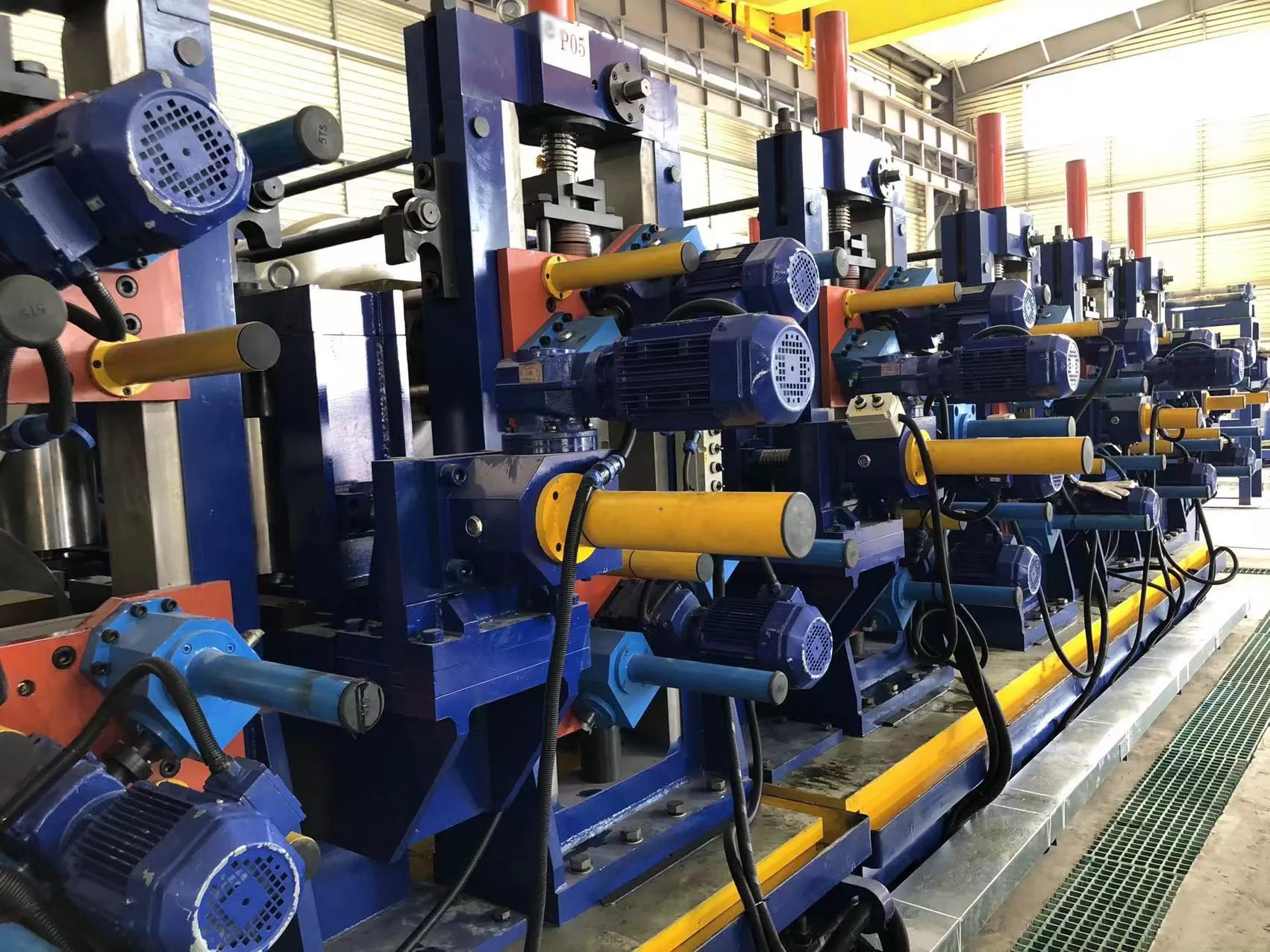
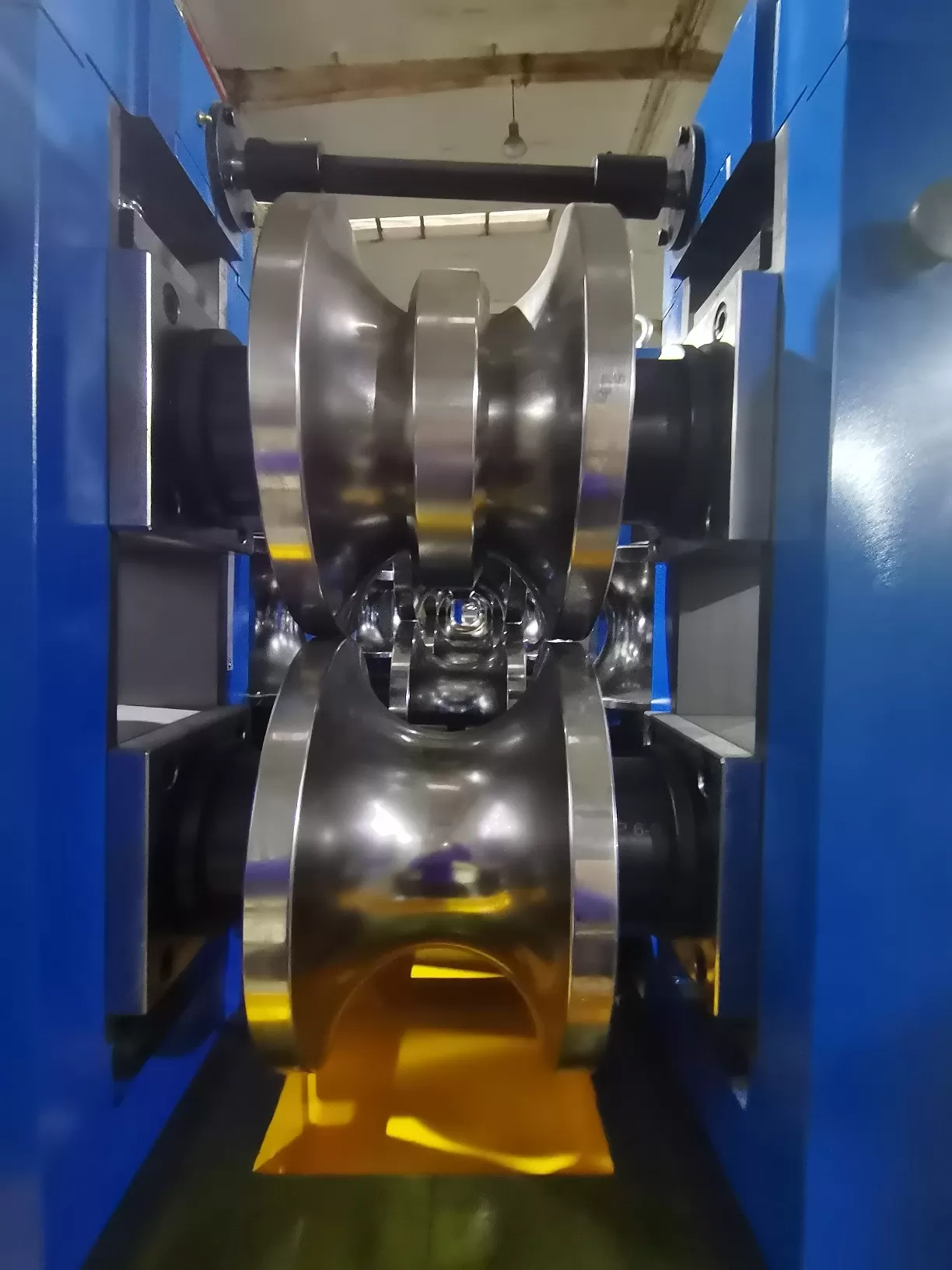
1. The Critical Role of the Strip Accumulator in High-Speed Tube Mills
In the realm of continuous tube and pipe production, downtime is the enemy of
profitability. For electric resistance welding (ERW) mills, the process of
joining coil ends—whether via shear welding or traditional
stitching—necessitates a momentary halt at the entry section. Without a
sophisticated buffer system, this pause would propagate through the forming
section, bringing the entire production line to a standstill. This is where the
Strip
Accumulator transitions from a mere component to the absolute heart of
operational continuity.
Modern ERW mills demand constant linear speeds to maintain weld integrity and
dimensional tolerance. A Strip Accumulator decouples the entry
section (uncoiler and shear welder) from the forming mill. It stores a reserve
of strip while the upstream line is running, and then pays out that reserve
during the crucial minutes when the entry section stops to weld a new coil. This
article provides a technical analysis of accumulator types, capacity
calculations, tension control methodologies, and the integration of Industry 4.0
sensors to ensure zero-defect production, with specific insights into solutions
provided by industry leaders like SANSO.
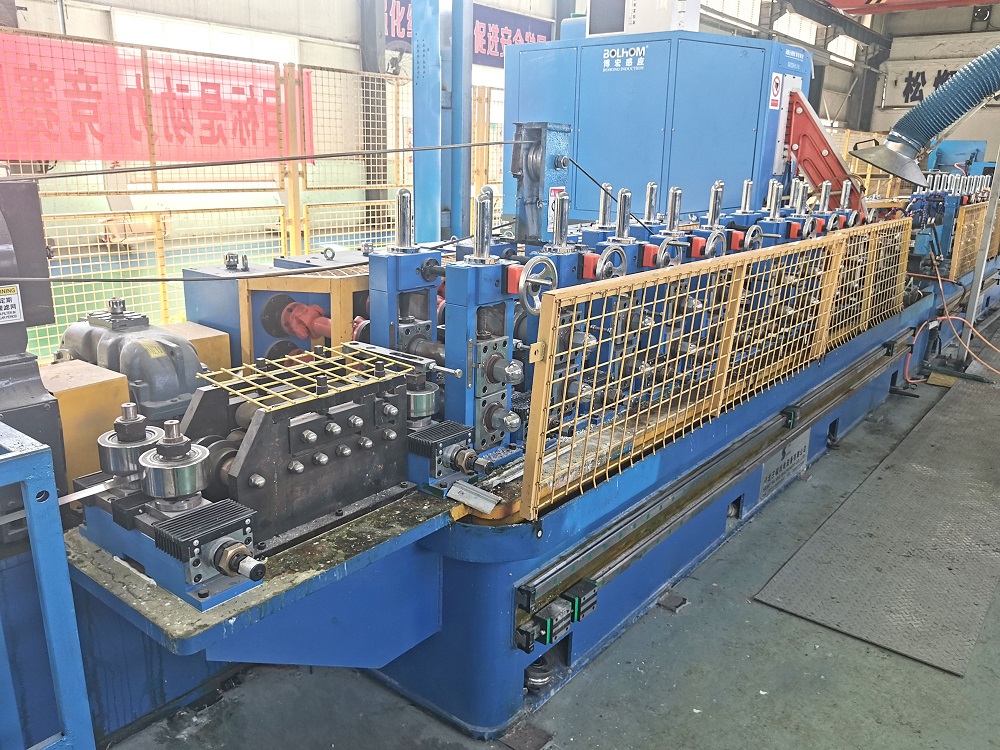
2. Engineering Principles: Storage Capacity and Tension Dynamics
The primary engineering challenge in designing a Strip
Accumulator is balancing physical footprint with required storage time. A
standard coil change and weld cycle might take 60 to 120 seconds. During this
period, the mill continues to consume strip at a rate of, say, 30 meters per
minute. Therefore, the accumulator must store between 30 and 60 meters of
strip.
2.1. Vertical vs. Horizontal Configurations
Engineers typically choose between two geometric configurations based on the
plant layout and strip specifications:
Vertical Accumulators: Utilizing gravity through a moving
carriage and fixed sheaves at the top. These are excellent for maintaining
precise, low tension on thin-wall or delicate materials (like stainless steel or
aluminum). They require significant overhead clearance but have a smaller
footprint.
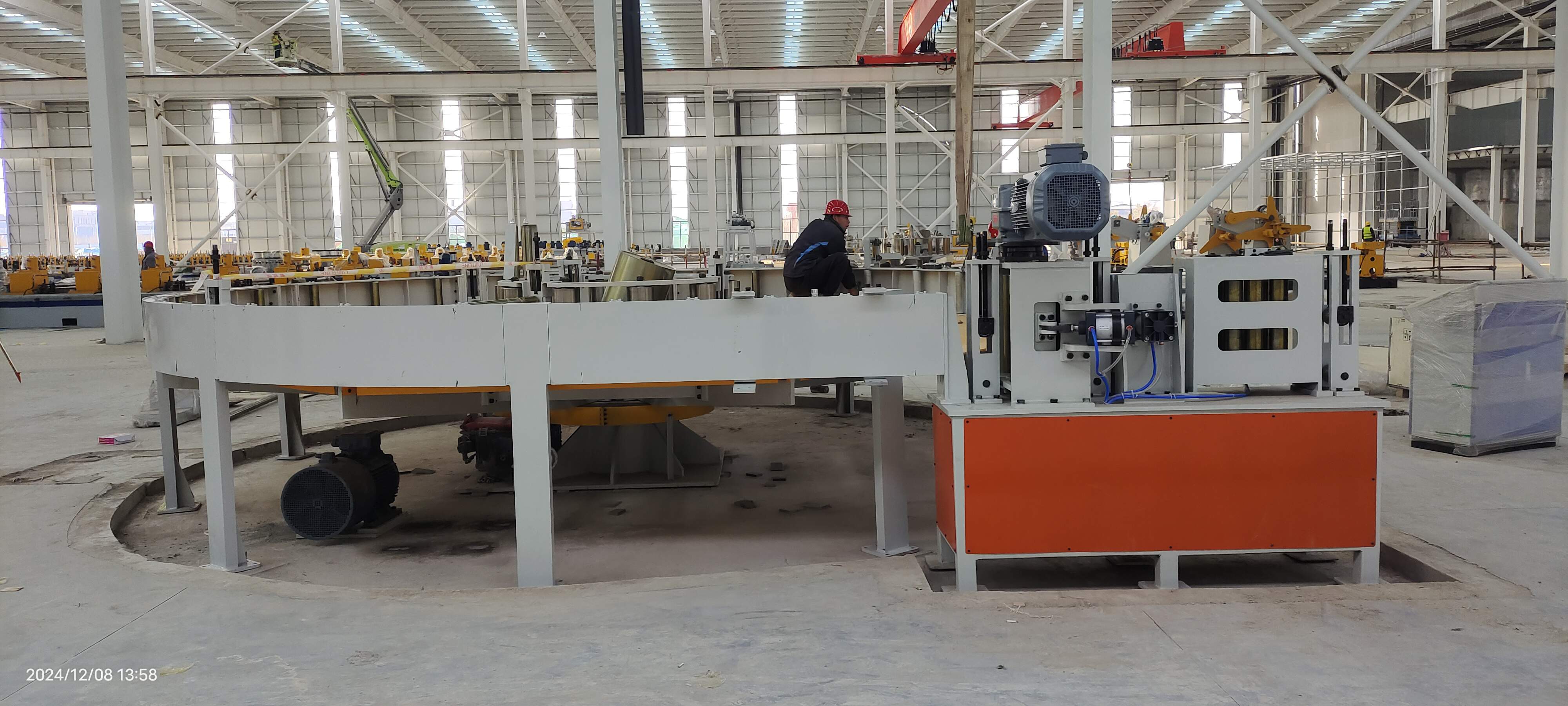
Horizontal Accumulators: Employing a moving trolley on
rails. These are preferred for heavy-gauge, high-strength steel strips where the
weight of the strip itself in a vertical loop would cause plastic deformation.
They offer easier maintenance access but require substantial floor space. SANSO specializes in customizing horizontal track lengths to match specific client
cycle times.
2.2. Tension Regulation and Strip Tracking
Inconsistent tension is a primary cause of "snaking" or edge damage within
the accumulator. Modern systems utilize closed-loop load cells on the deflector
rolls. These cells feed real-time data to the drive system controlling the
bridle rolls. The goal is to maintain a specific set-point tension (measured in
kN) that is high enough to prevent strip sag (which causes scratching) but low
enough to avoid stretching the material beyond its yield point (work hardening).
Laser sensors are now standard to monitor the exact position of the moving
carriage, ensuring smooth acceleration and deceleration during the filling and
emptying cycles.
3. Operational Workflow: The "Fill" and "Empty" Cycle
To understand the sophistication of a Strip Accumulator, one
must visualize the synchronized dance of the entry and exit bridles. The process
is governed by a Programmable Logic Controller (PLC) that calculates mass flow
in real-time.
The "Empty" Phase (Pay-out): When the entry end stops for
coil welding, the exit bridle accelerates slightly to pull strip out of the
accumulator. The moving carriage travels towards its "empty" limit, driven by
the demand of the forming mill. The control system must ensure the strip speed
out of the accumulator exactly matches the mill speed to prevent jerks that
could affect the weld seam stability.
The "Fill" Phase (Recharge): Once the new coil is welded and
the crop shear has trimmed the ends, the uncoiler accelerates. The entry bridle
now runs faster than the exit bridle, pushing strip back into the accumulator.
The moving carriage retracts to its "full" position, storing energy (potential
energy in vertical, kinetic in horizontal) for the next cycle. High-efficiency
systems can recharge in less than 50% of the time of the emptying cycle to
prepare for subsequent, potentially shorter, coil change intervals.
4. Technical Challenges and Mitigation Strategies
Operating a Strip
Accumulator involves mitigating specific physical risks that can lead to
production halts.
4.1. Surface Scratching and Pickup
As strip passes over and under multiple rolls (sheaves), any debris or roll
surface defect can scratch the strip. This is critical for pre-painted or
pickled and oiled (P&O) materials. Mitigation involves using
polyurethane-lined rolls for thin strips and hardened chrome-plated rolls for
high-strength steel, combined with automatic brush cleaners that wipe the roll
surface continuously.
4.2. Loop Control and Wrinkling
For extremely thin materials (below 1.0mm), the strip may buckle or wrinkle
when entering the accumulator if the entry bridle tension is too high relative
to the strip's compressive strength. Advanced accumulators now feature segmented
bridle rolls with individual drives to "stretch" the strip slightly between
rolls, increasing the strip's flatness and rigidity before it enters the looping
tower. This technique, often fine-tuned by manufacturers like SANSO,
prevents the "tin-canning" effect.
5. Integration with the Mill Control System (Industry 4.0)
The modern Strip Accumulator is no longer an isolated
mechanical device; it is a data node. In the context of Industry 4.0, sensors on
the accumulator provide critical data for predictive maintenance and quality
assurance.
Vibration analysis on the bearings of the deflector rolls can predict failure
weeks in advance. Encoders on the moving carriage provide precise data on strip
length stored, which is cross-referenced with the welder data to manage coil
remnants. Furthermore, vision systems are now being deployed inside horizontal
accumulators to monitor edge position and detect "cobbles" before they cause a
catastrophic jam. By integrating the accumulator data with the MES
(Manufacturing Execution System), plant managers can optimize production
schedules based on real-time buffer capacity.
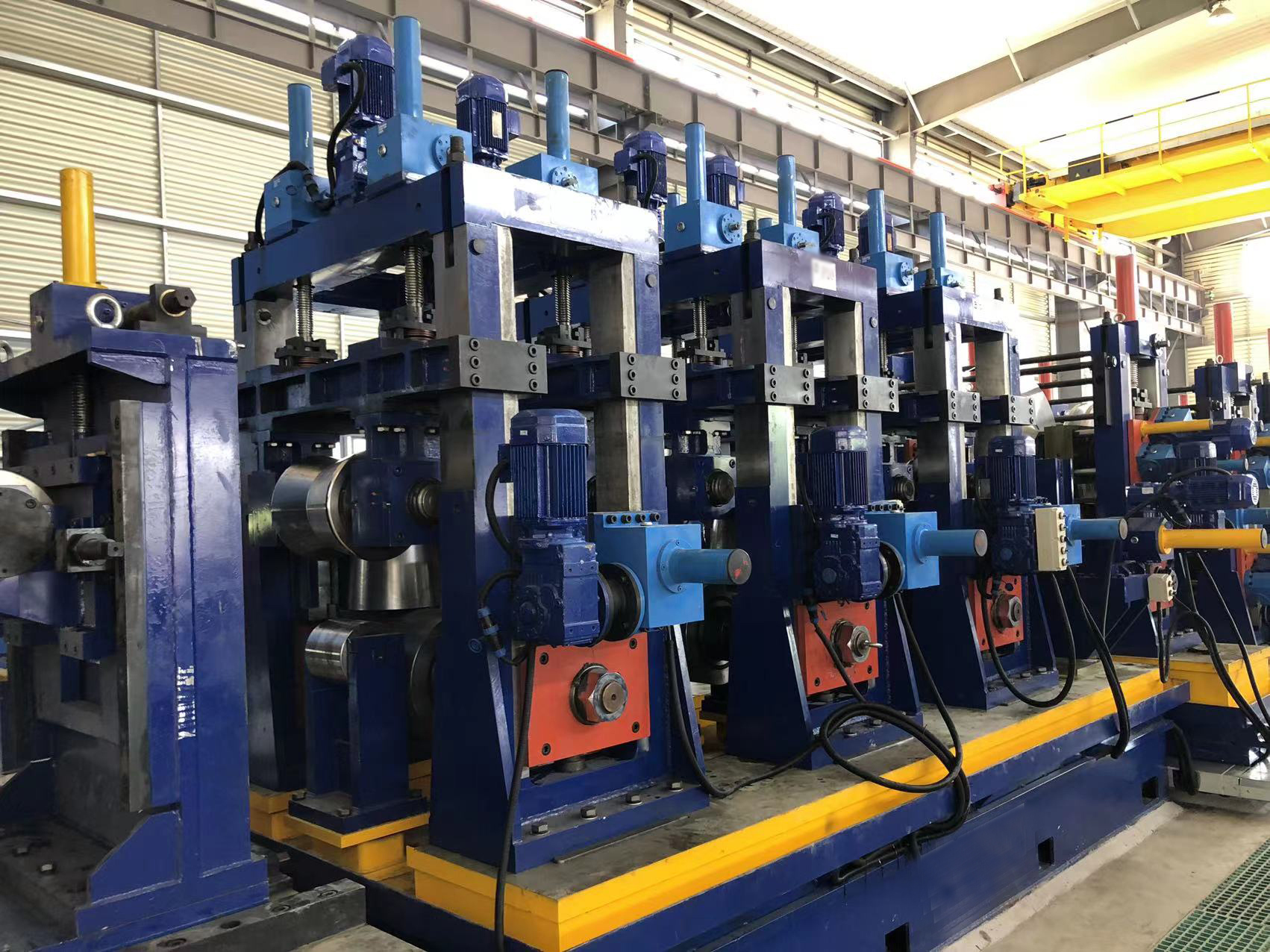
6. How SANSO Optimizes Accumulator Performance for Different Markets
Different end-markets require different accumulator philosophies. For
structural tube manufacturers using heavy wall thickness (HWT), the priority is
ruggedness and high tension capacity. For automotive part manufacturers using
high-strength low-alloy (HSLA) steels, the priority is precision tracking and
surface protection. SANSO addresses these diverse needs by
offering modular accumulator designs. Their systems feature adaptive PID control
loops that automatically adjust gain settings based on the material grade
entered into the HMI. This ensures that whether the line is processing 0.5mm
soft steel or 6.4mm X70 grade, the accumulator maintains optimal strip tension
without operator intervention, directly contributing to reduced scrap rates and
higher OEE (Overall Equipment Effectiveness).
7. Frequently Asked Questions (FAQ)
Q1: What is the primary function of a Strip Accumulator in a tube mill?
A1: The primary function is to provide a continuous supply
of strip steel to the forming and welding section of the mill while the entry
section is stopped to weld a new coil. It stores material during normal
operation and releases it during the coil change, preventing downtime and
maintaining constant production speed.
Q2: How do I calculate the required storage capacity for my
accumulator?
A2: The required capacity is calculated by multiplying the
maximum mill speed (meters per minute) by the total time required for a coil
change and weld cycle (including deceleration/acceleration). A safety factor
(usually 10-15%) is added. For example, a 50 mpm mill with a 90-second cycle
needs a minimum usable strip storage of 75 meters plus a buffer.
Q3: What is the difference between a vertical and a horizontal Strip
Accumulator?
A3: A vertical accumulator uses a moving carriage in a tower
and relies on gravity to create tension. It saves floor space and is ideal for
light-gauge materials. A horizontal accumulator uses a moving trolley on rails,
requires more floor space but is better suited for heavy-gauge, high-strength
materials due to better tension support and lower height requirements.
Q4: Why is strip tension control so important inside the accumulator?
A4: Consistent tension is critical to prevent strip
wandering (tracking errors), scratching against side guides, or plastic
deformation. Too much tension can stretch and thin the strip (necking), while
too little can cause loose loops leading to tangling or "cobbles." Precision
control ensures material integrity and stable operation.
Q5: Can an accumulator handle different material widths and
thicknesses?
A5: Yes, modern accumulators are designed with a wide
operating range. However, efficiency changes with geometry. A machine set up for
300mm width may have tracking issues with 100mm width unless equipped with
adjustable side guides and segmented rolls. Leading manufacturers like SANSO design
accumulators with flexible guiding systems to accommodate a diverse product mix
without sacrificing performance.
Q6: What maintenance is required for a horizontal Strip Accumulator?
A6: Key maintenance tasks include regular lubrication of the
trolley rail wheels and bearings, inspection of wire ropes or chains (depending
on the drive mechanism), checking wear on deflector roll bearings via vibration
analysis, and verifying the calibration of the position encoders and tension
load cells to maintain control accuracy.