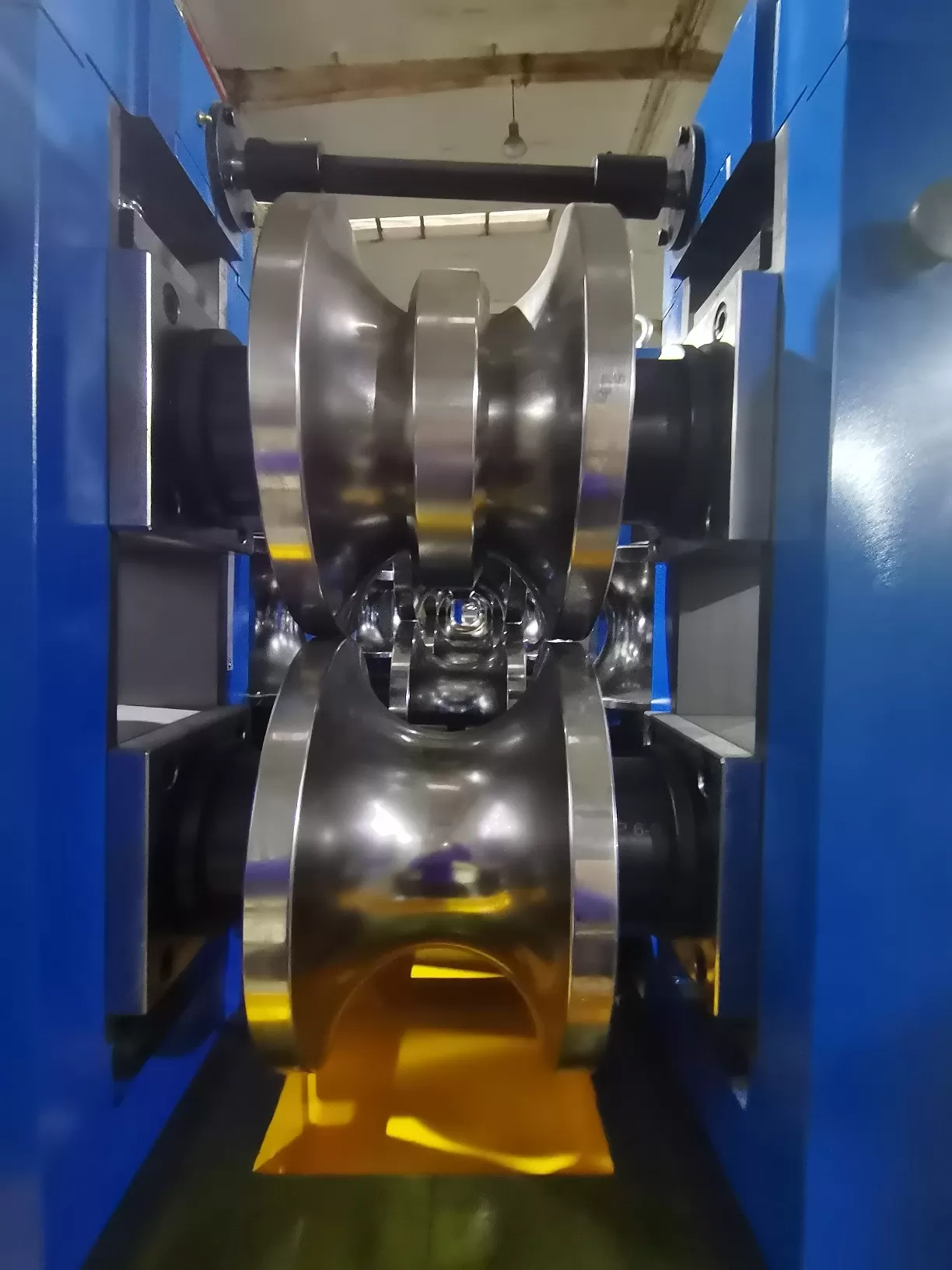
In high-volume tube and pipe manufacturing, the transition from continuous
forming to finished product hinges on one critical operation: cut to length. A variance of even 0.5mm in cutoff
accuracy can cascade into assembly line rejections, increased scrap rates, and
compromised customer specifications. For operations running at 100 meters per
minute, the margin for error is measured in milliseconds. SANSO has engineered a generation of cutting systems
that redefine precision in this domain, integrating servo-driven flying shears,
real-time length measurement, and mill-wide synchronization to deliver
consistent accuracy across millions of cycles.
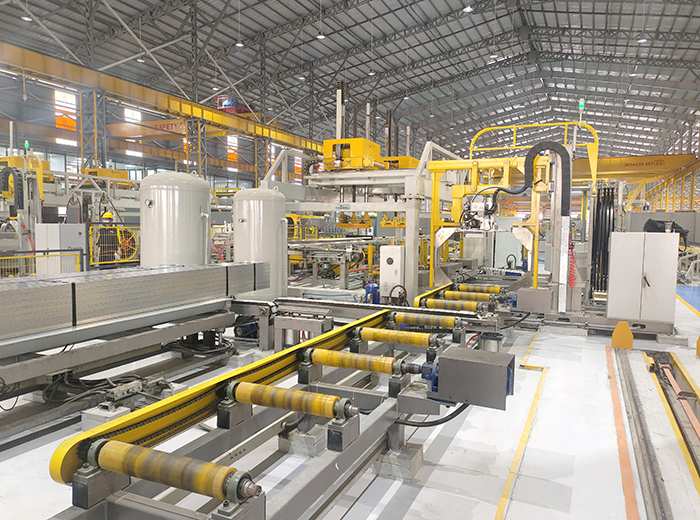
The Engineering Imperative: Why Cut to Length Accuracy Defines Manufacturing
Economics
A mill’s cut to length station is not merely a
finishing step—it is the point where cumulative process variations from forming,
welding, and sizing converge. When cutoff accuracy drifts, the consequences
extend far beyond scrap:
Yield loss: For a mill producing 10,000 tons annually,
every 1mm of excess length per cut translates to 10–15 tons of wasted material
per year.
Secondary operations disruption: Inconsistent lengths cause
feeding jams in downstream processes like bending, threading, or packaging,
reducing overall equipment effectiveness (OEE) by 5–8%.
Customer rejections: Industries such as automotive,
hydraulic, and structural construction enforce length tolerances as tight as
±1mm; non-conforming shipments result in chargebacks and lost
contracts.
Addressing these challenges requires a systems-level approach that integrates
mechanical design, control algorithms, and process feedback into a cohesive
cut to length solution.
Core Subsystems of a High-Performance Cut to Length Line
Modern tube mill cutoff systems comprise three interdependent modules, each
engineered for sub-millisecond responsiveness.
1. Measurement and Feedback: Encoder Systems and Non-Contact Sensing
Accurate length measurement begins with precise velocity tracking. High-end
systems employ dual redundant encoders—one on the mill’s main drive and another
on a pinch roll assembly immediately preceding the cutoff station. This
configuration compensates for slippage and thermal expansion. For mills
processing coated or polished tube, SANSO integrates laser Doppler velocimeters
(LDV) that achieve measurement resolution of 0.01mm at line speeds up to 150
m/min. These sensors feed real-time data to the motion controller, enabling
dynamic compensation for speed variations during the cut cycle.
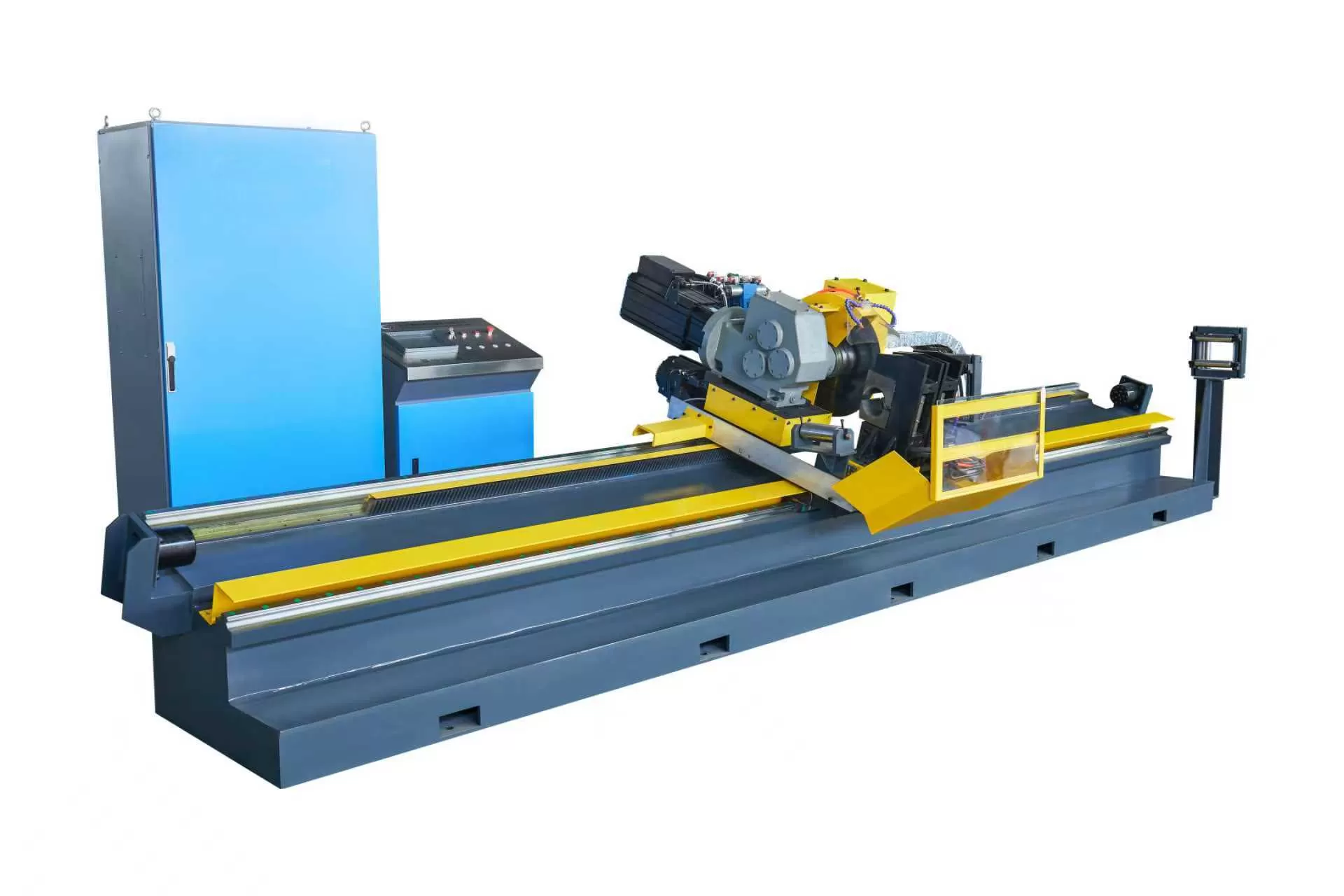
2. Flying Cutoff Mechanisms: Shear vs. Saw Selection
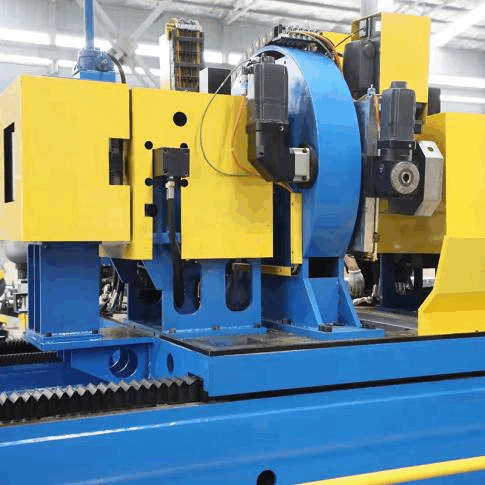
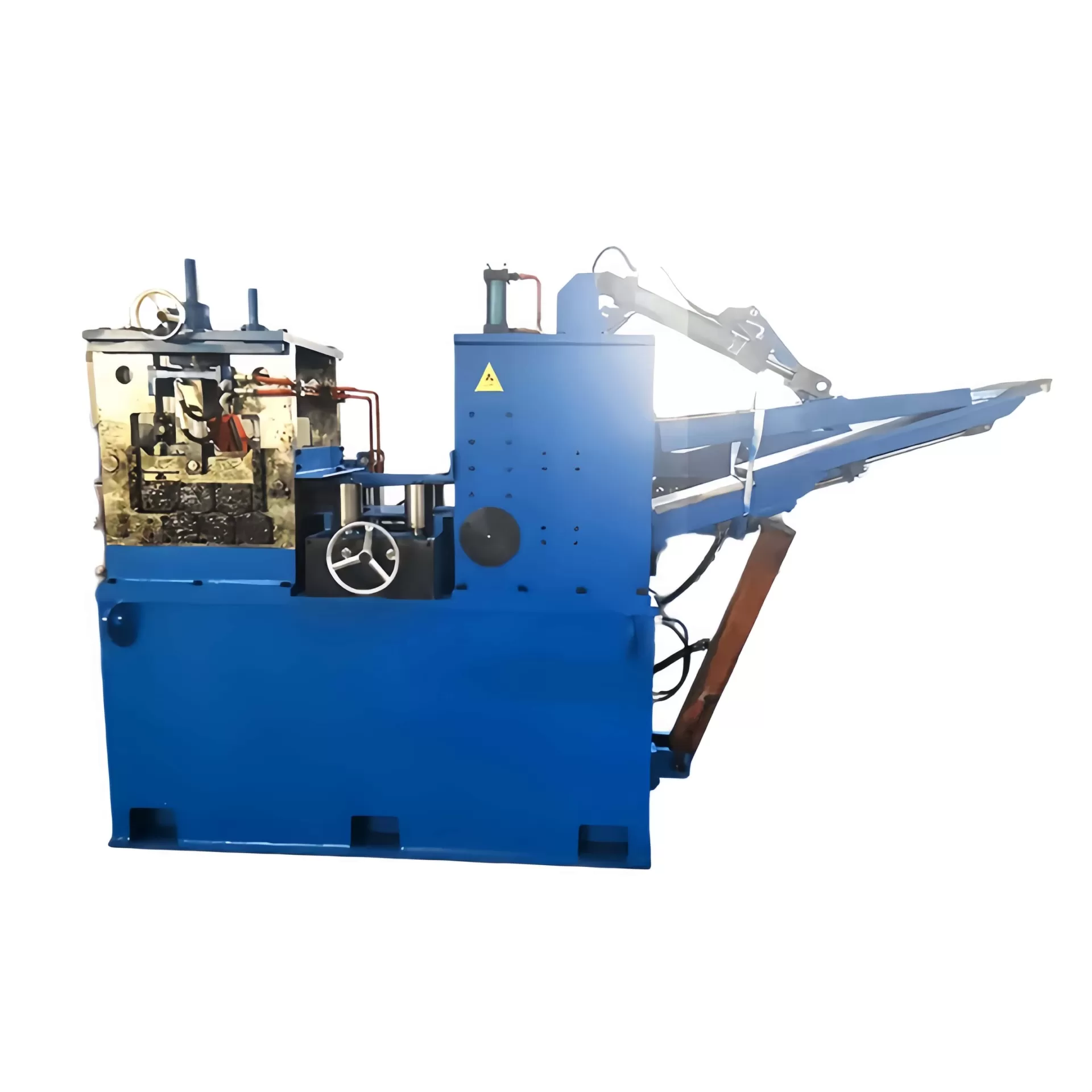
The choice between rotary shears, guillotine shears, and cold saws depends on
tube diameter, wall thickness, and material hardness.
Rotary shears: Ideal for diameters up to 80mm and wall
thicknesses under 3mm. They achieve cycle times as low as 0.3 seconds per cut,
supporting line speeds exceeding 100 m/min.
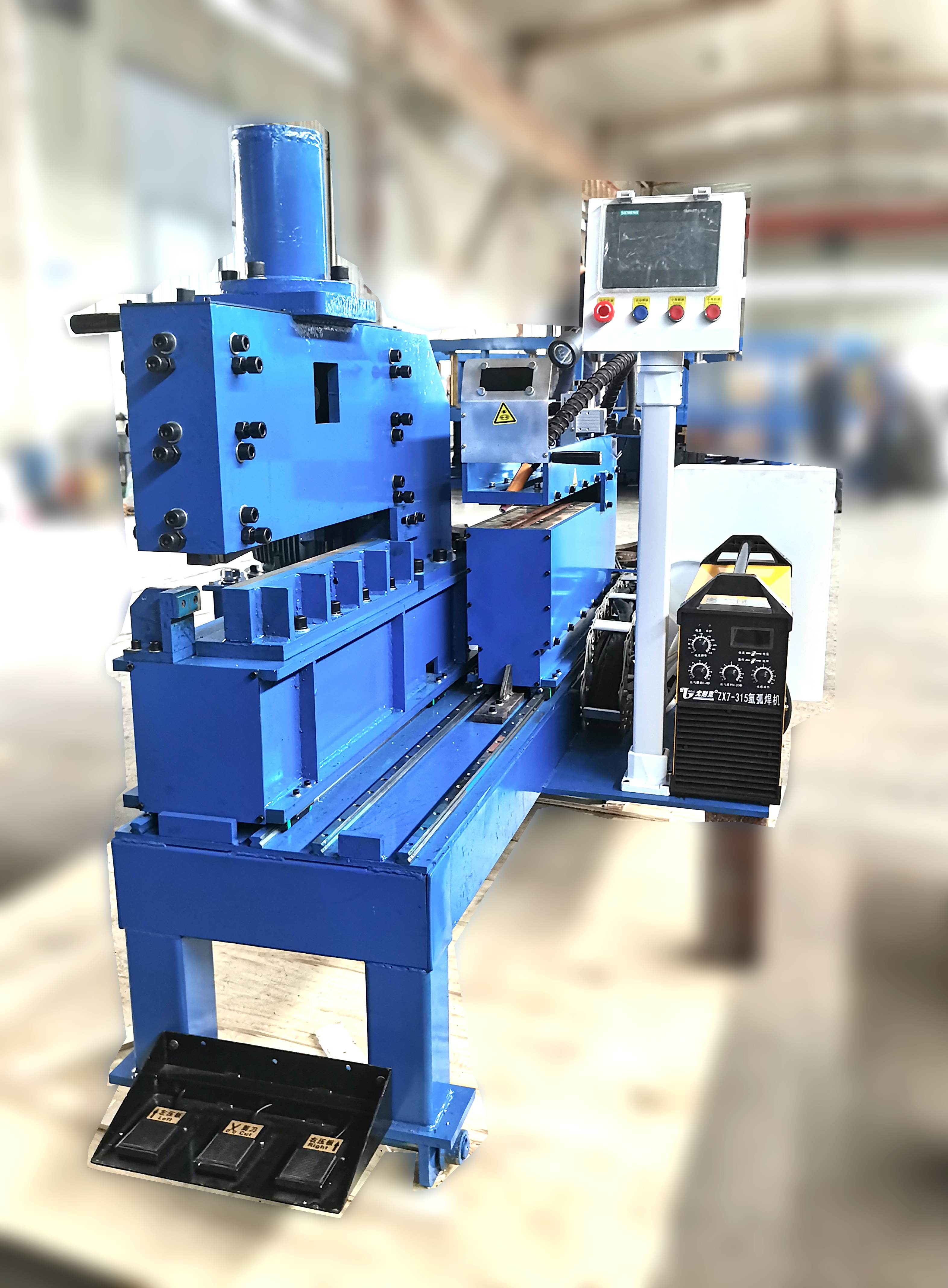
Guillotine shears: Preferred for square, rectangular, and
heavy-wall round tubes (up to 8mm thickness). They provide burr-free cuts but
require longer acceleration and deceleration profiles.
Flying cold saws: Used for large diameters (80–300mm) and
materials requiring superior cut-face quality. SANSO’s saw systems incorporate
carbide-tipped blades with precision spindle runout below 0.02mm to maintain cut
squareness within 0.5°.
3. Control Architecture: Synchronized Motion and Adaptive Algorithms
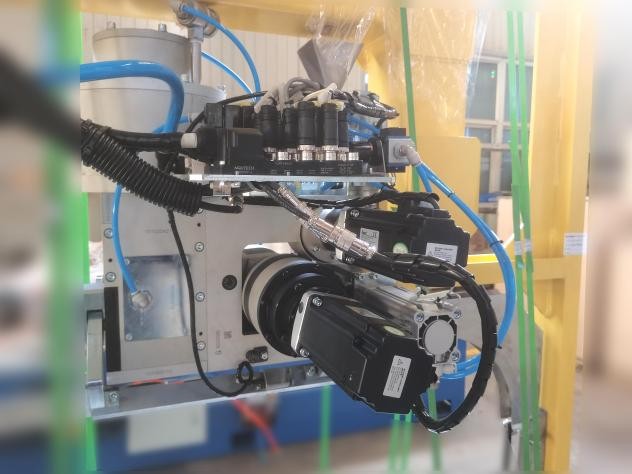
The control system must orchestrate the cutoff carriage’s acceleration,
synchronization, cutting action, and return stroke within a fraction of a
second. SANSO employs programmable logic controllers (PLCs) with dedicated
motion control coprocessors that execute at cycle rates below 1ms. Key control
features include:
Electronic gearing: The cutoff carriage is electronically
synchronized to the mill’s exit speed, eliminating mechanical cams and enabling
rapid recipe changes.
Predictive velocity profiling: The controller calculates
the optimal acceleration curve to match the cutoff tool’s speed to the tube’s
velocity within 0.5% before engaging the cut.
Adaptive length correction: After each cut, the system
compares actual measured length against target and applies a dynamic
compensation factor to the next cycle, maintaining tolerance even as line speed
fluctuates.
Critical Applications Across Industries
Precision cut to length systems serve diverse
sectors where tube length directly impacts downstream assembly:
Automotive structural components: Chassis members, roll
cages, and exhaust systems require cut lengths held to ±0.5mm to fit robotic
welding fixtures without adjustment.
Hydraulic cylinders: Honed tube for cylinders demands
cut-end perpendicularity within 0.3° to ensure proper seal seating and piston
alignment.
Structural steel fabricators: Columns, beams, and truss
components must meet ASTM A500 length tolerances; inconsistent cuts lead to
field rework and erection delays.
Medical tubing: Stainless steel and nitinol hypotubes for
catheters and surgical instruments require burr-free cuts with length accuracy
of ±0.05mm, often achieved with servo-driven flying saws equipped with
high-speed spindle rotation (15,000–30,000 RPM).
Industry Pain Points: Where Cut to Length Systems Fail
Despite technological advances, many mills experience recurring issues with
their cutoff operations. SANSO’s field data identifies five primary failure
modes:
Encoder drift and slippage: Worn pinch rolls or inadequate
tension cause encoder feedback errors, resulting in progressive length
deviation—often misdiagnosed as controller faults.
Carriage bearing wear: High-cycle operations (over 1
million cuts per year) lead to linear guide wear, introducing play that
compromises cut squareness and length consistency.
Blade/knife geometry degradation: Shear blades operating
beyond recommended regrind intervals (typically 50,000–100,000 cuts) produce
burrs and angled cuts that pass visual inspection but fail functional
checks.
Control system latency: Legacy PLCs with scan times
exceeding 10ms cannot respond to speed transients, causing length variations
during acceleration and deceleration phases.
Inadequate material handling downstream: Poorly
synchronized runout tables or bundling stations can back pressure the cutoff
area, causing tube buckling that affects cut quality.
SANSO’s Integrated Approach: From Mechanical Precision to Digital
Traceability
SANSO addresses these failure modes through a
comprehensive engineering methodology applied to every cut to length system deployment. The approach
integrates mechanical robustness with advanced control features:
Heavy-duty linear guide systems: SANSO specifies oversized
profiled rail guides with integrated lubrication ports, achieving L10 life
ratings exceeding 10 million meters of travel—five times industry average.
Closed-loop carriage position feedback: In addition to
encoder-based length measurement, SANSO’s systems incorporate linear magnetic
scales on the cutoff carriage, providing direct position feedback with 0.005mm
resolution to verify synchronization.
Predictive maintenance dashboards: The control system
tracks blade cut counts, carriage travel distance, and motor current draw,
generating alerts when wear thresholds approach, allowing scheduled maintenance
during shift changes rather than unplanned downtime.
Batch traceability and data integration: Each cut is
recorded with timestamp, measured length, and process parameters, enabling full
traceability from coil to finished tube—a requirement for automotive and
aerospace supply chains.
Data from SANSO installations demonstrate consistent length capability
indices (Cpk) above 1.33 across 48-hour continuous runs, with average scrap
reduction of 35% compared to previous systems. For a mill producing 30,000 tons
per year, this improvement translates to over 500 tons of material savings
annually.
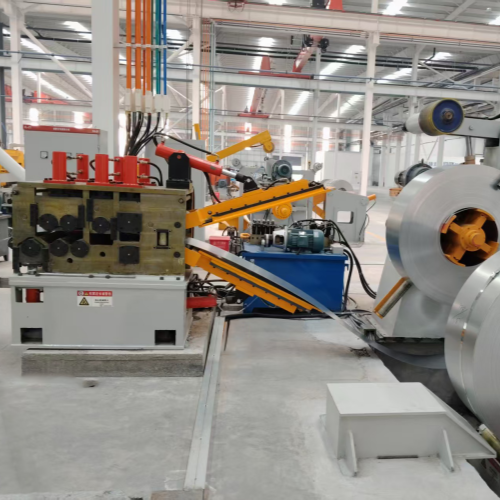
Economic Analysis: Total Cost of Ownership for Cut to Length Systems
When evaluating capital investment in a precision cutoff system, the total
cost of ownership (TCO) must account for consumables, maintenance labor, and
yield losses. A comparative analysis reveals:
Blade/knife life extension: SANSO’s precision shear
alignment and servo-controlled impact force extend blade life by 40–50% compared
to pneumatic or hydraulic shear systems, reducing annual consumable costs by
$15,000–$25,000.
Maintenance labor reduction: Modular carriage design with
accessible components cuts maintenance hours by 30%, freeing skilled technicians
for other production priorities.
Scrap reduction: As noted, yield improvements of 1.5–2% are
typical, representing $120,000–$300,000 annual savings for mid-sized mills (at
$2,500/ton material value).
Downtime avoidance: Predictive maintenance features prevent
unplanned stoppages; each avoided hour of downtime at a mill producing 5
tons/hour represents $12,500 in lost contribution margin (material + labor +
overhead).
These factors typically yield a payback period of 12–18 months for a
precision cutoff system upgrade, with continued benefits over a 15–20 year
service life.
Future Direction: AI-Optimized Cut to Length and Industry 4.0
Integration
The next generation of cut to length technology leverages machine learning
to predict optimal cutting parameters based on real-time material properties.
SANSO’s development platforms incorporate neural network models that analyze
vibration signatures, motor current harmonics, and previous cut quality to
adjust feed rates and acceleration profiles dynamically. Early trials
demonstrate a further 15% reduction in length variation and a 20% increase in
blade life through optimized engagement force. For manufacturers operating under
Industry 4.0 frameworks, these systems provide the data backbone for full
production traceability and predictive quality management.
Frequently Asked Questions (FAQ)
Q1: What is the typical length tolerance achievable with a modern flying
cutoff system?
A1: For a well-engineered cut to length system operating at stable line speeds
(within ±5% variation), tolerances of ±0.5mm to ±1.0mm are standard for tube
diameters up to 150mm. SANSO’s servo-driven flying shears, combined with laser
Doppler velocity measurement, have demonstrated sustained performance at ±0.2mm
in controlled environments. Tolerances widen with increasing line speed,
material springback, and product geometry; each application requires a
capability study to define expected performance.
Q2: How do I determine whether a flying shear or a flying saw is appropriate
for my product mix?
A2: The selection depends on material, wall thickness, and cut-face quality
requirements. Rotary shears are fastest and most economical for thin-wall
(<3mm) round tube, producing a clean cut with minimal deformation. Guillotine
shears suit square/rectangular profiles and thicker walls up to 6–8mm. Flying
cold saws are required for large diameters (>80mm), heavy walls (>5mm), or
when cut-face perpendicularity must be maintained without any deformation (e.g.,
for subsequent threading or welding). SANSO provides application engineering
support to evaluate your product portfolio and recommend optimal
configuration.
Q3: What maintenance schedule is required to maintain cut length
accuracy?
A3: Accuracy-critical components require scheduled inspection. SANSO
recommends: weekly verification of encoder coupling tightness and pinch roll
pressure; monthly linear guide lubrication and wear measurement; blade/knife
sharpening at intervals determined by cut count (typically 50,000–100,000 cuts
depending on material); and quarterly calibration of length measurement using a
certified master tube. The control system’s predictive maintenance dashboard
automates these reminders based on actual usage.
Q4: Can a cut to length system be retrofitted to an existing tube mill
without major modifications?
A4: Yes, SANSO specializes in retrofit installations. The retrofit package
typically includes a new cutoff carriage, servo drive system, updated control
panel, and length measurement encoders. Integration with the existing mill’s
main drive and runout table requires careful coordination but does not
necessitate mill disassembly. SANSO engineers conduct site assessments to verify
foundation requirements, power availability, and space constraints. Retrofit
projects are typically completed during scheduled maintenance windows (3–5 days)
with minimal production disruption.
Q5: How does SANSO ensure cut length accuracy during mill acceleration and
deceleration phases?
A5: SANSO’s control system employs a multi-stage synchronization algorithm.
During steady-state operation, the cutoff carriage uses electronic gearing to
match the tube’s linear speed. When acceleration or deceleration is detected
(via rate-of-change monitoring), the controller transitions to predictive
velocity profiling, calculating the carriage’s required motion profile based on
historical machine response. Additionally, the system can be configured to
perform cuts only when line speed is within a defined stable window, rejecting
cuts made during transients. For applications requiring continuous cutting
during speed changes, SANSO offers optional dual-encoder feedback with
acceleration compensation that maintains accuracy within ±0.5mm across a speed
range of 20–100 m/min.
For tube and pipe manufacturers seeking to eliminate cutoff variability,
reduce scrap, and meet increasingly stringent customer specifications, the
choice of cut to length technology is a strategic
decision. SANSO combines precision mechanical engineering with
advanced control systems to deliver solutions that consistently meet the demands
of automotive, hydraulic, and structural applications worldwide.