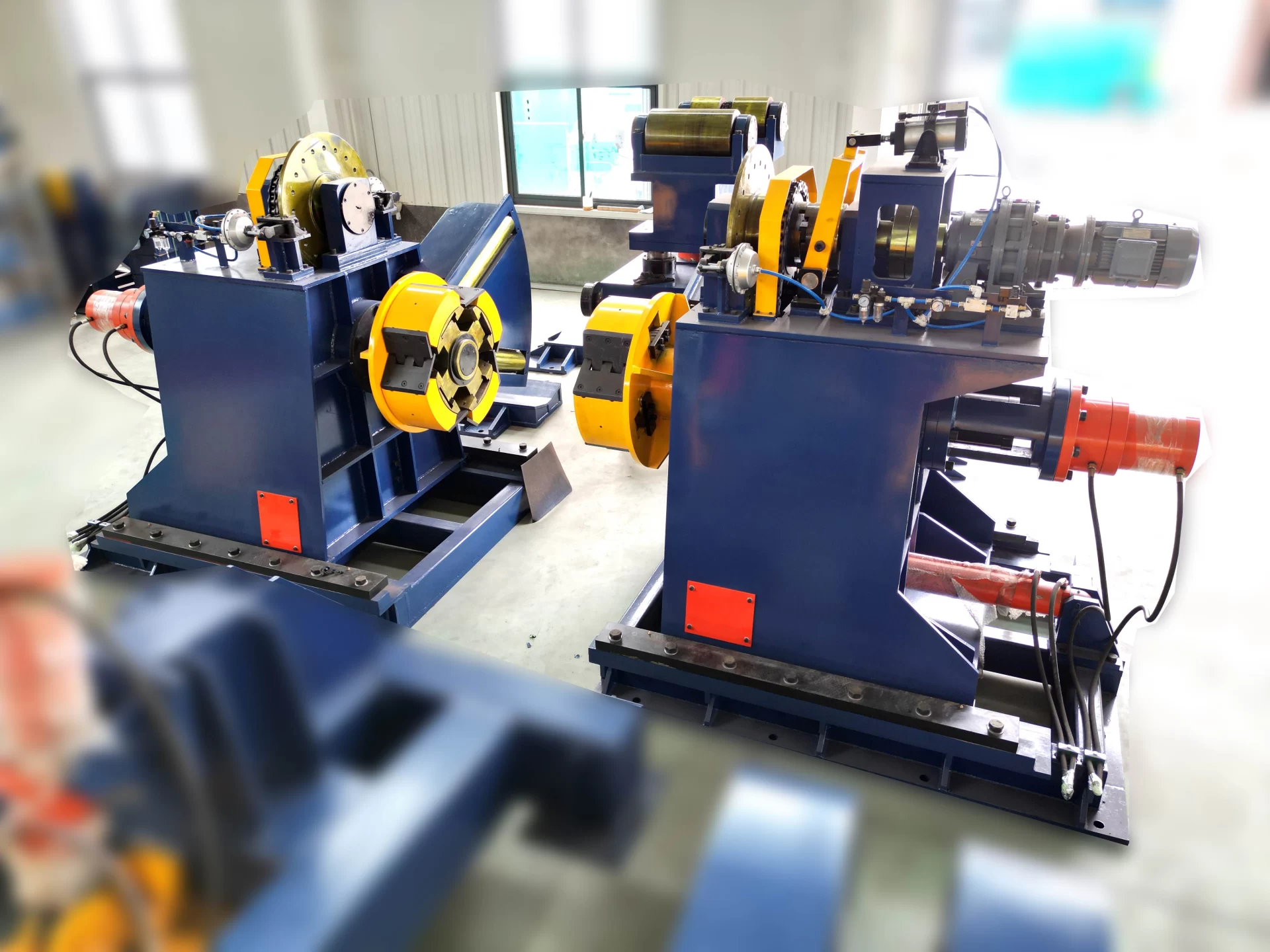
Tube mill operators frequently battle weld seam defects. When cracks,
pinholes, or edge overlaps appear on the finished line, maintenance crews
instinctively check the high-frequency induction welder, swap squeeze rolls, or
adjust fin-pass tooling. Yet, scrap bins continue to fill up.
The root problem rarely starts in the welding box. Instead, it originates
upstream at the uncoiling and strip entry station. Steel strip fed with residual
stresses, edge camber, or inconsistent tension produces unpredictable movement
in the forming passes. At SANSO, we design automated coil
handling machinery that resolves these upstream instabilities before the strip
ever touches a breakdown roll.
If your mill struggles with high scrap rates or unstable weld seams,
upgrading your entry line can fix the issue permanently. Contact our engineering team today to request a line
evaluation and get a tailored quotation for your facility.
The Hidden Culprit Behind Tube Mill Weld Seam Defects
Electric Resistance Welding (ERW) and high-frequency induction tube
production require millimetric precision. For a consistent, defect-free weld,
the two strip edges must meet parallel, under steady squeeze pressure, and at a
constant speed.
When the incoming strip carries mechanical irregularities, the forming
section cannot compensate. The strip twists, springs back, or wanders laterally.
These minute mechanical variations destabilize the welding arc or induction
field, leading directly to rejection-level defects.
A conventional coil line uses separate machines: a standalone uncoiler, an
independent straightener, and an external feeder, often separated by an open
loop pit. This spread-out footprint introduces slack, center deviation, and
uneven pulling force. Replacing this disjointed configuration with an integrated
decoiler straightener feeder solves the problem by
consolidating strip management into a single rigid, synchronized platform.
The Root Cause: How Poor Strip Preparation Affects Tube Welding
To understand why weld seams fail, one must examine the physical state of
hot-rolled and cold-rolled steel coils before forming.
Coil Set and Residual Stress
Coiled steel retains memory. Outer wraps experience severe tensile
stretching, while inner wraps suffer tight compressive bending. This condition
is called coil set. If a machine simply uncoils the metal without plastic
deformation past its yield point, this residual stress stays locked within the
crystalline lattice.
As the strip travels through the breakdown and fin-pass passes, these trapped
stresses release unevenly. The metal springs back unpredictably. According to
the Fabricators
& Manufacturers Association (FMA), unaddressed elastic recovery remains
one of the primary drivers of cross-sectional distortion in roll-formed
profiles.
Edge Mismatch and Stepping
High-frequency welding demands absolute edge alignment. If one edge sits even
0.2 mm higher than the other at the squeeze rolls, the magnetic field
concentrates unevenly. The higher edge overheats and melts away, while the lower
edge remains pasty and underheated. This defect, known as edge mismatch or
stepping, causes immediate hydrostatic test failure.
Mismatch rarely occurs because the squeeze rolls are cut incorrectly. It
occurs because the strip enters the breakdown section with a slight camber or
variable width drift. Without precise edge guiding and real-time tensioning from
the feeder, the strip rotates along its longitudinal axis.
Tension Fluctuations and Unstable Heat Input
Welding requires a precise heat input per unit of steel:
Heat Input = (Voltage × Current) / Travel Speed
If pulling tension from an uncoiler fluctuates, strip speed micro-stalls.
Even a millisecond drop in strip velocity spikes the local heat input, blowing
holes through thin-walled profiles. Conversely, strip slip causes under-welding.
An out-of-sync entry system creates continuous cyclic variations in line
resistance.
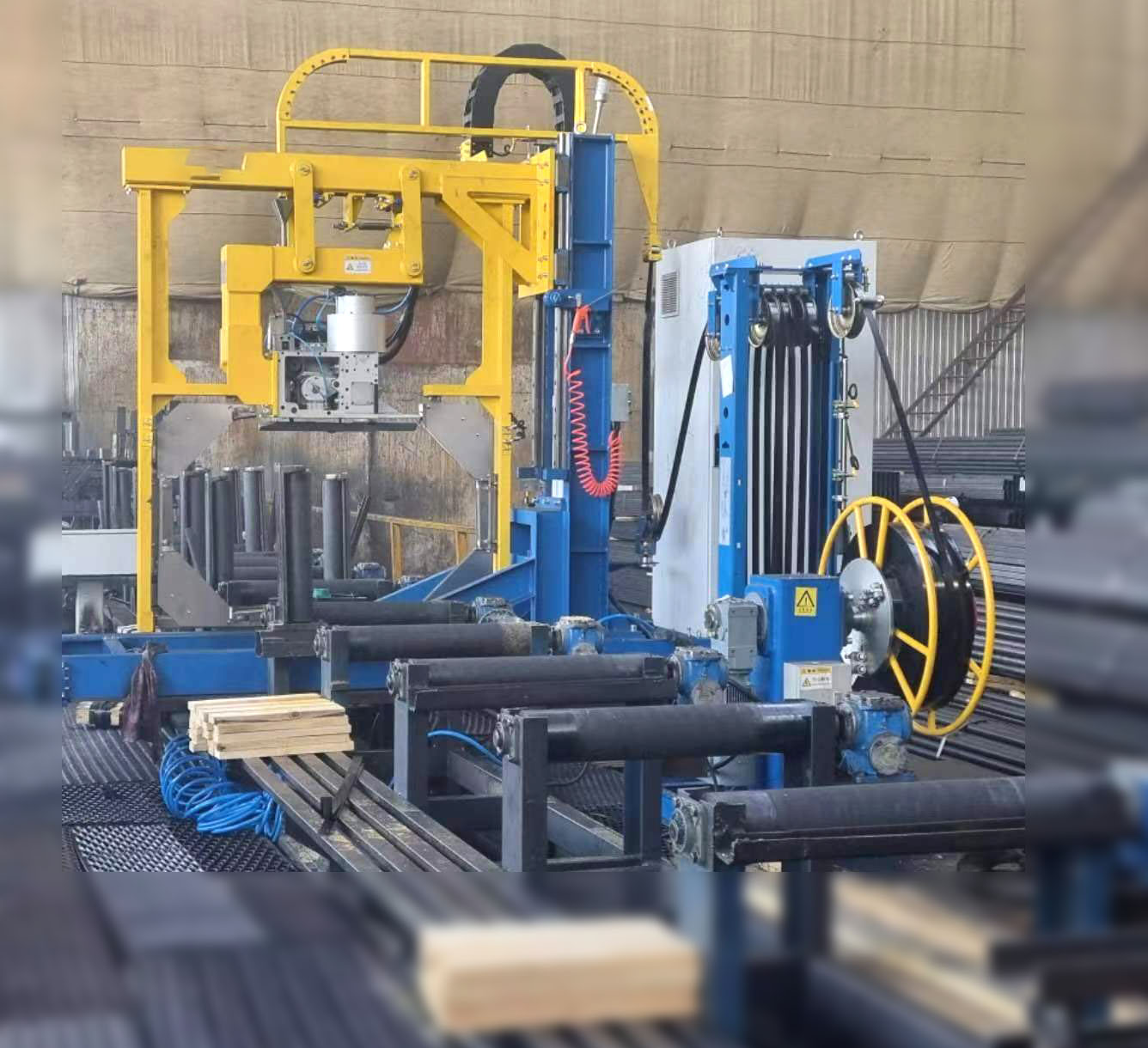
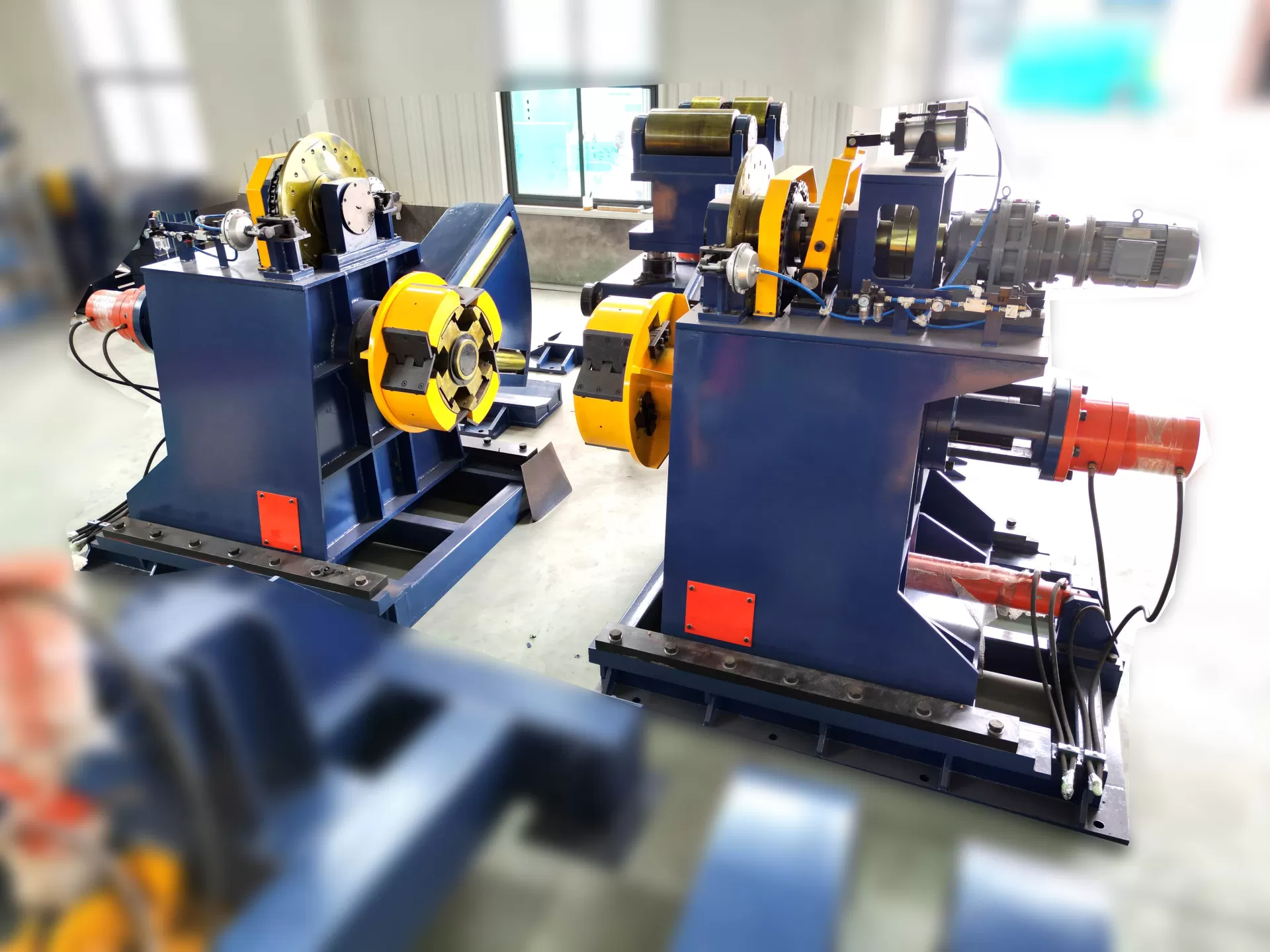
An integrated decoiler straightener feeder (also known as a
3-in-1 feeder) combines the expansion mandrel, straightening roll bank, and
servo feed rolls into one continuous, motorized frame. Here is how this
engineering architecture eliminates welding vulnerabilities at the source.
1. Precision Leveling to Eliminate Residual Stress
The straightener module features alternating work rolls—typically 7 to 11
precision-ground rolls supported by backup bearings. The machine bends the
material back and forth past its yield point, gradually reducing the wave
amplitude as the strip exits.
This plastic-elastic deformation wipes out coil set, crossbow, and
longitudinal memory. By equalizing internal stresses between the top and bottom
surfaces, the strip becomes neutral. When it reaches the forming mill, it yields
uniformly to the rolls without asymmetric springback.
2. Closed-Loop Servo Feeding and Synchronization
Integrated feeders utilize industrial AC servo drive motors paired with
high-resolution absolute encoders. The feed rolls clamp the material using
pneumatic or hydraulic pressure, eliminating slip.
The control system ties directly into the tube mill main PLC. If the mill
slows down for cut-off, the feeder decelerates instantaneously; if the line
accelerates, the feeder matches the line speed down to fractions of a millimeter
per second. This tight control keeps the strip tension constant, ensuring steady
heat input across the entire coil length.
3. Integrated Rigidity and Centerline Stability
In fragmented entry lines, uncoilers, straighteners, and feeders can shift
out of parallel over time due to floor vibration. A deviation of just 1 mm over
a 10-meter span forces the strip against the forming roll flanges, shearing
strip edges and throwing off alignment.
In a SANSO 3-in-1 decoiler straightener feeder, all critical
components rest on a single stress-relieved steel base. High-precision, hardened
side guides center the strip before and after the leveling process. The strip
travels directly into the breakdown stands on an unchanging centerline.
Specific Weld Defects Eliminated by Integrated Feeding Systems
Installing an integrated feeding line directly eradicates several common
production rejections documented by the American Welding Society (AWS):
- Edge Mismatch (Offset): Neutralizing camber and locking
down the strip entry centerline ensures that both strip edges present identical
heights at the apex of the squeeze roll pass.
- Incomplete Fusion and Cold Welds: Consistent strip speed
maintains an unwavering heat-affected zone (HAZ), eliminating intermittent cold
joints caused by speed dips.
- Hook Cracks: Strip edges flattened of crossbow align flush
against squeeze rolls. Oxide inclusions squeeze out cleanly into the weld bead
instead of getting trapped in the pipe wall.
- Weld Seam Porosity: Steady feed tension eliminates
mechanical chatter. Stable mechanical contact prevents micro-arching in
high-frequency contact welding tips.
- Twisted Profiles: Eliminating trapped torsional stress in
the coil stock prevents finished square or rectangular structural tubes from
twisting after flying cut-off.
Beyond Quality: Operational Advantages for Modern Tube Mills
While fixing weld quality protects your delivery reputation, an integrated
decoiler straightener feeder also transforms plant economics.
Floor Space Optimization
Traditional configurations require a large looping pit between the
straightener and the feed system to store strip buffer. These pits consume up to
10 to 15 meters of valuable plant real estate. Integrated feeders use
computerized variable speed control, eliminating or drastically shortening loop
space requirements. You recover up to 40% of floor space for raw material
inventory or secondary processing.
Faster Coil Changeover and Operator Safety
Handling thick steel coils poses significant safety hazards. Modern 3-in-1
systems incorporate motorized coil cars, hydraulic hold-down peeler arms, and
snubber rolls. The operator threads a new coil into the pinch rolls via a
handheld pendant without ever touching the band manually. Coil changeover times
drop from twenty minutes down to less than four minutes.
Measurable Scrap Reduction
Conventional systems waste several meters of steel on every coil during
initial threading and manual jog passes. An integrated decoiler
straightener feeder automates edge introduction straight into the
breakdown passes. The strip reaches target tolerance almost immediately, saving
valuable tonnage over months of operation.
Key Factors to Consider When Selecting Equipment for Tube Mills
Selecting the right feeding machinery requires a clear audit of your mill
specifications and material grades:
- Material Yield Strength: Processing high-strength low-alloy
(HSLA) steels or stainless steels requires larger roll diameters, heavy backup
bearings, and higher motor kilowatt ratings than standard mild carbon
steels.
- Roll Configuration and Surface Hardness: Look for
straightener rolls forged from high-grade alloy steel (such as GCr15 or 42CrMo),
vacuum heat-treated, and hard chrome-plated to 60+ HRC to prevent strip marking
and wear.
- PLC Integration Capabilities: Ensure the feeder controller
supports standard fieldbus industrial protocols (Profinet, Ethernet/IP) to link
with your line drive, weld controller, and flying shear.
- Expansion Range: Mandrel expansion must match your
supplier's inner coil diameters, with options for rubber or polyurethane sleeves
to protect delicate strip surfaces.
Organizations like the ASM International emphasize that matching machine
yield capability with raw material strain thresholds is mandatory to prevent
work-hardening the metal before forming begins.
Frequently Asked Questions (FAQ)
Q1: Can an integrated decoiler straightener feeder handle
high-strength steel coils without slippage?
A1: Yes. High-strength materials require specialized configurations with
hydraulic clamping pinch rolls, high-torque servo motors, and heavy-duty backup
roll banks. These mechanisms provide the necessary downforce to grip the
material securely and yield the strip without surface skidding.
Q2: How does an integrated feeder save floor space compared to a
traditional modular line?
A2: Conventional lines need long free-looping pits between separate
straighteners and roll feeders to prevent strip tension from interfering with
the leveling process. An integrated 3-in-1 combines uncoiling, leveling, and
feeding into one continuous chassis, operating with photo-eye or ultrasonic
loops that need only a fraction of the distance.
Q3: Does eliminating coil set really prevent tube split-welds during
hydro-testing?
A3: Yes. Coil set produces unbalanced residual stress. When the tube passes
the welding box, this internal stress works against the forged weld bond. Under
intense hydraulic pressure testing, the seam ruptures at areas where trapped
mechanical tension combines with internal line pressure. Neutralized strip
eliminates this failure mode.
Q4: Can we retrofit an integrated 3-in-1 feeder onto an existing ERW
tube line?
A4: Absolutely. Retrofitting is common. The entry system functions
mechanically upstream of the breakdown mill. The integration team connects the
feeder control system to your existing line PLC to share speed references,
emergency stops, and interlock run commands.
Q5: What maintenance does an integrated decoiler straightener feeder
require?
A5: Routine maintenance focuses on three areas: regular automated lubrication
of bearing blocks and drive gears, daily inspection and cleaning of straightener
roll surfaces to prevent metal particle buildup, and checking hydraulic system
pressure seals and oil levels.
Upgrade Your Tube Mill Performance Today
Welding defects waste time, squander expensive raw materials, and erode
customer trust. Stop chasing symptoms at your weld box. Stabilize your strip
entry, remove material memory, and deliver flat, parallel edges to your roll
passes with an integrated entry line.
SANSO manufactures heavy-duty, high-precision coil feeding
solutions engineered specifically for continuous tube and pipe mills. Our
engineering specialists analyze your material dimensions, yield parameters, and
line speed requirements to deliver equipment built for zero-defect
production.
Ready to modernize your tube mill? Submit an inquiry to the SANSO technical sales team today. Send us
your strip specifications, and let our engineers deliver a detailed layout
proposal and competitive quote for your facility.