Global demand for hollow structural sections is surging. Solar mounting
structures, commercial vehicle chassis, modern warehouse frameworks, and
infrastructure projects require consistent structural profiles. However,
procurement teams frequently face costly missteps when ordering capital
equipment.
Many pipe producers struggle with irregular corner radiuses, excessive
downtime during tooling changeovers, split seam welds, and rapid machine bed
deflection. Choosing an inadequate production line damages operating margins
quickly. If your plant is preparing to install a new line, consult with the technical engineers at SANSO early in your planning cycle to verify design parameters before
committing capital.
This checklist details the mechanical, electrical, and manufacturing
benchmarks required to source a durable and profitable tube production line.
Checklist Item 1: Define Product Parameters and Forming Technology
A successful equipment purchase begins with your product matrix. You must
evaluate tube dimensions, material grades, and the mechanical limits of
different forming methods.
1. Dimensional Range and Material Yield Strength
Structural tubes fall into distinct mechanical classifications. Light-gauge
furniture tubing behaves differently under deformation than heavy-wall
structural columns. Ensure your supplier provides engineering calculations based
on your exact steel grades, whether dealing with standard carbon steel (like
Q235B or Q355B) or high-yield structural steels.
SANSO delivers customized solutions spanning an extensive range from 8mm
precision profiles up to 508mm heavy structural hollow sections. Equipment
builders must design drive shafts, universal joints, and gearbox ratios to
handle peak torsional loads without mechanical shudder.
2. Direct-to-Square vs. Round-to-Square Forming
The choice between direct-to-square forming and conventional round-to-square
forming shapes your long-term operating costs.
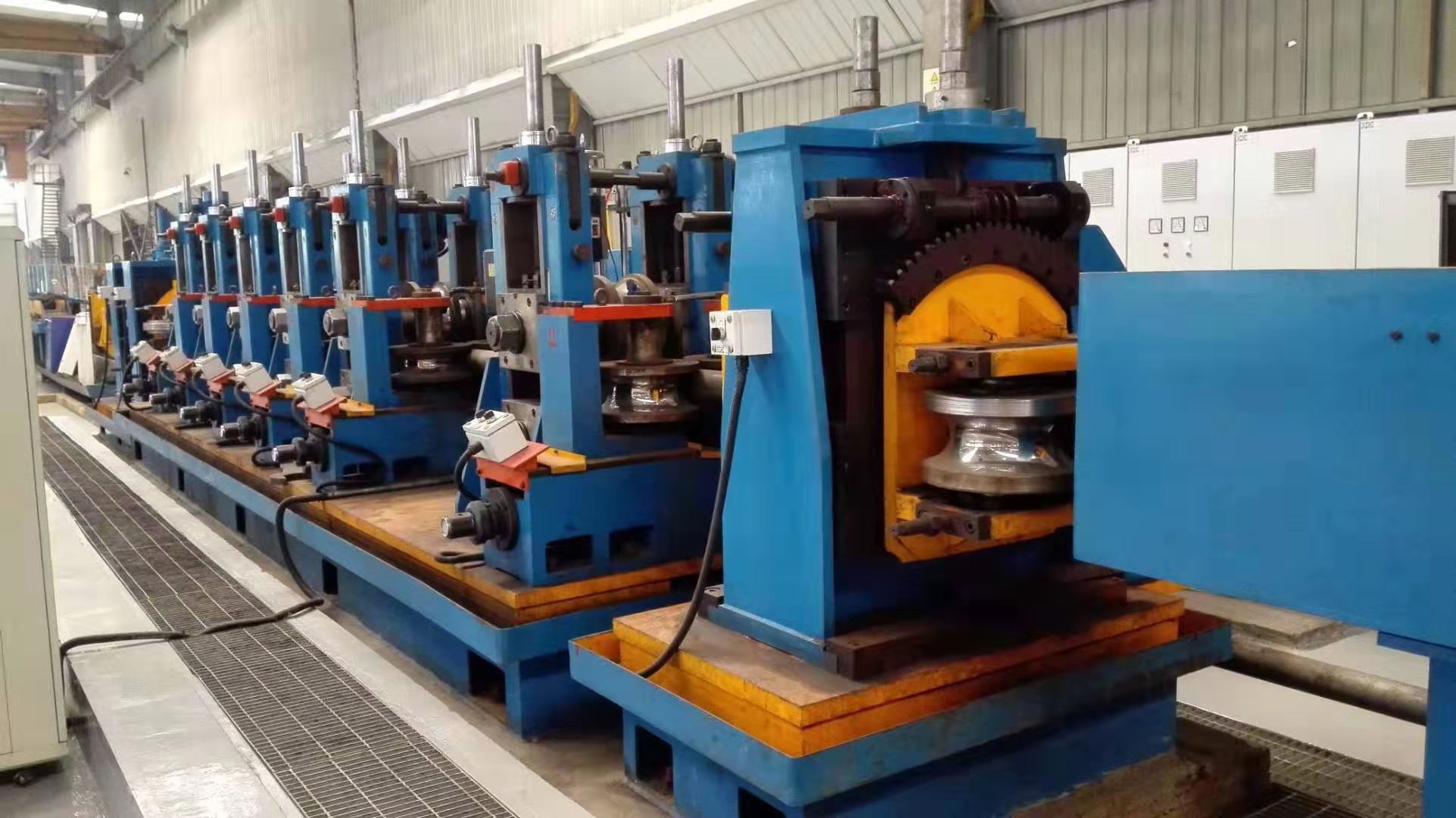
- Round-to-Square Forming: The machine forms a round mother
tube, welds it, and reshapes it into a square profile in the sizing section.
This process works well for smaller tube mills requiring high dimensional
precision on small diameters. However, it requires more roll tooling and
produces thinner corner profiles.
- Direct-to-Square Forming: Strip steel bends directly into a
square or rectangular cross-section before welding. This method eliminates the
need to form and reform round sections. As a result, you consume less electrical
energy, prevent corner thinning, and use fewer breakdown roll sets.
Manufacturers designing products to comply with structural standards like ASTM A500 cold-formed welded
structural tubing specifications must strictly control corner radius and
wall thickness consistency. Direct-to-square technology provides predictable
external radiuses across standard and heavy walls.
Checklist Item 2: Audit the Machine Builder’s True Manufacturing
Capacity
The industrial machinery sector includes many trading firms posing as
original equipment manufacturers. These operations outsource structural welding,
machining, and assembly to third-party workshops. This business model creates
quality variations and tolerance stacking across the machine bed.
1. The Pitfalls of Assembly-Only Vendors
When an assembly-only shop builds an electric resistance welding line,
machine beds rarely receive stress relief annealing. Thermal stresses remain
trapped in the steel plate. Over two or three years of vibration and mechanical
loading, the base plates twist.
Even a 0.5mm misalignment between breakdown stands and the weld box causes
strip edge mismatch, roll scuffing, and unstable weld seams. Sourcing from
non-manufacturing middlemen also drives up spare parts replacement costs over
the life of the machine.
2. The In-House Manufacturing Standard
Evaluate machine builders on their internal manufacturing infrastructure.
High-performance machinery requires tight tolerances across horizontal shaft
axes, vertical slide tracks, and bearing chocks.
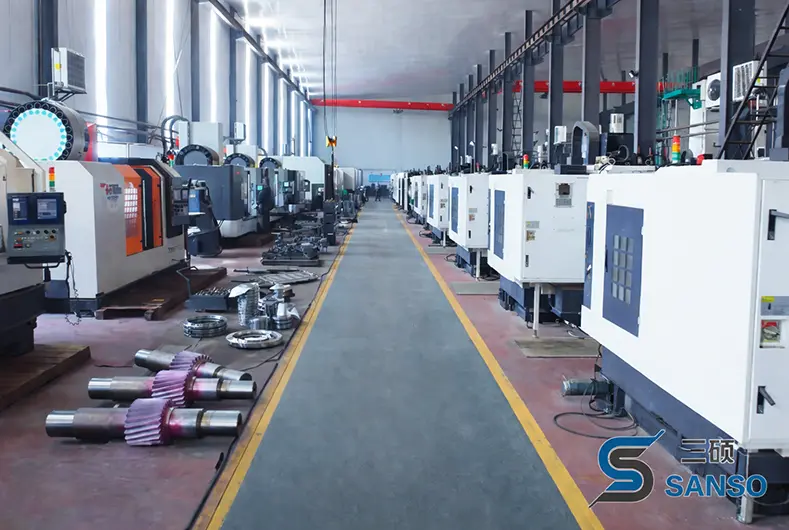
With over two decades of mechanical manufacturing experience, SANSO maintains
an in-house machining rate exceeding 90%. Excluding proprietary subcomponents
like bearings, motors, and hydraulic valves, SANSO manufactures the equipment
from raw steel plates to final sub-assemblies. Heavy fabrication bays, thermal
stress-relieving furnaces, and multi-axis CNC gantry milling centers ensure
every stand maintains parallel shaft alignment under full load.
Checklist Item 3: Demand Integrated Strip Preparation and Handling
Systems
A square tube mill is only as fast as its slowest entry or
exit module. Sizing stands and weld boxes cannot achieve high overall equipment
effectiveness (OEE) if the line stops for manual coil loading or unbundling.
1. Entry Strip Preparation
Continuous production requires uninterrupted raw material feed. Look for
these integrated front-end components:
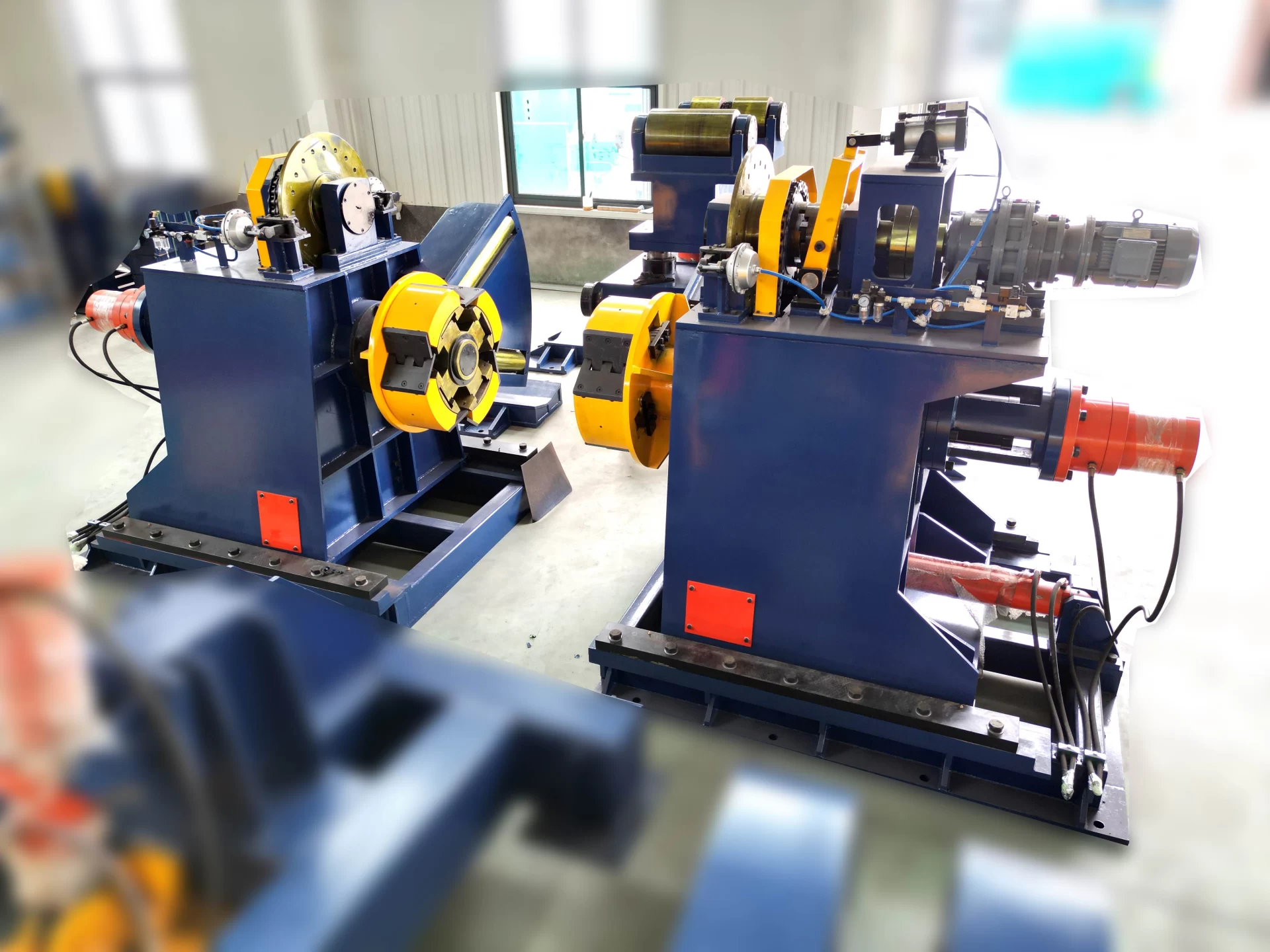
- Hydraulic Uncoilers: Look for dual-cone or expanding
mandrel designs with integrated snubber rolls to control high-strength,
spring-back coils safely.
- Pinch and Leveling Units: Eliminating coil set and surface
camber before the first breakdown pass prevents edge walk into the fin-pass
stands.
- Automatic Shear and End Welders: Manual TIG butt welding
causes prolonged line stoppages. Fully automatic shear welders trim scrap coil
ends square and join them in minutes using TIG, MIG, or plasma welding
heads.
2. Horizontal Spiral Accumulators
Vertical drop accumulators often scratch outer strip surfaces and take up
excessive workshop height. A horizontal spiral accumulator stores sufficient
steel strip buffer inside an expanded track.
This design allows the uncoiler operator to splice coil ends without stopping
the high-frequency welder downstream. Smooth continuous feeding prevents line
speed fluctuations that alter the weld seam heat input.
3. Automated Exit Finishing
Handling finished square structural sections manually introduces safety
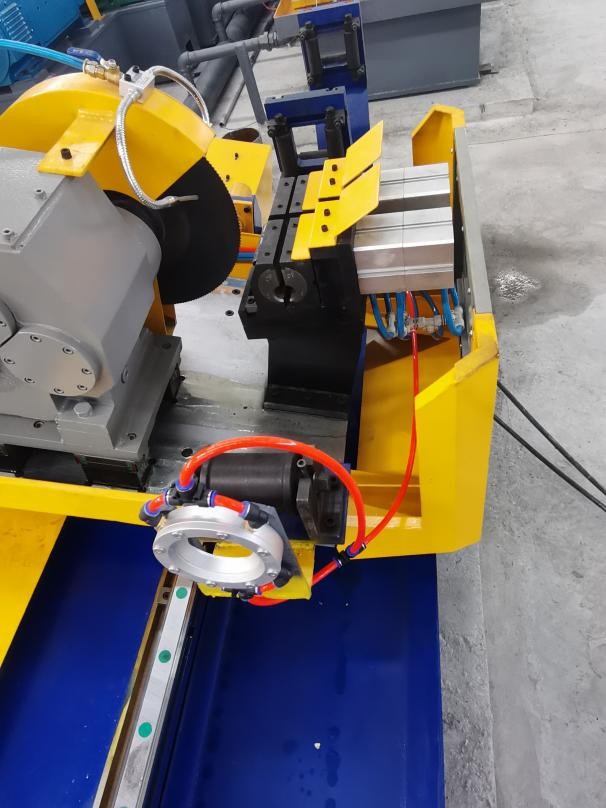
hazards and surface damage. Pair your line with an automated cold saw using
carbide blades to maintain square, burr-free cut ends. Downstream from the
cutoff, incorporate an automatic packing, stacking, and strapping machine.
Automated bundle strapping protects surface finishes, aligns bundle ends, and
frees operators for higher-value line monitoring tasks.
Checklist Item 4: Inspect Welding Controls and Drive Synchronization
Welding integrity determines pressure resistance and mechanical safety.
High-frequency induction or contact welding (HFW) requires stable heat input
synchronized with the mill line speed.
1. Solid-State High-Frequency Welders
Modern tube manufacturing lines utilize solid-state HFW power units using
MOSFET or SIC inverter topologies. These systems deliver electrical conversion
efficiencies above 85% compared to older vacuum tube systems.
Your welding power control unit must automatically adjust kilowatt output
according to line speed variations. Proper control prevents under-welded cold
laps during ramp-up and burning during line slowdowns. Aligning your welding
operations with parameters recognized by the American Welding Society helps preserve
consistent grain structure within the heat-affected zone (HAZ).
2. Closed-Loop Electrical Drive Systems
A rugged mechanical mill still requires sophisticated digital controls.
Poorly synchronized stand speeds pull or compress the steel tube between
successive forming passes, damaging drive gears.
Insist on digital PLC architectures using industrial systems from recognized
suppliers like Siemens, Omron, or Schneider Electric. Common-bus AC variable
frequency drives (VFD) allow each forming and sizing stand to match the linear
speed of the steel profile accurately. Closed-loop monitoring prevents excessive
roll wear and lowers power usage.
Checklist Item 5: Calculate Total Cost of Ownership (TCO) and Changeover
Speed
Capital equipment pricing represents only the initial cost layer. Operational
maintenance, tooling changeover downtime, and unexpected part replacements make
up the bulk of ownership expenses over ten to fifteen years.
1. Quick Tooling Changeover Technology
Batch sizes are getting smaller, requiring operators to swap rolls frequently
across different square and rectangular profiles. Traditional roll changes take
an entire shift, burning through valuable production capacity.
When selecting your line, evaluate fast-change features such as rafted
stands. In rafted systems, the entire cluster of vertical and horizontal stands
uncouples via hydraulic clamps and lifts out by crane. A pre-tooled replacement
raft drops in within an hour. For larger structural mills, automated
roll-positioning systems eliminate manual adjustment using motorized screw-downs
linked to digital encoders.
2. Mechanical Rigidity and Long-Term Wear
A light-duty mill framework deflects under continuous mechanical loading.
Wear on shaft splines, housing windows, and gear teeth increases rapidly when
stands flex under load. Heavier base weldments and thick bearing chocks dampen
mechanical vibrations and stabilize internal gear meshes.
Verify that your equipment supplier manufactures replacement spindles,
bearing housings, and gears in-house. When parts wear down years later, working
with an original builder guarantees precise replacement tolerances without
requiring custom fitting on your shop floor.
Technical Comparison: Common Mill Formats
The following table outlines performance considerations across typical tube
production formats:
| Feature | Conventional Round-to-Square | Modern Direct-to-Square |
|---|
| Tooling Investment | Requires full breakdown sets plus dedicated sizing tooling. | Reduces roll sets by sharing breakdown profiles across sizes. |
| Corner Wall Thickness | Corner thinning often ranges from 5% to 15%. | Uniform thickness across corners and side walls. |
| Power Consumption | Higher power consumption due to continuous reshaping passes. | Saves up to 10% to 15% in electrical forming power. |
| Yield Strength Handling | Work hardens corners significantly during round-to-square conversion. | Forms corners progressively with lower localized stress. |
| Product Application | Ideal for thin-gauge conduit, decorative, and furniture pipes. | Best for heavy-gauge structural, solar, and building
frameworks. |
Frequently Asked Questions (FAQ)
Q1: What mechanical design feature best prevents shaft deflection
during heavy-wall forming?
A1: Shaft deflection is minimized by choosing larger roll
shaft diameters made from forged 42CrMo alloy steel, supported by dual spherical
roller bearings on both sides of the stand. Solid cast-steel or heavy structural
plate stands that interlock directly into the machine bed provide the rigidity
needed to prevent shaft movement under load.
Q2: How does direct-to-square forming reduce tooling
costs?
A2: In direct-to-square forming, the breakdown stands bend
the strip corners directly into square geometry. This approach allows multiple
rectangular and square sizes to share the same breakdown rolls. You only need to
change specific corner and side components, cutting overall roll inventories
compared to full round-to-square sets.
Q3: What causes split seam welds on high-strength square
profiles?
A3: Seam splits typically stem from poor edge preparation,
unstable fin-pass squeeze pressures, or improper high-frequency heat input. If
the strip enters the weld squeeze rolls with camber or edge wave, the V-angle
shifts continuously, leading to cold laps or insufficient fusion along the weld
line.
Q4: Why is internal stress-relief annealing critical for welded
machine beds?
A4: Heavy structural welding introduces substantial thermal
stresses into steel plates. Without post-weld thermal stress relief, machine
beds will slowly warp over several years of mechanical vibration and load
cycles. This warping throws drive shafts and roll passes out of parallel
alignment.
Q5: What are the standard tolerances achievable on high-end square
tube lines?
A5: High-precision lines hold side dimension tolerances
within +/- 0.2mm to 0.5mm depending on profile size, maintain corner radiuses
within narrow customer specifications, and limit tube twist to less than 1mm per
meter length, adhering to international manufacturing guidelines published by
bodies like the International Organization for
Standardization.
Build Your Production Line on Reliable Engineering
Investing in an industrial square tube mill represents a
decade-long operational commitment. Prioritizing low initial quotes over
mechanical rigidity, in-house fabrication, and automated strip preparation leads
to lower product quality and ongoing maintenance downtime.
By auditing your machine builder's manufacturing facilities, selecting the
right forming method, and choosing synchronized drive automation, your mill will
operate smoothly and profitably for years to come.
SANSO combines two decades of manufacturing expertise with an in-house
fabrication rate above 90% to build dependable, high-precision tube lines.
Ready to modernize your operations? Contact the engineering
team at SANSO today for a detailed technical proposal, customized plant layout
design, and equipment ROI breakdown.