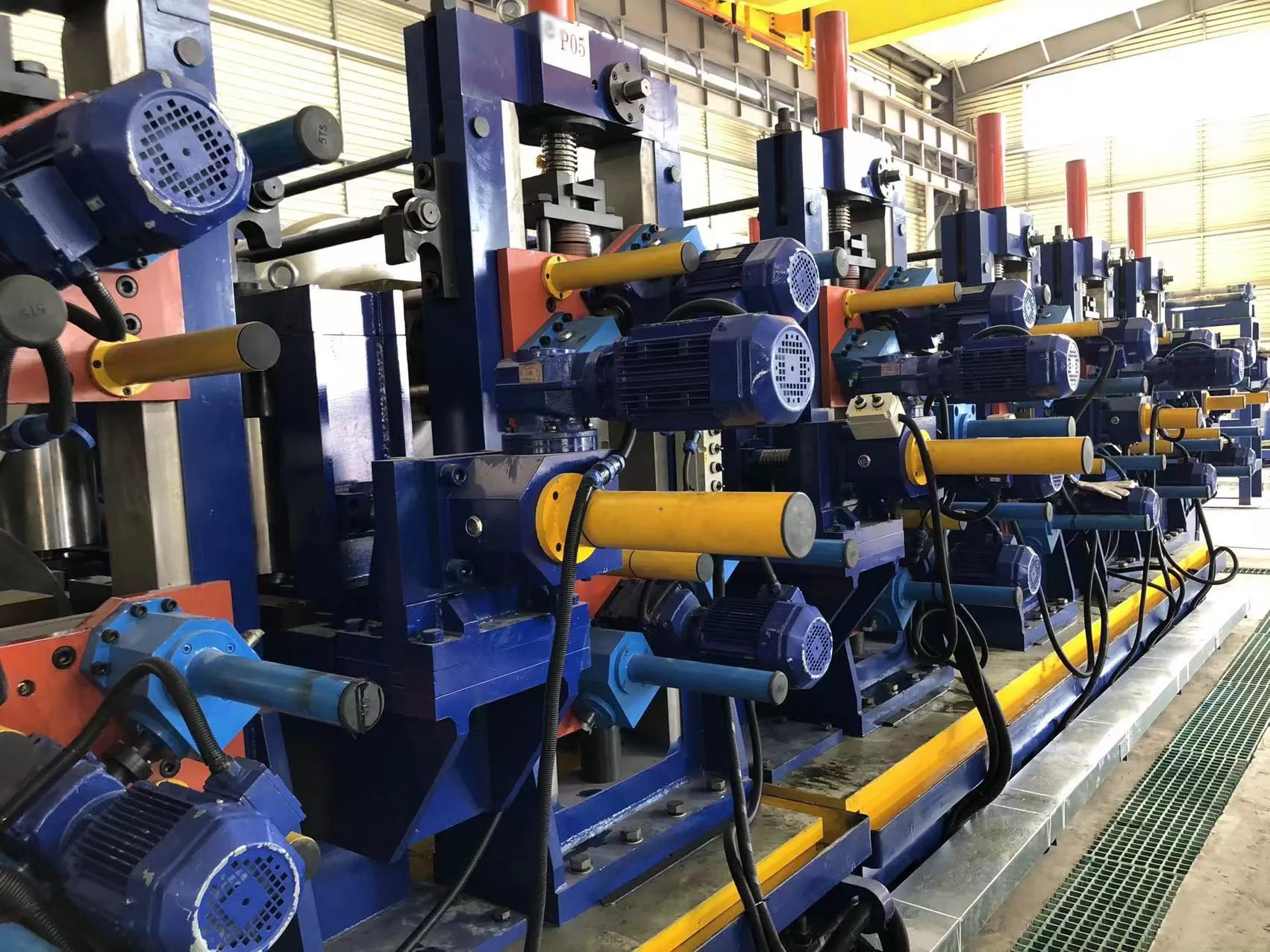
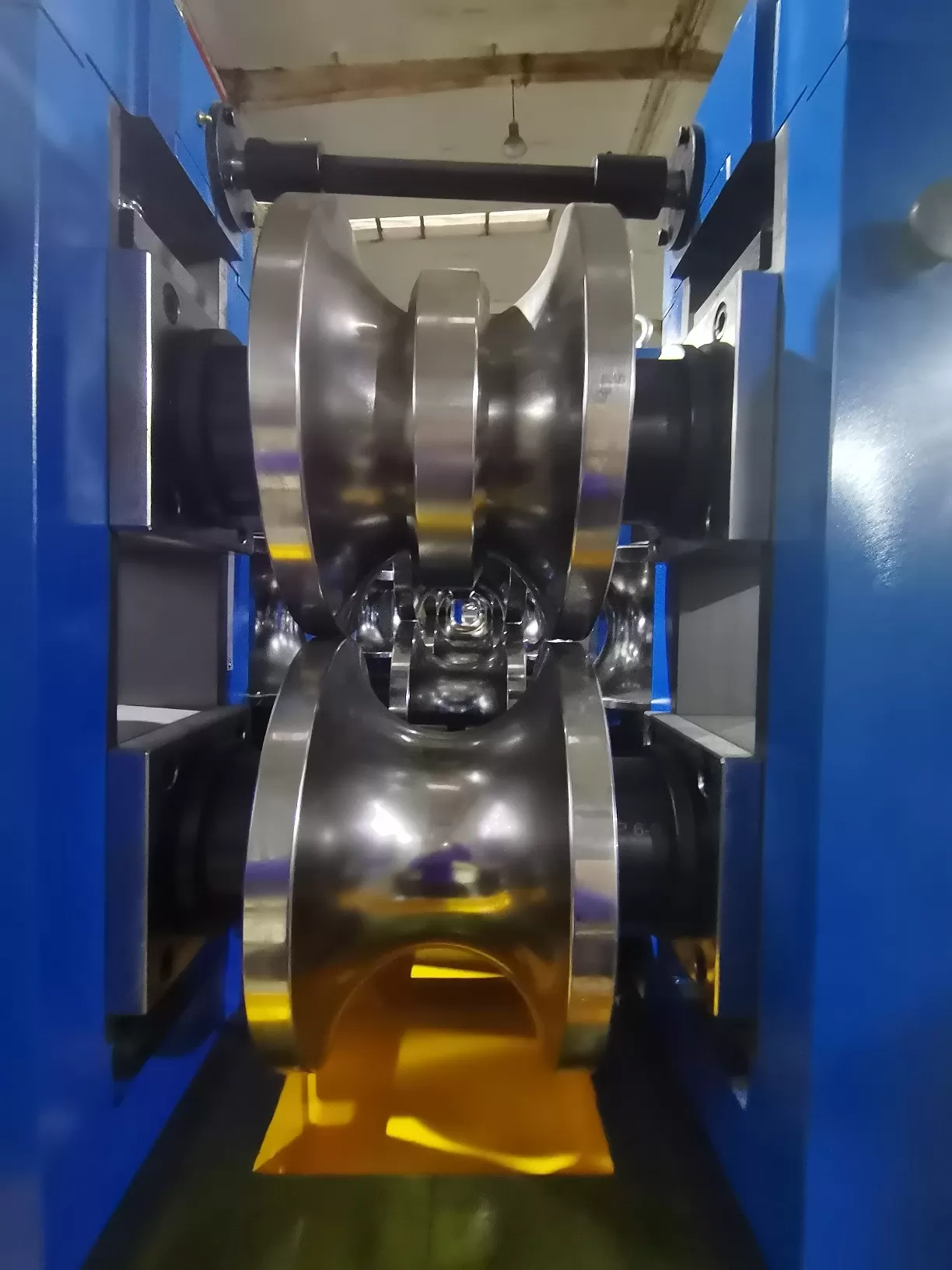
In continuous tube milling operations, the cutting element directly influences product quality, production continuity, and overall equipment effectiveness. Among the various cutting tools employed, the hss blade remains a cornerstone for many pipe forming and welding lines. Its performance, however, is not a given; it is the result of a complex interplay of material science, precision engineering, and operational discipline.
Tube producers frequently encounter issues such as inconsistent weld seam quality, accelerated blade wear, and unexpected downtime. These challenges often trace back to a limited understanding of the factors that govern hss blade behavior in high-stress environments. This article examines seven key factors that directly affect the performance and service life of high-speed steel blades in tube mills. The analysis is grounded in metallurgical principles, machining dynamics, and practical mill-floor experience.
SANSO has been supplying tube mill equipment and tooling solutions to the pipe manufacturing industry for over two decades. The insights presented here draw from that engineering heritage and field application knowledge.
1. Material Composition and Its Influence on HSS Blade Properties
The foundation of any cutting tool is its metallurgical composition. High-speed steel is a family of tool steels that maintain hardness at elevated temperatures, a property essential for continuous cutting operations. The performance of an hss blade begins with the precise balance of alloying elements.
Alloying Elements and Their Roles
Tungsten (W) and molybdenum (Mo) are the primary carbide formers in HSS, providing red hardness and wear resistance. The M2 grade, containing approximately 6% tungsten and 5% molybdenum, is a general-purpose workhorse for tube milling applications. For more demanding operations, M35 and M42 grades incorporate cobalt (Co) to enhance hot hardness and fatigue resistance. Cobalt strengthens the matrix, allowing the blade to retain cutting edge integrity under intermittent cutting conditions common in seam trimming and sizing operations.
Vanadium (V) contributes to fine, hard carbides that improve abrasive wear resistance. A higher vanadium content, as found in powder metallurgy HSS grades, produces a more uniform carbide distribution. This uniformity translates to consistent cutting performance and predictable wear patterns across the blades cutting edge. Chromium (Cr), present in all HSS grades, provides corrosion resistance and depth hardenability during heat treatment.
For tube mills producing high-strength or stainless steel pipes, the choice of HSS grade becomes particularly important. The abrasive nature of these materials demands a blade with higher vanadium and cobalt content to resist flank wear and cratering. Conversely, for mild steel and low-carbon applications, a standard M2 hss blade offers a favorable balance of performance and service life.
2. Blade Geometry and Cutting Edge Design
Material composition alone does not determine cutting performance. The geometry of the blade—specifically the tooth form, rake angle, clearance angle, and pitch—dictates how the blade engages with the tube surface. Improper geometry leads to increased cutting forces, heat generation, and accelerated wear.
The rake angle influences chip formation and cutting energy. A positive rake angle reduces cutting forces and promotes smoother chip flow, which is beneficial for thinner-walled tubes. A neutral or slightly negative rake angle, however, provides greater edge strength and is preferred for thicker sections or materials with high tensile strength. The selection must be tailored to the specific tube dimensions and material grade being processed.
Clearance angles prevent the blade flank from rubbing against the workpiece, which would generate frictional heat and promote adhesive wear. An insufficient clearance angle causes the blade to "drag" on the cut surface, leading to rapid flank wear and poor surface finish. Conversely, excessive clearance weakens the cutting edge, increasing the risk of chipping or fracture.
Tooth pitch and gullet depth are equally significant. A coarse pitch with deeper gullets accommodates higher chip loads and is suitable for larger diameter tubes or higher feed rates. A finer pitch provides a smoother cut with reduced vibration, which is advantageous for precision sizing operations. The selection of pitch must account for the chip evacuation capacity to prevent clogging and subsequent blade damage.
3. Heat Treatment and Hardness Optimization
Heat treatment transforms the as-rolled or forged HSS microstructure into a hardened, tempered state capable of withstanding cutting stresses. The austenitizing temperature, soaking time, quenching media, and tempering cycles are all variables that define the final hardness and toughness of the hss blade.
For tube milling applications, the target hardness typically ranges between HRC 64 and 68, depending on the grade and the specific operation. A harder blade (HRC 67-68) offers superior wear resistance but with reduced toughness, making it susceptible to chipping under interrupted cuts or if the mill has excessive vibration. A slightly lower hardness (HRC 64-65) provides greater impact resistance and is preferred for operations with inconsistent feed conditions or when processing materials with inclusions.
The tempering process, usually performed in two or three cycles, relieves residual stresses from the quenching stage and transforms retained austenite into martensite. Adequate tempering also ensures a uniform carbide distribution and stabilizes the microstructure, which prevents dimensional changes during service. An improperly tempered blade can experience premature edge failure due to untempered martensite or retained austenite that transforms during cutting, causing distortion and loss of edge sharpness.
Sub-zero treatment, or cryogenic processing, is sometimes applied to high-end HSS blades to convert retained austenite and enhance wear resistance. This process, when controlled correctly, results in a more complete martensitic transformation and a denser carbide structure, extending blade life in high-production tube mills. SANSO offers blades with optimized heat treatment profiles tailored to specific tube mill configurations.
4. Surface Finish and Coating Technologies
The surface condition of the blade, including its ground finish and any applied coating, influences friction, chip adhesion, and wear resistance. A ground surface with a fine finish reduces the coefficient of friction between the blade and the workpiece, lowering heat generation and improving chip evacuation.
Coatings such as titanium nitride (TiN), titanium aluminum nitride (TiAlN), and aluminum chromium nitride (AlCrN) provide a hard, lubricious layer that reduces adhesive wear and prevents material buildup on the cutting edge. TiN, with its golden color, is a common general-purpose coating that offers good wear resistance and reduced friction for mild steel applications. TiAlN and AlCrN, with higher oxidation temperatures, are better suited for high-speed operations and stainless steel processing, where cutting temperatures can exceed 800°C.
The coating thickness and adhesion quality are as important as the coating material itself. A thin, well-adhered coating provides the benefits of reduced friction without altering the blades critical edge geometry. Excessively thick coatings can dull the cutting edge or spall under impact, exposing the underlying steel to rapid wear.
Post-coating polishing or edge honing is sometimes employed to remove coating droplets and ensure a sharp, uniform cutting edge. This step is particularly relevant for tube mills producing welded pipes with stringent surface quality requirements, as any coating irregularity can transfer to the tube surface, affecting weld appearance or downstream coating adhesion.
5. Operational Parameters and Their Effect on Blade Wear
Even the best manufactured blade will underperform if the operational parameters are not correctly set. The cutting speed, feed rate, depth of cut, and coolant application are variables that directly impact the blades thermal and mechanical loading.
Feed Rate and Speed Optimization
Cutting speed is a primary determinant of tool temperature. For a given material, there is an optimal speed range that balances productivity against thermal damage. Operating below this range can cause built-up edge formation, while excessive speed leads to rapid softening of the blade material. For tube milling, the surface speed must be calculated based on the tube diameter and the blades position in the mill, with adjustments for the specific material being cut.
Feed rate per tooth determines the chip thickness and the cutting force. A feed rate that is too low results in thin chips that promote abrasive wear and edge rubbing. A feed rate that is too high increases mechanical loading, risking chipping or fracture. The optimum feed rate is one that produces a chip thick enough to carry heat away from the cutting zone but not so thick that it overloads the blades cutting edge.
Coolant application, whether flood, mist, or high-pressure directed, serves to reduce cutting temperature and lubricate the cutting interface. For HSS blades, maintaining a consistent coolant flow is essential to prevent thermal cracking and to flush chips away from the cutting zone. Inadequate coolant can lead to localized overheating and rapid loss of blade hardness, while excessive coolant can cause thermal shock if applied discontinuously.
Mill vibration and runout also affect blade performance. Excessive vibration produces micro-chipping and uneven wear patterns, significantly reducing blade life. Regular inspection of mill spindles, arbor alignment, and blade mounting ensures that the blade operates under stable conditions.
6. Maintenance Practices and Regrinding Strategies
Blade maintenance, particularly the regrinding process, is a factor often overlooked in tube mill operations. A blade that is reground without attention to proper geometry or surface finish will not perform to its potential, regardless of its original quality.
Regrinding should be performed on precision equipment with adequate coolant to prevent heat damage to the blades substrate. The grinding wheel specification and feed rate must be selected to avoid grinding burns, which create a softened layer that wears rapidly in service. A burnt blade will show discoloration and may have a reduced hardness at the cutting edge, leading to premature failure.
The regrinding interval is determined by the amount of wear on the cutting edge. Allowing a blade to run beyond its optimal wear limit increases cutting forces, generates excessive heat, and can lead to catastrophic blade failure. Conversely, regrinding too frequently reduces the total blade life and increases tooling costs. Establishing a wear monitoring system, whether by visual inspection, edge measurement, or tracking of cut quality, helps define the ideal regrinding schedule.
After regrinding, the blade should be inspected for edge quality, concentricity, and dimensional accuracy. A blade that is out of balance or has uneven tooth geometry will cause vibration and produce inconsistent cuts. SANSO provides regrinding services and technical guidance to help tube mills maintain optimal blade performance throughout the blades service life.
7. Quality Control and Performance Verification
Quality control measures for HSS blades extend beyond initial manufacturing to include in-process verification and post-service analysis. A comprehensive quality assurance program ensures that each blade meets the required specifications before being placed into service.
Hardness testing, using Rockwell or Vickers methods, verifies that the heat treatment process has achieved the target hardness range. A random sampling of blades from each production batch confirms consistency. Microstructural examination, using metallographic techniques, reveals carbide distribution, grain size, and the presence of any unwanted phases that could compromise performance.
Dimensional inspection of the blades mounting hole, outside diameter, and tooth geometry ensures that the blade will fit correctly and operate without runout. Even minor dimensional deviations can cause vibration and uneven wear, leading to reduced blade life and compromised tube quality.
In-service performance monitoring, such as tracking blade life per ton of tube produced or per meter of weld seam cut, provides empirical data for optimizing blade selection and operational parameters. Many tube mills maintain records of blade performance across different product lines, using this data to refine their tooling strategies. This approach enables continuous improvement and helps identify the most effective blade specifications for each application.
Frequently Asked Questions About HSS Blades in Tube Milling
Q1: What is the ideal hardness range for an HSS blade used in continuous tube welding lines?
A1: The ideal hardness typically falls between HRC 64 and 68, with the specific value depending on the tube material and mill conditions. For general mild steel applications, HRC 65-66 offers a good balance of wear resistance and toughness. For stainless steel or high-strength alloys, a harder blade (HRC 67-68) is often preferred, though the mills stability and cooling system must be capable of supporting the reduced toughness.
Q2: How often should an HSS blade be reground during tube mill operation?
A2: The regrinding interval is determined by the observed wear on the cutting edge and the quality of the cut. A common practice is to regrind when the flank wear reaches 0.3 to 0.5 millimeters, or when the tube surface finish begins to degrade. For high-production mills, this may be every 8 to 24 hours of operation, depending on material and feed rates. Establishing a scheduled inspection routine helps prevent unexpected downtime.
Q3: Can carbide blades replace HSS blades in tube milling operations?
A3: Carbide blades offer higher hardness and wear resistance, making them suitable for high-speed operations and abrasive materials. However, they are more brittle and have higher initial costs. HSS blades remain the preferred choice for many tube mills due to their toughness, ease of regrinding, and cost-effectiveness, particularly for operations with moderate speeds and variable feed conditions. The decision depends on the specific production requirements and economic analysis of each operation.
Q4: What are the primary causes of premature wear on HSS blades in tube mills?
A4: The leading causes include improper cutting speed or feed rate, inadequate coolant application, vibration or runout in the mill, incorrect blade geometry for the material, and suboptimal heat treatment. Additionally, regrinding without proper cooling or using an incorrect grinding wheel can introduce surface damage that accelerates wear. A systematic approach to setup and maintenance helps identify and address these issues.
Q5: How does coolant application affect the performance of an HSS blade?
A5: Coolant reduces cutting temperature, lubricates the cutting interface, and aids in chip evacuation. Consistent, directed coolant flow is essential for preventing thermal softening of the cutting edge. Intermittent coolant application can cause thermal shock, leading to cracks and edge chipping. The coolant type and concentration also influence lubrication effectiveness and corrosion protection for the blade and the tube surface.
Q6: What is the difference between M2 and M42 HSS blades for tube milling?
A6: M2 is a tungsten-molybdenum high-speed steel with good wear resistance and toughness, suitable for a wide range of tube milling applications. M42 contains additional cobalt (approximately 8%) and vanadium, providing higher red hardness and better wear resistance at elevated temperatures. M42 blades are preferred for high-speed operations, stainless steel processing, and applications where maintaining edge sharpness is critical. The choice between the two depends on the material being cut and the productivity requirements of the mill.
For inquiries regarding hss blade specifications, custom tooling requirements, or technical consultation for your tube milling operations, please reach out to our engineering team. SANSO offers comprehensive support for blade selection, performance optimization, and maintenance planning to help you achieve consistent production quality and operational efficiency. Our technical staff is available to discuss your specific application needs and provide recommendations based on your mill configuration and production targets.