High-Performance Tube Mill Equipment for ERW Lines | SANSOThe efficiency, precision, and reliability of an Electric Resistance Welding (ERW) line are directly determined by the quality and integration of its individual components. From coil handling to final cut-off, each piece of tube mill equipment must perform in perfect synchronization. This article provides a technical analysis of critical downstream machinery, addressing common operational bottlenecks and presenting engineered solutions for seamless tube manufacturing.
A modern ERW tube mill is a continuous, high-speed process. Any interruption or inconsistency in one station affects the entire line. Therefore, selecting tube mill equipment should not be a series of isolated purchases but a strategy for building a cohesive system. Manufacturers like SANSO, with over 20 years of experience, design and integrate complete lines for pipe diameters from 8 mm to 508 mm, ensuring all components—from the uncoiler to the packing machine—are matched for optimal performance at specified speeds and thicknesses.
Front-End Equipment: Ensuring Material Integrity from the Start
The quality of the finished tube is fundamentally established before forming begins. Front-end tube mill equipment must handle the strip steel precisely to prevent defects.
Uncoilers and Peeling Units: Modern uncoilers are not just holders; they provide controlled back tension. For critical applications, peeling units remove surface defects from the coil edges. SANSO's uncoilers are designed for various coil weights and widths, ensuring smooth payoff.
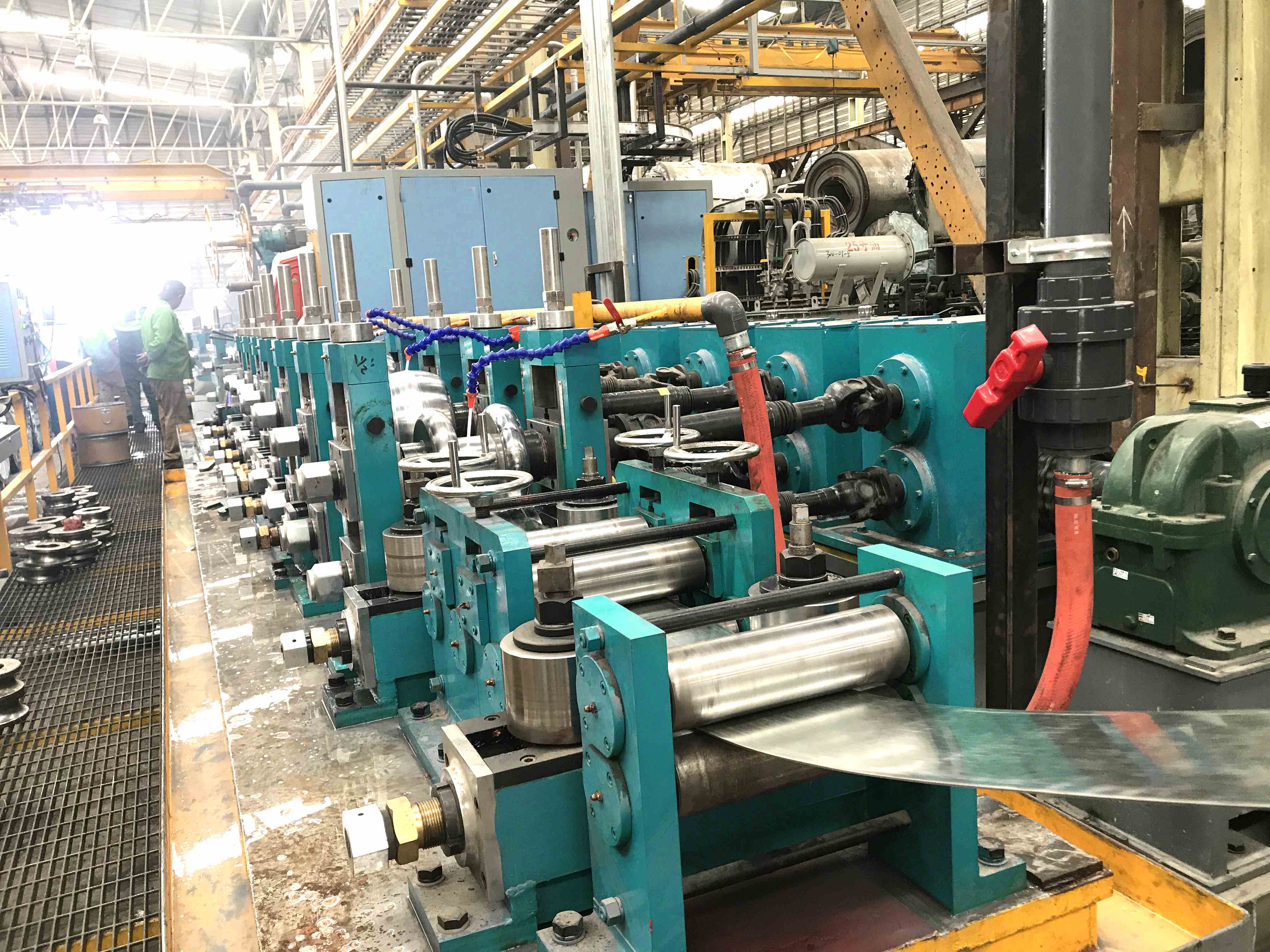
Pinch and Leveling Machines: This equipment is vital for correcting coil set and crossbow. A precision leveler with small-diameter work rolls and backup roll support ensures the strip is perfectly flat. This flatness is a prerequisite for the subsequent forming process, preventing edge wave and twist in the final pipe.
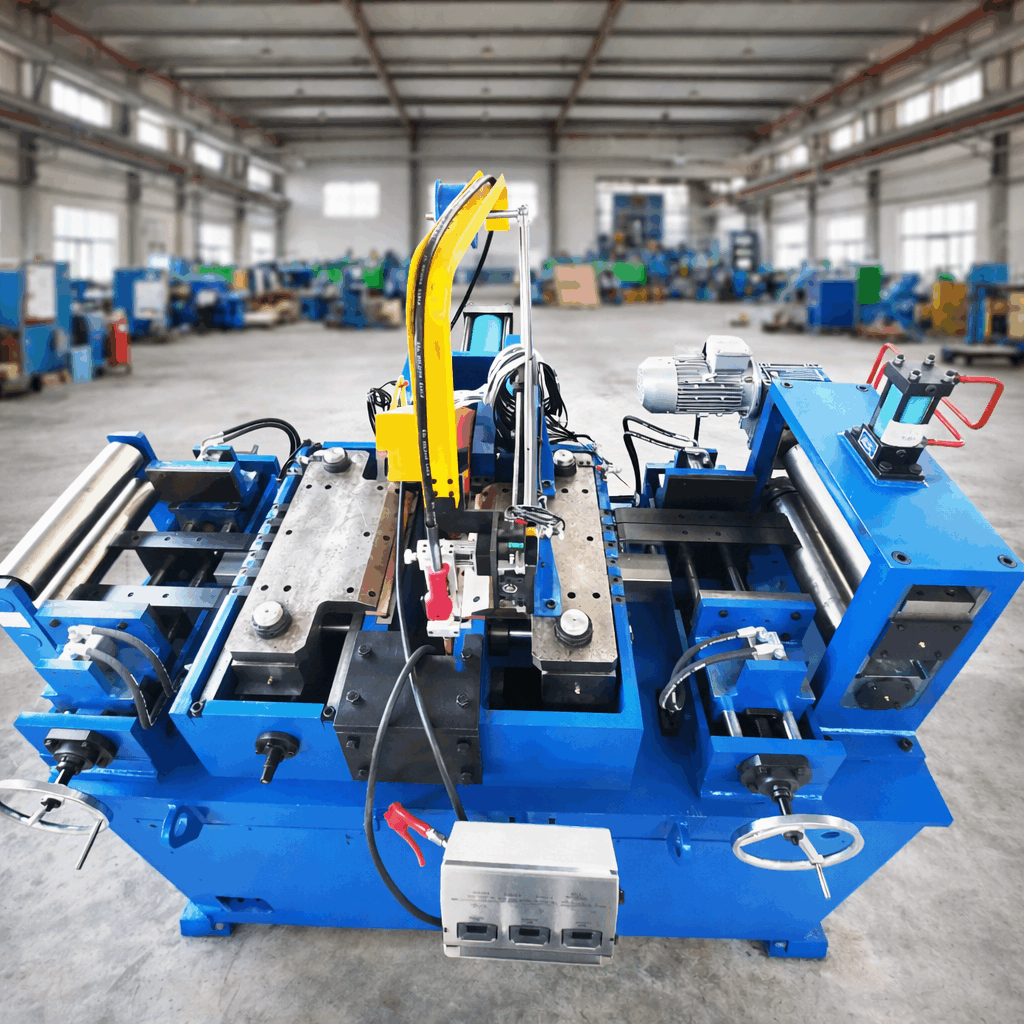
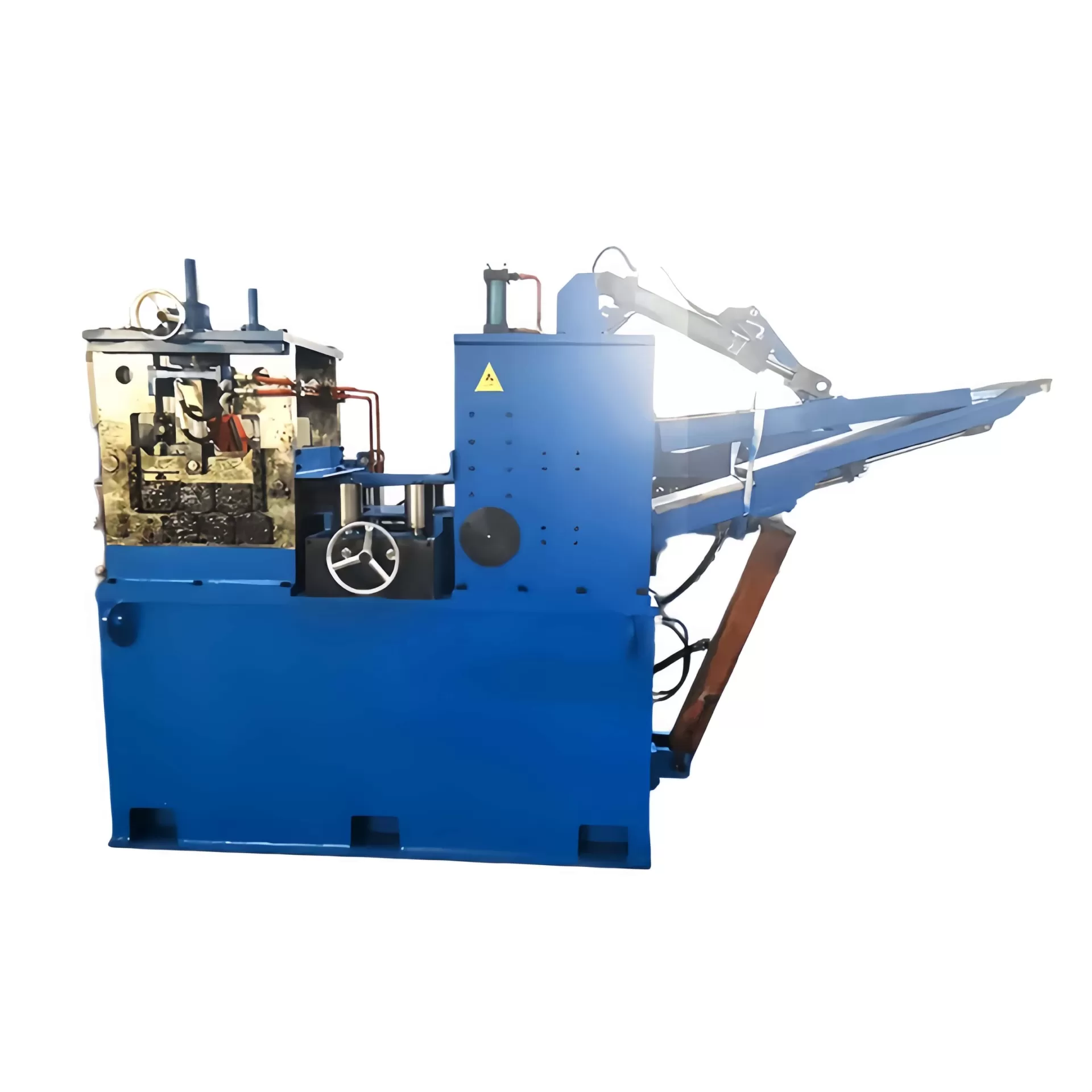
Shear and End Welding Machines: To enable continuous production, the trailing end of one coil must be joined to the leading end of the next. Automatic shear welders create a precise, burr-free weld in seconds. This minimizes material waste and allows downstream equipment, like accumulators, to function effectively without stopping the mill.
Core Forming and Welding Equipment: Precision in the Heart of the Mill
This section transforms the flat strip into a welded tube. The integration here dictates the final product's dimensional accuracy and mechanical properties.
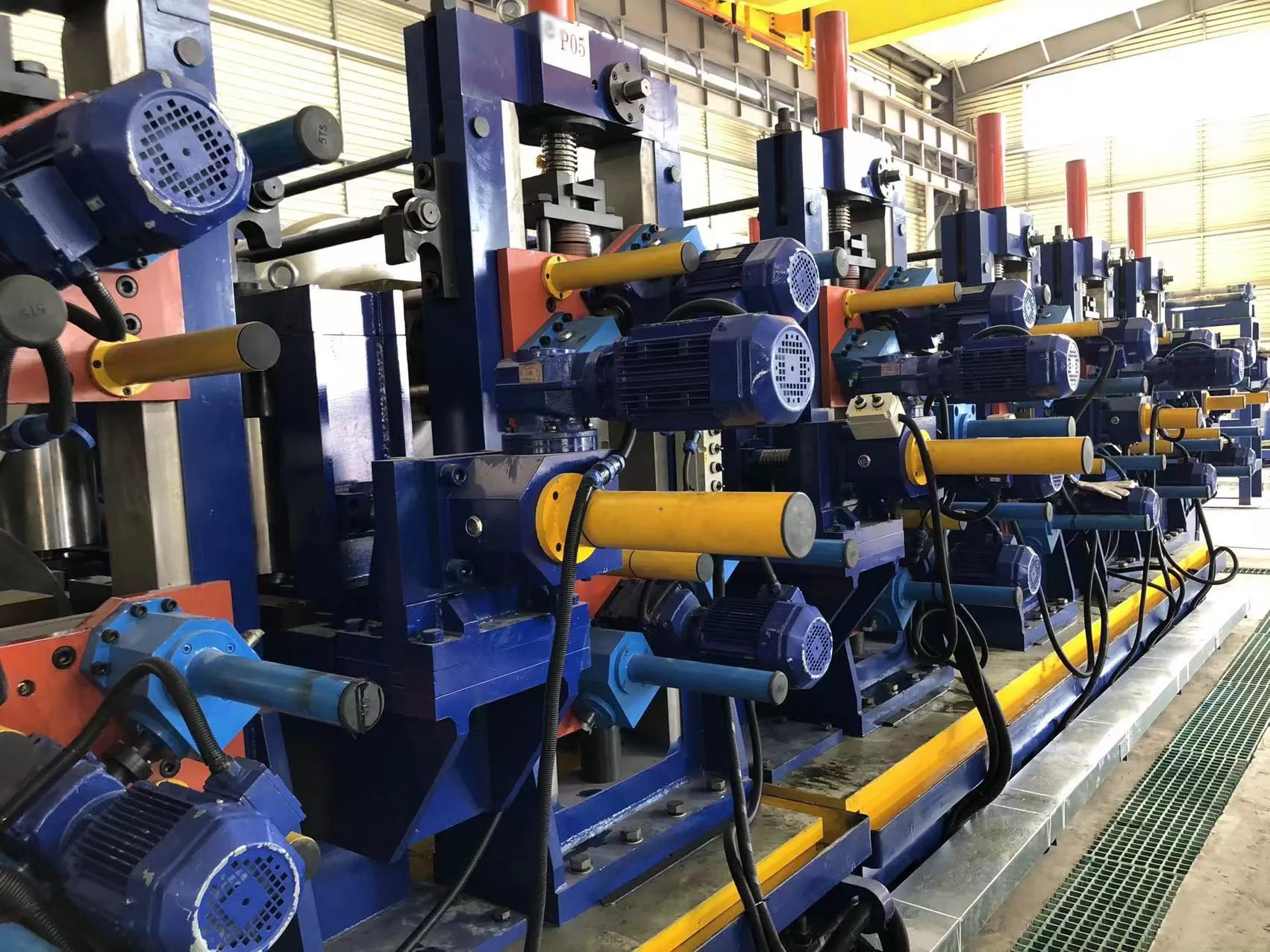
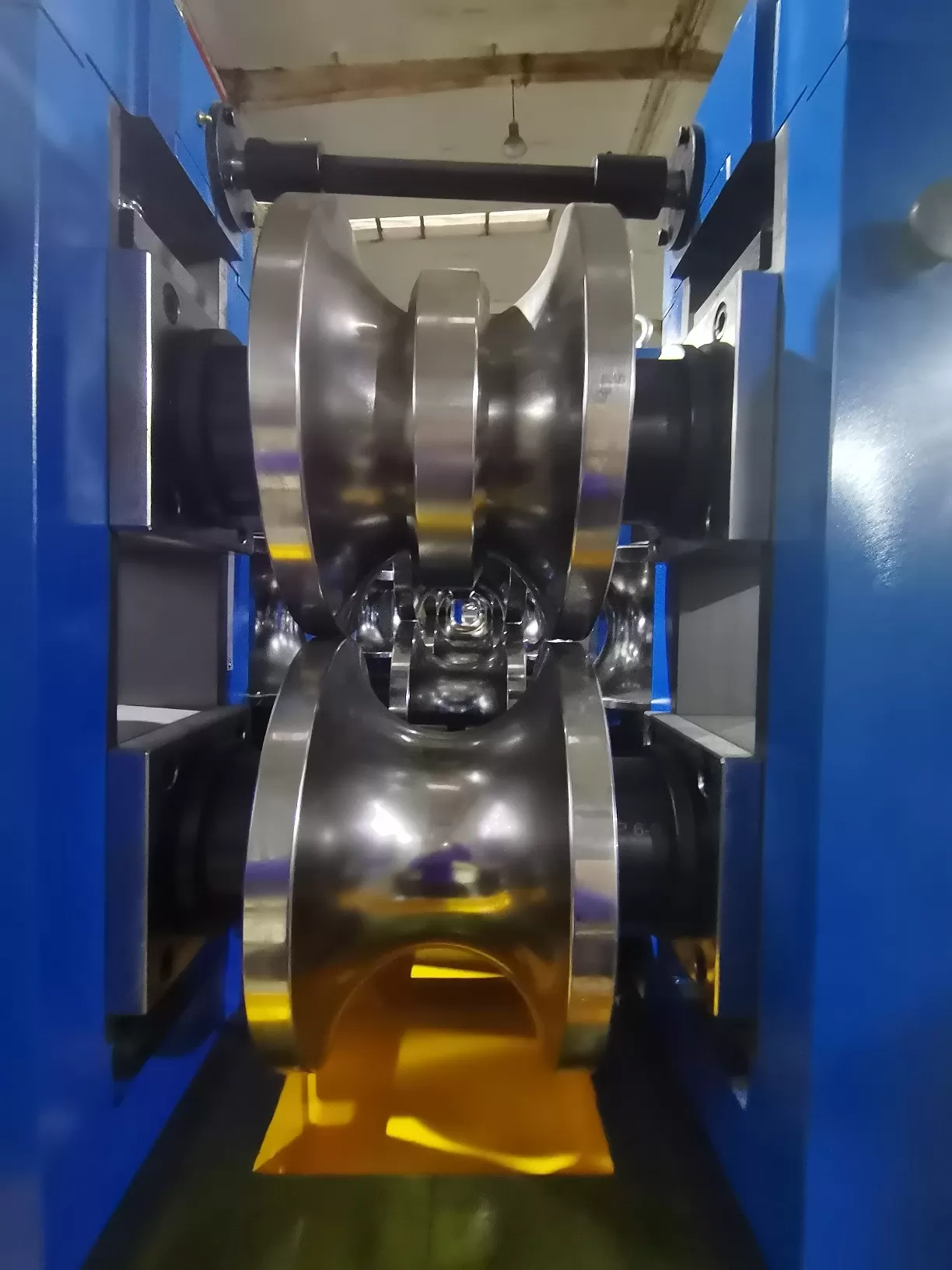
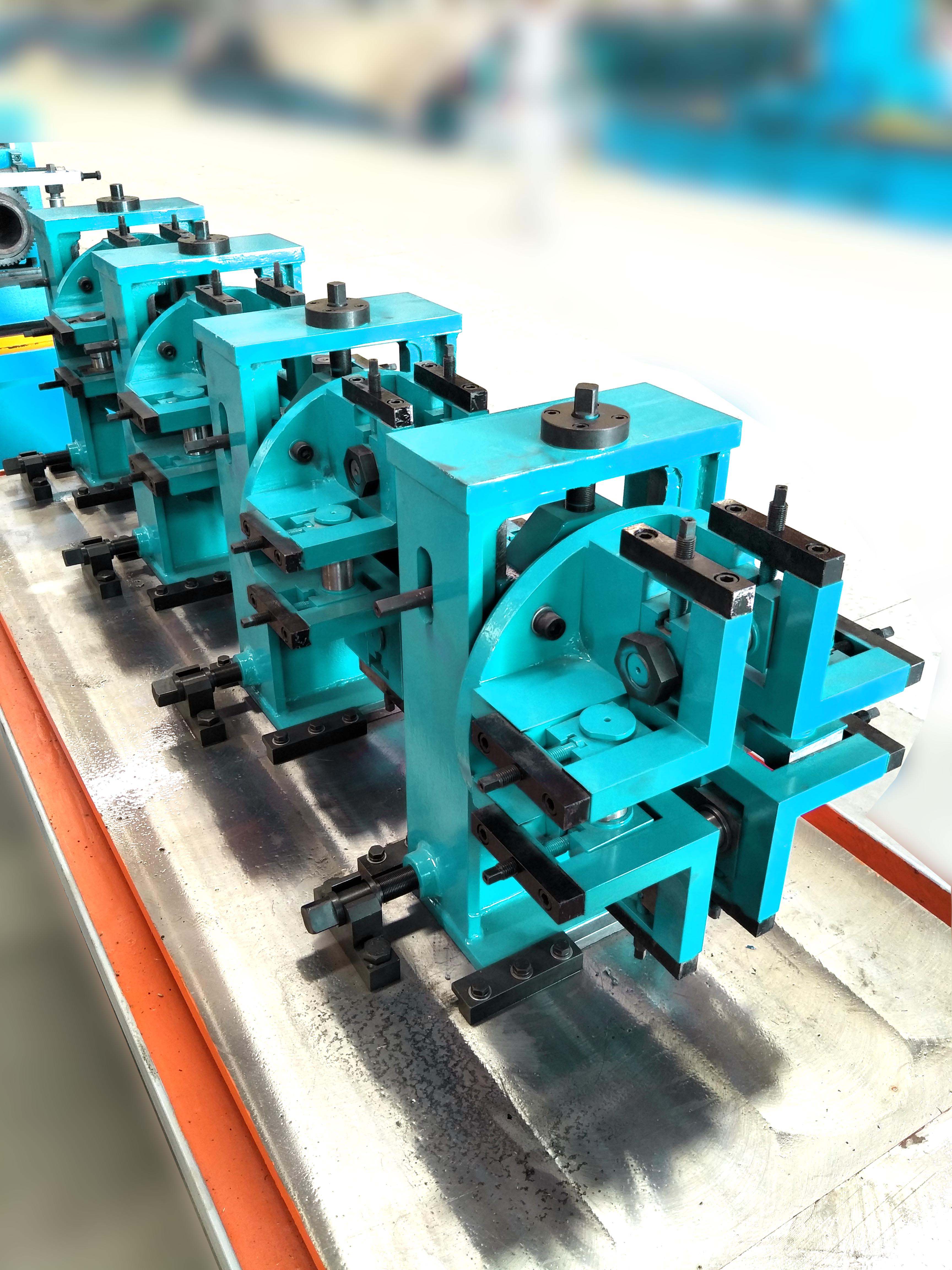
Forming and Sizing Mill Stands: The heart of the line, these stands contain the rolls that progressively shape the strip. The "flower pattern" design, material selection for rolls (often high-chrome or D2 steel), and the rigidity of the mill housing are critical. High-precision stands with minimal deflection ensure consistent wall thickness and OD control.
Solid State HF Welders: Modern solid-state welders offer superior control and energy efficiency compared to older vacuum tube designs. They provide stable welding power at high frequencies, crucial for creating a strong, defect-free weld seam. Integration with the forming mill's speed control allows for automatic power adjustment, optimizing heat input for varying wall thicknesses.
Seam Guidance and Squeeze Box: This equipment aligns the strip edges immediately before the weld point. Precision side rolls and induction coil positioning are essential for minimizing the weld flash and ensuring consistent wall distribution.
Downstream Equipment: Finishing and Handling at Line Speed
After welding, the tube must be sized, cut, and prepared for shipment. This tube mill equipment must match the maximum line speed to avoid becoming a bottleneck.
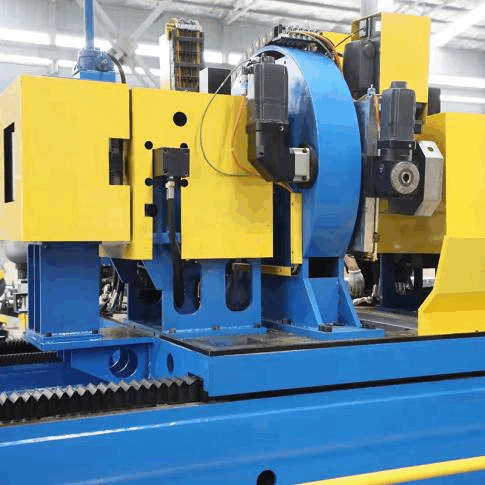
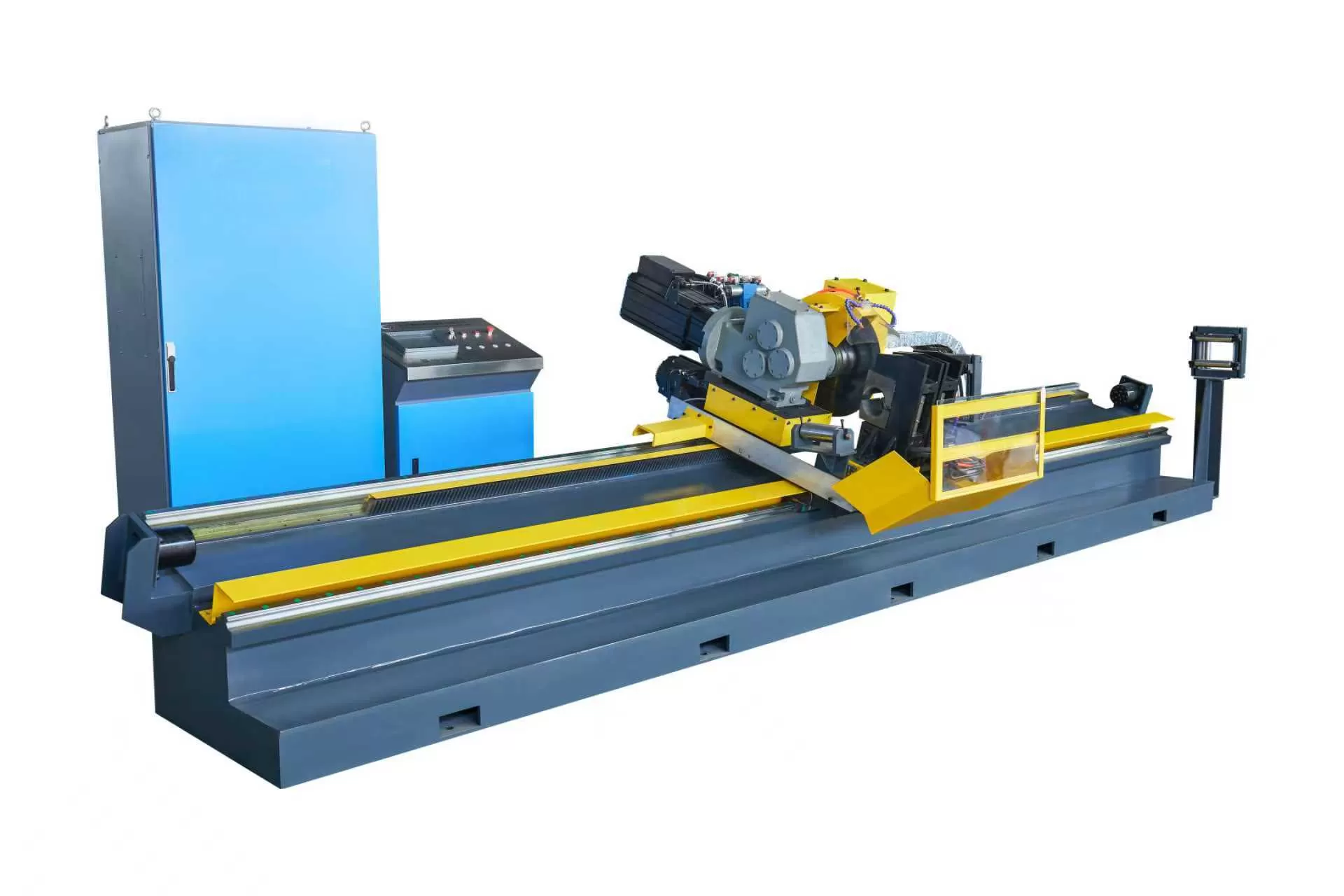
Flying Saws: These cut the moving tube to precise lengths without stopping the mill. High-speed flying saws use servo-driven carriages that match the tube's speed. Burr-free cutting and precise length tolerances are key performance indicators, often controlled by advanced PLC systems.
Pipe Packing Machines: Automated packing systems, from simple bundling to fully automated strapping and stacking, improve safety and efficiency. Integrating a packing machine directly with the cut-off saw streamlines the end of the line, reducing manual handling.
Cooling and Straightening Tables: Proper cooling of the welded tube relieves stresses. Subsequent straightening, often using multi-roll rotary straighteners, ensures the final product meets straightness specifications required by end-users in construction or automotive industries.
One of the most strategic components for ensuring continuous operation is the tube mill accumulator. Located between the strip preparation section and the forming mill, its function is to store material. When the entry section stops to weld a new coil, the accumulator continues to feed the forming mill, allowing production to proceed uninterrupted.
Horizontal Spiral Accumulators vs. Cage Accumulators
Two primary technologies dominate the market, each with specific application advantages:
Horizontal Spiral Accumulators: These provide a large storage capacity in a relatively compact footprint by looping the strip in horizontal spirals. They are ideal for high-speed mills (over 60 m/min) producing smaller to medium diameter pipes (up to ~219 mm). SANSO's horizontal accumulators are known for gentle strip handling, minimizing surface marking.
Cage Accumulators: Using a series of rotating cages, these are excellent for wider, thicker, or higher-strength materials often used in structural and line pipe applications (e.g., API 5L grades). They provide robust control and can handle significant strip tension, which is beneficial for maintaining strip shape during storage.
The choice between these accumulator types depends on the product mix, material properties, and target production speeds. Proper integration ensures the accumulator's entry and exit bridles maintain precise tension control, preventing strip slippage or stretching.
Addressing Industry Pain Points with System Integration
Manufacturers often face challenges like high scrap rates, long changeover times, and unpredictable maintenance. A holistic approach to tube mill equipment selection directly mitigates these issues.
Reducing Scrap with Precision Controls: By integrating sensors across the equipment—such as edge position controls on the uncoiler and seam guides before the welder—the line can make micro-adjustments in real-time. This reduces setup scrap and maintains tolerances during long runs.
Minimizing Downtime with Quick Change Systems: For job shops producing many different sizes, quick roll change systems for the forming and sizing mills are essential. SANSO offers solutions like cartridge-type stands that allow an entire set of rolls to be changed in minutes, not hours.
Predictive Maintenance Strategies: Modern drives and sensors generate data. Monitoring vibration in the mill stands, current draw on motors, and temperature in bearings allows for predictive maintenance. This prevents unexpected breakdowns of critical tube mill equipment.
Conclusion: Building a Cohesive and Efficient ERW Line
The performance of an ERW tube mill is the sum of its parts. Selecting high-quality, precisely integrated tube mill equipment—from the initial uncoiler to the final packing machine—is the most effective strategy for achieving high throughput, superior product quality, and operational profitability. By partnering with an experienced manufacturer like SANSO, which designs and builds complete systems for the full 8–508 mm diameter range, producers can ensure every component works in harmony, transforming potential process bottlenecks into a competitive advantage. The result is a reliable, flexible, and high-speed production line capable of meeting the most demanding market specifications.
Frequently Asked Questions (FAQ)
Q1: What are the essential components of a basic ERW tube mill line?
A1: A complete ERW line typically consists of: an uncoiler to hold the coil, a pinch and leveling machine for strip flattening, a shear and end welder for coil joining, an accumulator for continuous operation, a forming mill with roll tooling, a high-frequency welder, a scarfing unit to remove weld flash, a sizing mill for final dimensions, a flying saw for cutting to length, and a run-out table or packing machine for finished pipe handling.
Q2: How does a tube mill accumulator improve production efficiency?
A2: The accumulator acts as a material buffer. When the front section of the mill stops to weld the end of one coil to the start of the next, the accumulator continues to feed stored strip to the forming and welding section. This allows the core of the mill to run continuously at full speed, eliminating stop-start cycles that reduce efficiency and can affect weld quality.
Q3: What factors should be considered when selecting roll tooling material?
A3: Key factors include production volume, the material being formed (e.g., carbon steel, stainless, high-strength alloys), and the required surface finish. For high-volume runs of standard carbon steel, D2 tool steel with high hardness (58-62 HRC) is common. For abrasive materials or extreme production runs, carbide-inserted rolls may be justified. The roll design must also consider the specific flower pattern to minimize material stress.
Q4: How can I reduce changeover time on my tube mill equipment?
A4: Implementing quick change systems is the most effective method. This includes using cartridge-type or cluster-type roll stands for the forming and sizing sections that can be rolled out and replaced as a unit. Standardizing setup procedures, using digital positioning indicators, and employing offline roll preparation stations can also dramatically reduce the time between production runs.
Q5: What is the difference between a solid-state HF welder and an older vacuum tube welder?
A5: Solid-state welders use semiconductor components to generate high-frequency current, making them significantly more energy-efficient (often over 85% efficient) compared to vacuum tube welders (around 50-60% efficient). They offer more precise power control, faster response to line speed changes, greater reliability, and require less maintenance as they have no tubes that wear out or need replacement.