In modern industrial infrastructure, the role of consistent and defect-free
welded pipe cannot be overstated. Mill pipe — the output of
continuous forming, welding, and sizing lines — serves as the backbone for
energy transportation, structural frameworks, fluid handling, and mechanical
applications. However, achieving superior weld microstructure, precise outer
diameter control, and flawless surface finish across extended production runs
requires a deep mastery of roll forming mechanics, high-frequency induction
welding, and real-time process stabilization. This article offers a technical
examination of modern mill pipe manufacturing,
addressing industry pain points, emerging technologies, and field-proven
solutions for high-volume tube mills.
Core Technical Aspects of Modern Mill Pipe Production
The production of welded mill pipe involves a sequence of
tightly controlled stages: uncoiling, strip edge preparation, forming into an
open seam tube, high-frequency welding (HFI or HFW), scarfing, sizing,
straightening, and cutting to length. Each stage imposes specific demands on
equipment rigidity, tooling precision, and process monitoring. Below are the
critical subsystems that define mill pipe quality:
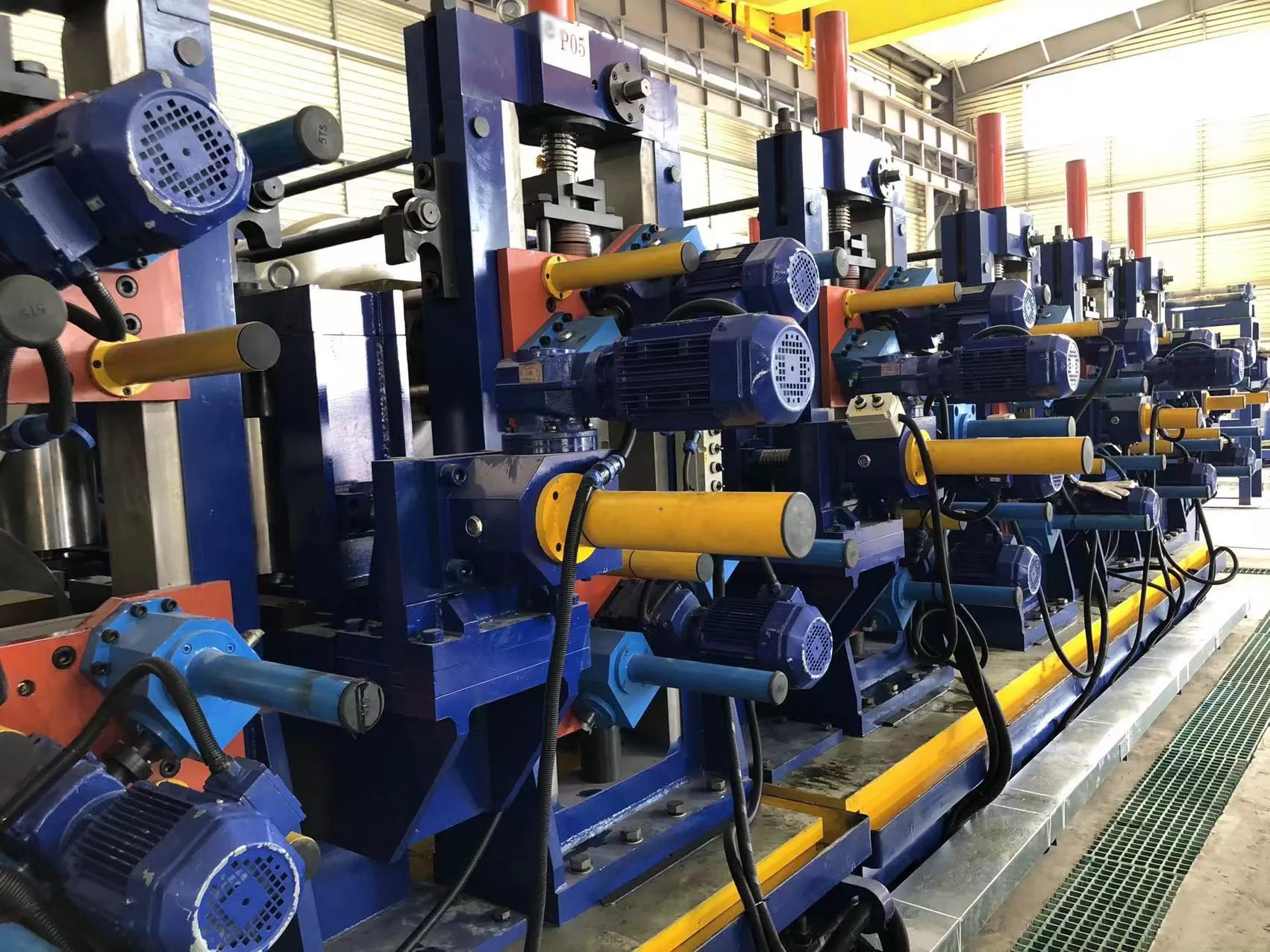
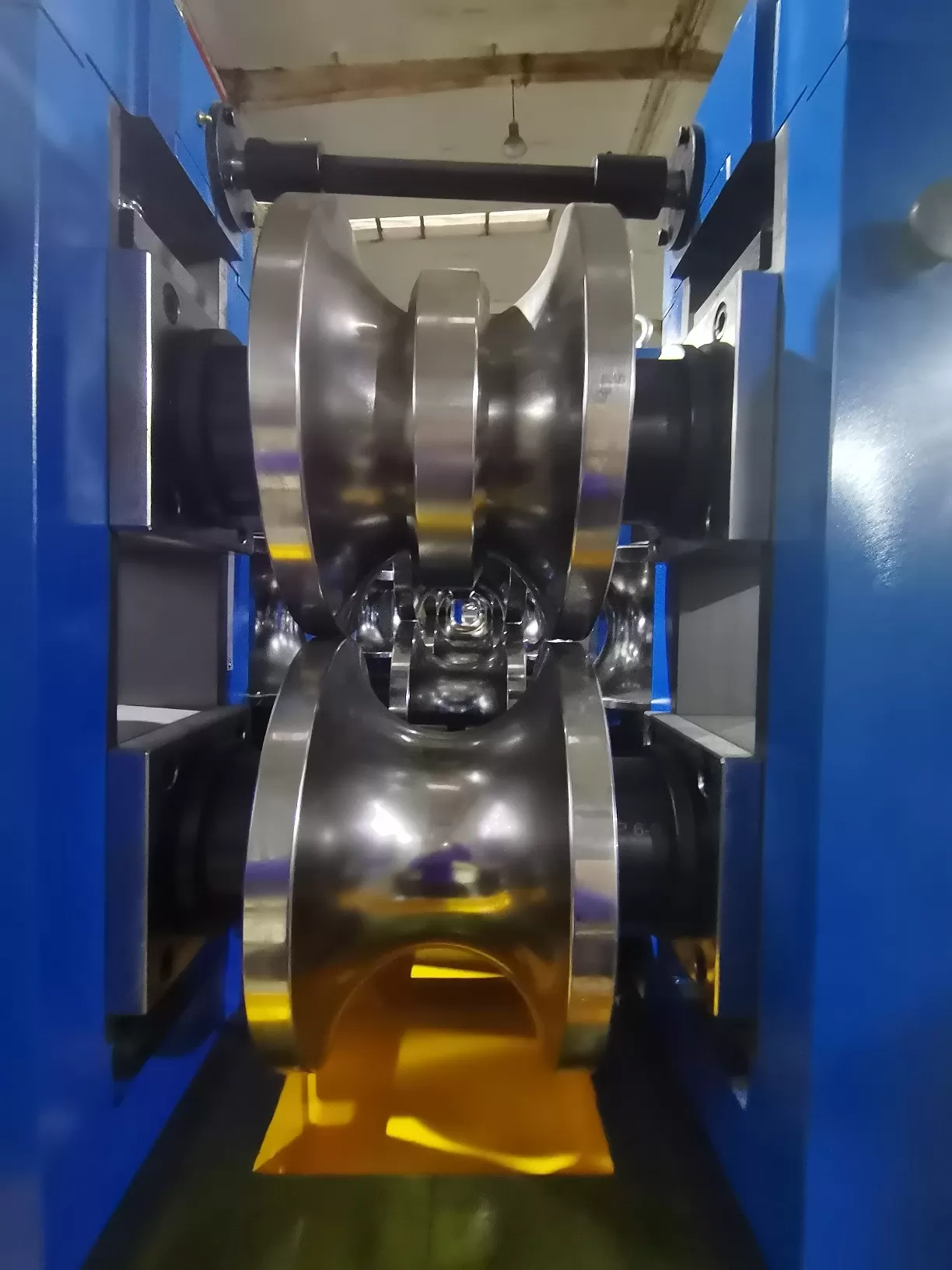
Forming section (breakdown, pre-finish, finish passes): Roll tooling geometry determines the strip-to-tube transition. Finite element
analysis (FEA)-optimized roll profiles minimize edge buckling and residual
stress.
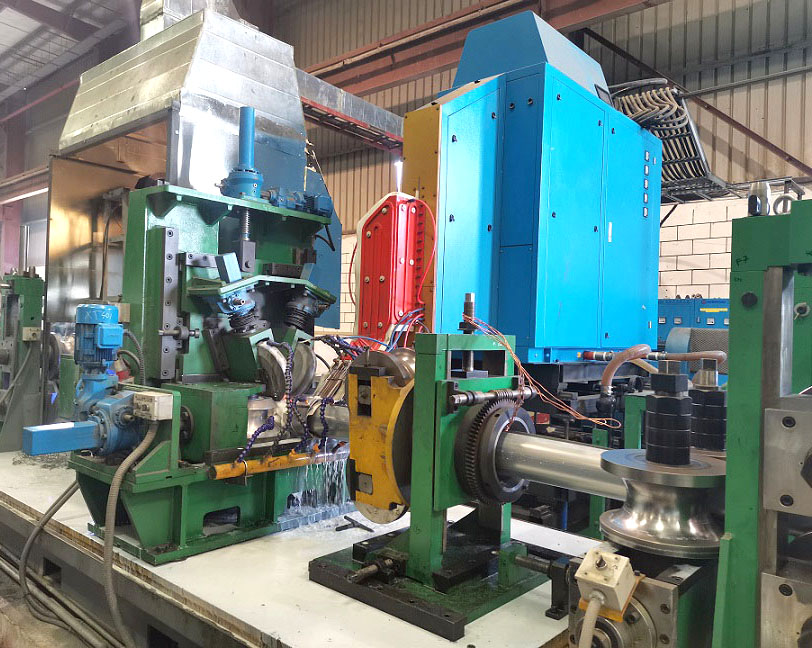
Welding zone: High-frequency induction coils (100–800 kW)
concentrate energy on the Vee angle. Impeder positioning and magnetic real-time
adjusters control heat input and weld penetration.
Sizing and straightening stand: Multi-stand turks heads and
straightening rolls correct ovality, camber, and reduce residual bending
moment.
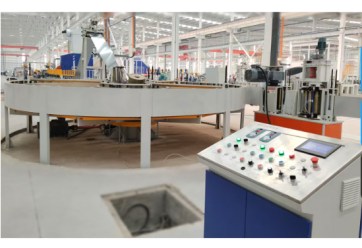
Accumulator section: Horizontal or vertical loop
accumulators decouple strip loading from the forming process, enabling
continuous welding line operation at speeds up to 120 m/min.
For high-strength steel grades (API 5L X52–X80, ASTM A106 Gr.B, stainless
steels 304/316), forming forces increase by 30–45%. Rigidity of the mill housing
and roll shaft diameter become decisive for maintaining consistent wall
thickness reduction. Without precision-engineered mill stands, wall eccentricity
can exceed 5% of nominal thickness, leading to rejection downstream.
Addressing Critical Industry Pain Points in Seamless Weld Pipe Lines
Even experienced pipe manufacturers encounter recurring obstacles when
scaling production. From material springback to weld seam oxidation, these pain
points directly affect the final mill pipe yield and plant
profitability. The most frequent issues observed in global tube mills
include:
Weld seam inconsistency: Fluctuations in strip edge
condition, mill speed, or induction coil tuning create lack-of-fusion or
excessive flash formation. This results in premature failure during hydrostatic
testing.
Chatter marks on external surface: Caused by roll vibration
or inadequate lubrication, these periodic marks compromise corrosion coating
adhesion and aesthetic grade requirements.
Tooling wear and rapid roll degradation: Processing
abrasive materials (e.g., galvanized or HRPO steel) accelerates roll wear,
altering the forming arc radius every 300–500 tons.
In-process weld temperature control: Without closed-loop
pyrometry, overheating causes grain coarsening in the heat-affected zone (HAZ),
lowering impact toughness below 27 J at 0°C.
Solving these demands more than standard maintenance intervals.
Forward-thinking plants employ real-time weld monitoring
systems (thermographic imaging + eddy current arrays) paired with
automated welding power modulation. Similarly, roll wear compensation can be
implemented via screwdown positioning encoders that adjust roll gaps in
increments of 0.01 mm. For continuous strip feeding, a high-performance
accumulator dampens tension peaks that would otherwise deform the forming zone.
Mill pipe producers
adopting these integrated controls routinely reduce scrap rates from 2.5% to
below 0.8%.
Advanced Technologies Enhancing Mill Pipe Consistency and Throughput
The shift toward Industry 4.0 data acquisition has revolutionized traditional
tube mill operations. Key innovations now available for mill
pipe lines deliver measurable improvements in uptime and geometric
precision. Among these, three technologies demonstrate the highest return on
investment:
Closed-Loop Forming with Force Feedback
Hydraulic roll stands equipped with load cells continuously monitor forming
forces across each pass. When deviation exceeds set thresholds (e.g., +12%
bending force), the PLC automatically adjusts upper roll penetration to equalize
edge tension. This eliminates the common "banana effect" in long-length
pipe.
Inline Eddy Current and Ultrasonic Testing
Positioned immediately after the sizing section, these non-destructive
testing (NDT) modules detect longitudinal and transverse flaws in real time.
Defective sections are traced back to specific weld parameters or strip coil
batches, allowing root-cause correction without halting the entire line.
Modular Accumulator Design with Strip Tracking
Modern horizontal loop accumulators incorporate laser strip edge sensors and
servo-driven pinch rolls. The accumulator not only provides material storage for
coil splicing but also actively centers the strip before entering the forming
section. This reduces edge wave formation by 90%, a common precursor to weld
defects. Many reliable mill pipe lines now integrate this
accumulator-based strip guidance as standard.
SANSO has engineered its tube mill
systems to incorporate these adaptive technologies from the ground up. By
eliminating legacy friction clutches and replacing them with independent AC
vector drives on each forming stand, the company's platforms allow per-pass
speed ratio tuning — a crucial capability when forming high-strength duplex
stainless steel mill pipe. mill pipe producers using
such individualized drive control report 22% faster changeover between diameter
families.
Application Segments Demanding Premium Mill Pipe Quality
Not all welded pipe applications tolerate the same deviation limits. Critical
industries enforce stringent standards that mandate advanced mill
pipe manufacturing protocols. Understanding these end-use requirements
helps line operators justify investments in higher-tier equipment:
Oil & Gas conveyance (API 5L, ISO 3183): Requires
Charpy V-notch impact values ≥40 J at 0°C, maximum hardness 22 HRC, and 100%
volumetric NDT. Only mills with precision weld current control and online
tempering can consistently meet PSL2 specifications.
Structural and construction piles (EN 10219, ASTM A500): Demand tight corner radii and consistent flat side dimensions for RHS/SHS
sections. Roll tooling design must compensate for material springback at the
weld corners.
Boiler and heat exchanger tubes (ASTM A178, A214): Require
clean internal bead profile (scarfing accuracy within ±0.1 mm) to prevent
localized overheating and stress corrosion cracking.
Precision mechanical tubing (DIN 2393, EN 10305): Demands
absolute concentricity and surface roughness Ra ≤ 1.6 µm for subsequent cold
drawing or hydraulic cylinder applications.
Each segment imposes distinct requirements on weld scarfing tool geometry,
annealing temperature uniformity, and downstream straightening regimes.
SANSO collaborates with pipe mills
to tailor the forming sequence specifically to the target standard, whether it
be high-frequency induction line for structural pipe or contact welding for
sanitary tubing.
How SANSO Integrates Reliability into Mill Pipe Systems
While individual components such as welders or accumulators are widely
available, the true engineering challenge lies in their harmonized integration.
SANSO approaches mill
pipe line design as a unified mechanical-electrical system, where each
station’s dynamics are simulated prior to manufacturing. The company’s
proprietary mill alignment protocol — using laser interferometry on all forming
stands — ensures that cumulative roll gap errors remain below 0.03 mm over the
entire 30 m forming length. For plant operators, this translates to immediate
benefits:
Straightness deviation ≤ 1.5 mm per 3 m length (exceeding ASTM A53
requirements).
Weld flash uniformity without periodic over-scarfing, reducing tooling wear
by 40%.
Accumulator loop control that actively compensates for incoming strip crown
variations.
Reduced start-up scrap from 20 pipes to just 4 pipes after coil
splicing.
Furthermore, SANSO offers remote operational tuning for
existing mill pipe lines using its proprietary diagnostics
package. By analyzing vibration signatures and motor torque curves, engineers
identify bearing failures or lubrication deficiencies 2–3 weeks before they
cause production stoppages. This predictive maintenance approach, combined with
high-rigidity mill housings, has helped numerous fabricators achieve OEE
(Overall Equipment Effectiveness) scores above 82% for continuous welded pipe
operations.
Conclusion: Optimizing Your Mill Pipe Production for Competitiveness
Achieving superior mill pipe quality no longer relies on
operator intuition alone. The combination of closed-loop forming control,
real-time weld monitoring, and precision accumulator strip guidance delivers
measurable gains in yield, dimensional consistency, and compliance with
international standards. As mills face rising demand for high-strength materials
and shorter delivery cycles, investing in modular, data-ready equipment becomes
a competitive necessity.
To explore how tailored mill configurations can address your specific product
mix — from structural square pipes to API line pipes — consult with engineering
specialists who understand both roll forming physics and production
economics.
Ready to upgrade your mill pipe output and reduce
reject rates? Contact the SANSO technical team for a line audit and customized improvement proposal. Send your inquiry now
→
Frequently Asked Questions (FAQ) – Mill Pipe Manufacturing
Q1: What typical dimensional tolerances can a modern mill pipe line
achieve?
A1: With a properly calibrated forming
mill (rigid stands + precision roll tooling), you can achieve outside diameter
tolerances of ±0.5% of nominal OD for ASTM A53 Grade B pipe, and wall thickness
tolerances of ±0.15 mm for sizes up to 168 mm OD. For high-frequency induction
welded pipe, straightness can be maintained within 1.0 mm per meter using
multi-roll straighteners.
Q2: How does accumulator technology directly influence mill pipe
surface quality?
A2: An accumulator that maintains
constant back tension (typically 1.5–2.5 kN) prevents micro-slip between the
strip and forming rolls. Without this tension control, intermittent jerking
causes chatter marks and edge galling. Modern horizontal accumulators with
servo-driven pinch rolls reduce surface defects by 70% compared to simple loop
pits.
Q3: Which materials are best suited for high-frequency induction
welded mill pipe?
A3: HFI welding works optimally
with low-carbon steels (C ≤0.22%), HSLA grades (e.g., S355J2H), and ferritic
stainless steels (409, 430). For fully austenitic stainless (304/316), contact
welding or laser hybrid is preferred to avoid chromium carbide precipitation. In
all cases, strip edge preparation (milling or shearing) must leave a burr-free
surface less than 10 µm high for stable HFI penetration.
Q4: What maintenance schedule extends the life of mill pipe forming
rolls?
A4: Implement a predictive lubrication
cycle: re-grease roll bearings every 300 operating hours using high-EP lithium
complex grease. Inspect roll profiles with a contour gauge after every 800 tons
of production. Regrinding should occur when the radius deviation exceeds 0.08 mm
from the original CAD profile. SANSO recommends storing spare
roll stands in climate-controlled cabinets to avoid micro-corrosion.
Q5: How can I convert an existing ERW line to produce tighter
tolerance mill pipe for hydraulic applications?
A5: Upgrades should focus on three areas: (1) adding a turks head sizing block with
four independently adjustable rolls, (2) implementing in-line wall thickness
monitoring with ultrasonic sensors, and (3) installing a driven straightening
machine with skewed rolls. SANSO offers retrofit kits for
legacy mills, providing guaranteed OD ovality below 0.3% without replacing the
entire forming section.
For technical proposals or to schedule a mill audit, please submit
your specification sheet and target pipe dimensions via our inquiry form. A
SANSO applications engineer will respond within two business
days.