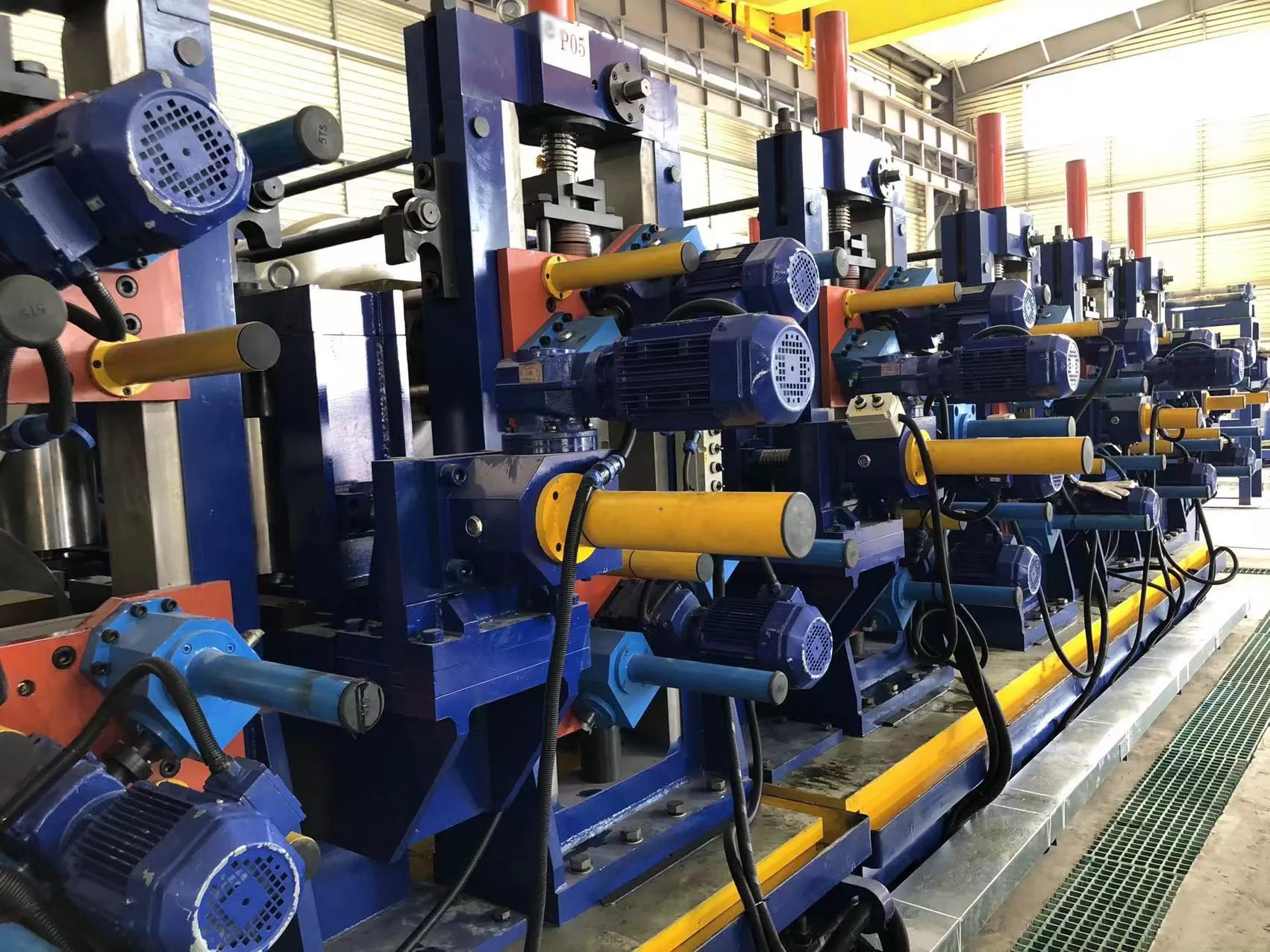
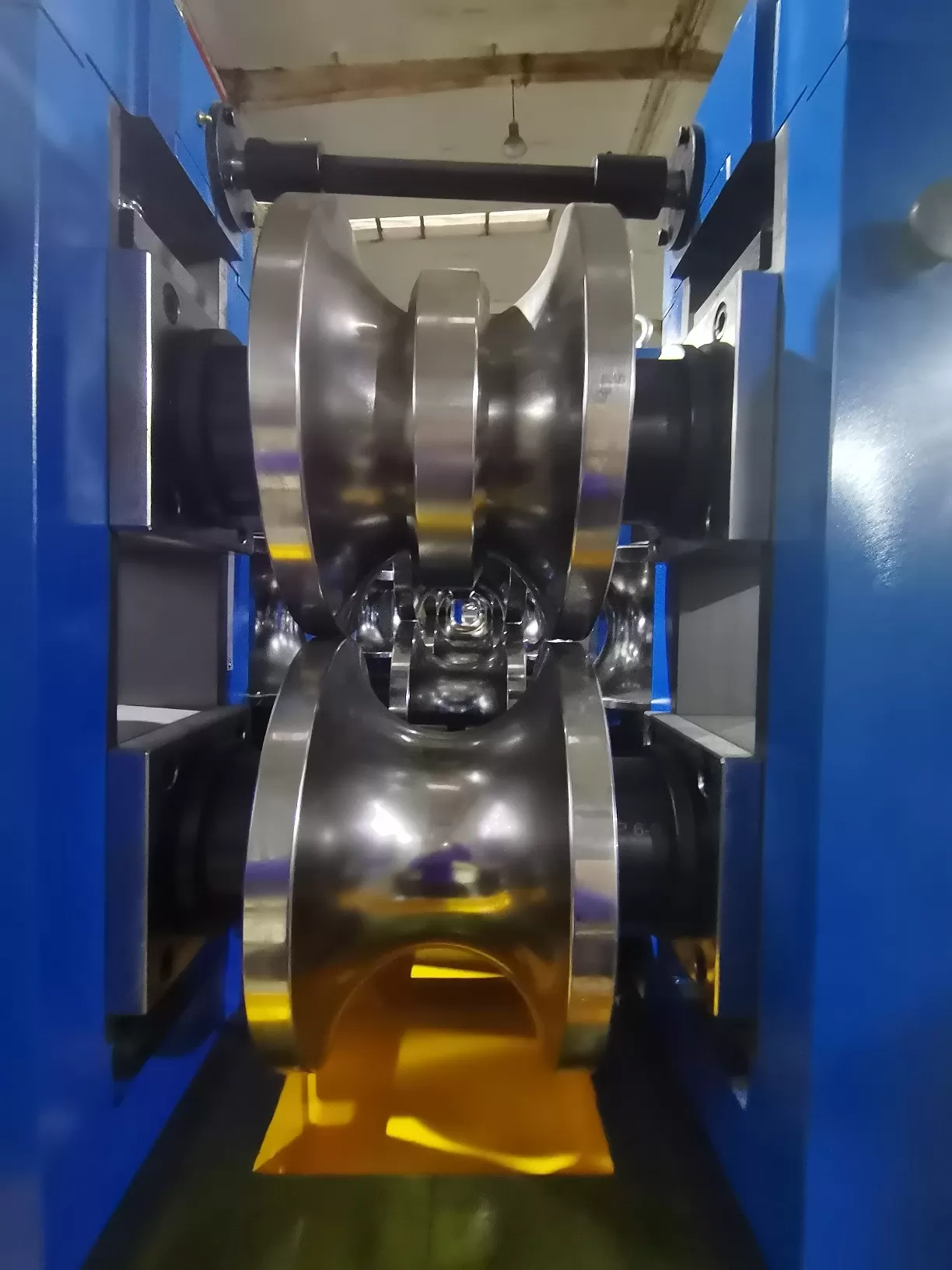
In high-frequency (HF) electric resistance welding (ERW) for steel tubes, the
ferrite
rod core — commonly known as the impedor core — directly dictates weld
integrity, production speed, and energy efficiency. For mill operators and
technical managers, selecting and maintaining the correct magnetic core is not a
commodity decision; it is a metallurgical and electromagnetic balancing act.
This article provides a detailed engineering perspective on how ferrite
rod core parameters interact with tube forming dynamics, and how SANSO tube mill systems are
designed to leverage these components for repeatable, high-integrity welds.
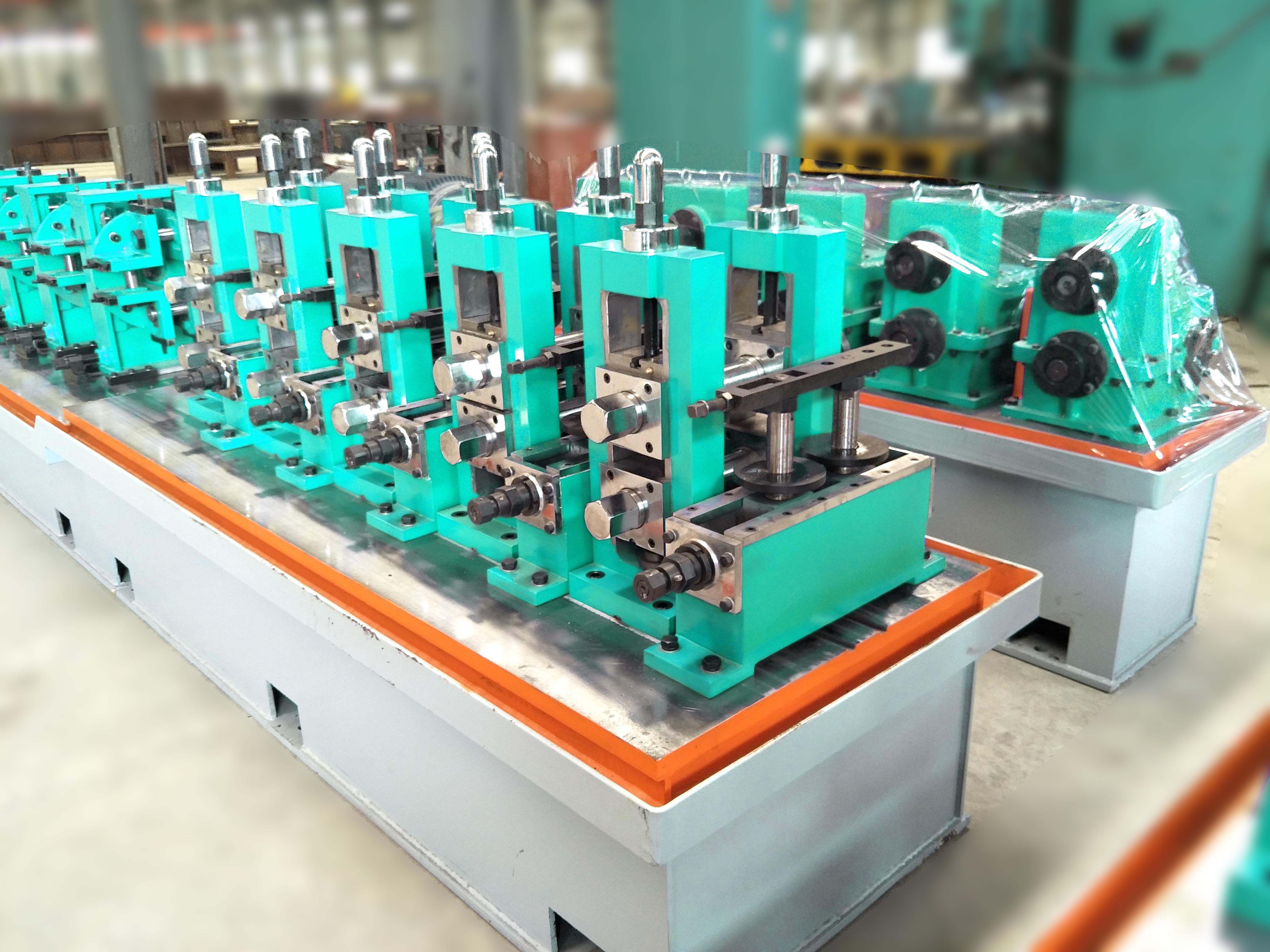
1. Role of Ferrite Rod Core in High-Frequency Tube Welding
The ferrite
rod core functions as a magnetic flux concentrator inside the impedor
assembly. Placed within the tube’s weld groove area, it redirects the
high-frequency current path from the outer skin of the strip edges to the actual
Vee convergence point. Without an optimized ferrite-based impedor, the welding
current tends to flow along the outer diameter, causing surface burning and
incomplete fusion. The core’s high permeability (typically 2000–5000 μi at 400
kHz) and low coercivity ensure deep current penetration exactly where the edges
meet.
Key electromagnetic functions of a high-grade ferrite
rod core include:
Magnetic flux shaping – focusing eddy currents into the
faying surfaces.
Impedance matching – reducing reflected power to the
oscillator tube, improving efficiency.
Suppression of arcing – minimizing stray fields that cause
edge flash.
Leading mill builders such as SANSO incorporate high-frequency welding
optimization into their complete line designs, ensuring that the impedor
housing geometry and cooling systems are compatible with industry-standard
ferrite rod dimensions (e.g., 8–25 mm diameter, 300–600 mm length).
2. Material Science: Selecting the Right Ferrite Grade for Tube Mills
2.1 Critical Ferrite Properties
Not all ferrite rods perform identically under thermal and electromagnetic
stress. For continuous HF welding (200–450 kHz), the preferred material is Mn-Zn
ferrite due to its high saturation flux density (0.45–0.55 T) and initial
permeability. Ni-Zn ferrites offer higher resistivity but lower Bsat, making
them suitable for small-diameter tubes where heat dissipation is restricted.
When specifying a ferrite
rod core, evaluate the following metrics:
Curie temperature (Tc) – must exceed 180°C to avoid thermal
runaway under heavy loads.
Volume resistivity (ρ) – >10³ Ω·cm for Mn-Zn, >10⁶
Ω·cm for Ni-Zn to minimize eddy current losses inside the rod.
Mechanical fracture toughness – ferrites are brittle; shock
resistance is critical during tube startups.
Operational data from high-speed mills (80–120 m/min) show that a correctly
chosen ferrite
rod core can sustain over 4000 hours of continuous welding before exhibiting
measurable degradation in permeability. SANSO provides engineering
guidelines for matching ferrite grades with tube dimensions (OD 10–150 mm) and
wall thickness ratios.
A high-precision tube mill must accommodate the impedor assembly without
introducing vibration or misalignment. SANSO roller forming stations
and welding boxes are engineered with adjustable impedor guides, allowing
operators to position the ferrite
rod core exactly at the weld point — typically 3–5 mm behind the squeeze
roll centerline. This placement ensures the magnetic field intensity peaks at
the edge‑to‑edge interface, producing a consistent forged weld without excessive
heat-affected zone (HAZ) widening.
Key integration features of SANSO mills for ferrite-core
users:
Quick-change impedor cassettes – reduce downtime when
replacing cracked rods.
Water-cooled rod housings – keep ferrite surface
temperature below 120°C, preventing permeability collapse.
Automatic gap sensing – real‑time feedback on impedor
position relative to strip edges.
Furthermore, SANSO offers complete tube mill product
families that include weld monitoring systems specifically calibrated for
ferrite-based impedors. This allows operators to correlate weld temperature
(pyrometer data) with changes in the ferrite rod's magnetic response, enabling
predictive maintenance before weld defects appear.
4. Industry Pain Points & Solutions: Ferrite Rod Core Failures
4.1 Common Failure Modes
Despite robust design, a ferrite
rod core in continuous production can exhibit several failure mechanisms.
Recognizing these early prevents catastrophic weld line shutdowns.
Thermal cracking – occurs when cooling water flow is
insufficient; ferrite develops micro-fractures, causing erratic impedance and
weld porosity.
Magnetic saturation – if the tube cross-section demands
higher flux than the rod’s Bsat, the weld current bypasses the Vee, leading to
cold welds.
Surface erosion – caused by arcing from loose connections
inside the impedor; erodes the ferrite’s outer layer and reduces effective
permeability.
4.2 Engineering Solutions
To mitigate these issues, experienced mill engineers apply the following
countermeasures:
Implement a scheduled ferrite rod inspection protocol every
500 operating hours, using a gaussmeter to check surface flux uniformity.
Use dual-rod impedors (two parallel ferrite
rod core assemblies) for tube diameters >100 mm, distributing magnetic
load and reducing thermal stress per rod.
Install deionized water cooling loops to prevent mineral
deposits on the ferrite surface, which create local hot spots.
Case studies from Asian tube mills show that adopting these solutions extends
average ferrite
rod core service life from 800 to 2,500 production hours, directly lowering
impedor replacement costs by over 60%.
5. Advanced Topics: Tuning Ferrite Rod Core Geometry for Specific Tube
Profiles
Beyond material grade, the shape and segmentation of the ferrite rod
influence weld quality for non‑circular or thin-wall tubes. For square or
rectangular hollow sections (RHS), a profiled ferrite rod core with a flattened top surface improves magnetic coupling to the corners of the
strip. Similarly, for stainless steel tubes (which have lower magnetic
permeability than carbon steel), a longer ferrite
rod core (up to 800 mm) is recommended to extend the dwell time of the
magnetic field along the welding Vee, compensating for the reduced heating
efficiency of austenitic grades.
Recent developments in segmented ferrite rod arrays allow
mill operators to adjust the axial flux distribution. By placing 2–3 shorter
rods with small air gaps inside the impedor, the magnetic field can be
concentrated at the exact point where the strip edges first contact. This
technique reduces the required welding power by 12–18%, according to internal
tests by SANSO R&D. For further
technical specifications, refer to SANSO’s advanced mill
components catalog.
6. Future Trends: Ferrite Rod Core with In-Situ Monitoring
The next generation of HF tube mills will integrate IoT sensors directly into
the impedor assembly. By embedding a miniature thermocouple and a Hall-effect
sensor inside the ferrite
rod core, real-time data on core temperature and magnetic field strength can
be transmitted to the mill’s PLC. This allows dynamic adjustment of welding
frequency and power, compensating for ferrite aging or cooling fluctuations.
SANSO is currently piloting
such smart impedor systems on its high-speed tube lines, with field data showing
a 35% reduction in weld reject rates for automotive tube applications.
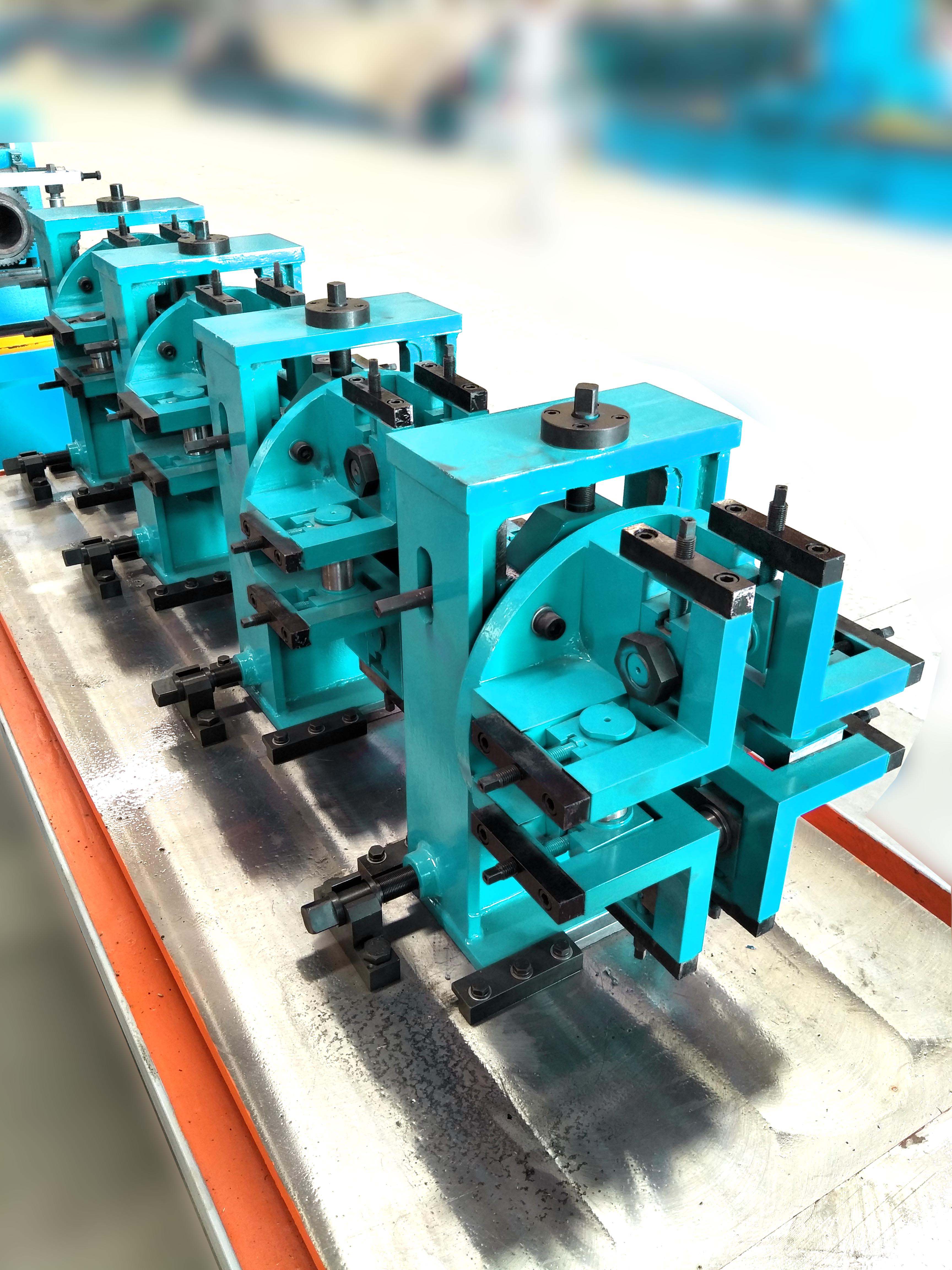
Frequently Asked Questions (FAQ) – Ferrite Rod Core in Tube Welding
Q1: How often should a ferrite rod core be replaced in a
high-frequency tube mill?
A1: Under normal operating conditions
(welding speed 60–100 m/min, carbon steel tubes), a quality ferrite
rod core lasts between 2,000 and 4,000 production hours. Replacement is
indicated by a persistent drop in weld power efficiency (>15% increase in
oscillator plate current for same tube size) or visible cracks during
inspection. High-strength steel and stainless steel applications may reduce rod
life by 30–40% due to higher thermal loads.
Q2: Can a cracked ferrite rod core still be used
temporarily?
A2: Not recommended. Even hairline fractures cause
local magnetic reluctance changes, leading to uneven heating and “skip welds.”
Continued use of a cracked ferrite
rod core accelerates damage to the impedor housing and may damage the
welding generator’s output transformer. Always replace with a new rod and
calibrate impedor position.
Q3: Does the ferrite rod core affect the mechanical properties of the
weld seam?
A3: Indirectly, yes. An optimal ferrite core ensures
uniform heat distribution across the edge faces, producing a fine-grained forged
structure with minimal oxide inclusions. A degraded or incorrectly sized ferrite
rod core causes localized overheating (coarse grains) or underheating (lack
of fusion), both of which fail flattening and flange tests per ASTM A370.
Q4: What cooling method is best for a ferrite rod
core?
A4: For high-duty cycles (>80 m/min), forced water cooling
with deionized water is mandatory. The water channel should directly contact the
rod’s outer surface via a copper or aluminum jacket. Air cooling is only
suitable for intermittent or low-speed mills (<30 m/min). SANSO recommends a
flow rate of 3–5 L/min per rod to maintain core temperature below 100°C.
Q5: How does tube diameter influence ferrite rod core
selection?
A5: For tube OD < 50 mm, a single 8–12 mm diameter ferrite
rod core is sufficient. For OD 50–150 mm, a 16–25 mm rod or dual parallel
rods are required to generate enough magnetic flux. For OD >150 mm, custom
rectangular ferrite bars (stacked) are often used. Always consult the impedor
design chart provided by your mill manufacturer.
Achieving Weld Consistency with Engineered Ferrite Rod Core
Solutions
The ferrite
rod core is not a passive component; it is an active electromagnetic tool
that directly determines the profitability of a tube mill. By understanding
ferrite material grades, failure modes, and optimal integration into the forming
line, manufacturers can reduce scrap rates, lower energy consumption, and extend
equipment life. SANSO provides complete tube
mill systems designed for rapid ferrite rod access, precise positioning, and
real-time weld monitoring — turning a traditionally problematic component into a
competitive advantage.
Need to optimize your HF welding
process or replace outdated impedor assemblies? Contact the SANSO engineering team for a
free technical consultation and customized ferrite rod core recommendations for
your tube mill line.
Send your inquiry now – include your tube dimensions,
material grade, and current welding speed. Our specialists will respond within
24 hours with detailed proposals and performance data.