In the precision-driven world of international welding pipe manufacturing, the choice of cutting tool is not merely a detail—its a cornerstone of efficiency and quality. For milling bevels, preparing pipe ends, and executing clean cuts on everything from carbon steel to high-alloy materials, the HSS cutting blade remains a fundamental tool. Its performance directly impacts production throughput, weld integrity, and overall operational cost. Brands like SANSO have refined this essential tool, engineering HSS cutting blades that meet the rigorous demands of modern pipe mills.
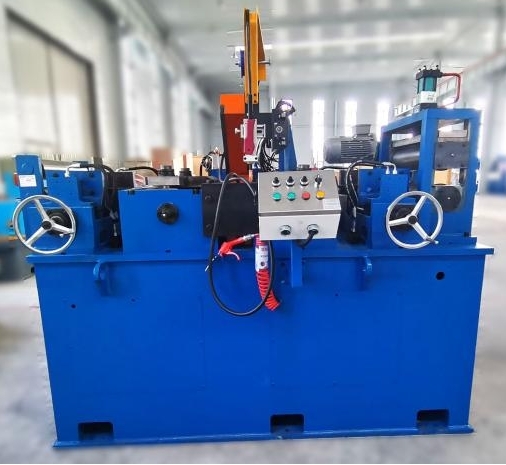
Understanding the HSS Cutting Blade: Material and Design
High-Speed Steel (HSS) represents a class of tool steels engineered to withstand high temperatures generated during cutting without losing hardness. This "red-hardness" is crucial in pipe milling, where continuous cutting generates significant heat.
A modern HSS cutting blade is more than just a disc of hardened steel. It is a carefully balanced component featuring precise tooth geometry, gullet capacity for chip removal, and often specialized coatings like TiN (Titanium Nitride) or TiAlN.
These coatings drastically reduce friction, allowing for higher feed rates and extending the blades service life, a key factor in continuous production environments.
Why HSS Cutting Blades Dominate in Pipe Milling Applications
While carbide inserts offer advantages in some areas, the HSS cutting blade holds strong in specific, critical applications within tube and pipe mills. Their primary strength lies in toughness and versatility.
HSS is more resistant to chipping and shock loads, which are common when cutting imperfect or out-of-round pipe sections. This makes a reliable HSS cutting blade ideal for roughing operations and general-purpose pipe preparation.
For milling machines performing heavy-duty beveling on large-diameter welding pipe, the robustness of an HSS tool is often unmatched. They can handle interrupted cuts and variable material thicknesses with greater reliability than more brittle alternatives.
Selecting the Right HSS Cutting Blade: Key Parameters
Choosing the correct blade is not a one-size-fits-all decision. Several factors must align with your mills operations.
First, tooth count is paramount. Coarse-tooth blades are preferred for softer materials and large pipe diameters, as they provide larger chip spaces. Fine-tooth blades deliver a smoother finish on thinner-walled pipe and harder alloys.
Hook angle, the rake of the tooth, affects cutting aggression. A positive hook angle provides a more aggressive, faster cut, while a negative or neutral angle is stronger and better for harder materials or tougher cuts.
The substrate and coating must match the workpiece material. For instance, milling abrasive stainless-steel pipe requires a different blade formulation than cutting standard carbon steel. Specialized manufacturers like SANSO provide detailed application guides for their HSS cutting blade range.
Maximizing Performance and Lifespan in Your Mill
Proper operation and maintenance are as important as the initial selection. Correct machine setup is the first step. Ensuring the milling head is rigid, the blade is mounted without runout, and the correct cutting speed and feed rate are used prevents premature wear.
Using adequate coolant or cutting fluid is non-negotiable. It controls heat, lubricates the cut, and flushes away chips, protecting both the HSS cutting blade and the workpiece surface.
Implementing a regular inspection and sharpening schedule is cost-effective. Dull blades require more power, produce poor surface finishes, and generate excess heat. Professional resharpening restores the original geometry, extending the blades life multiple times over.
HSS vs. Alternatives: Making an Informed Choice for Your Facility
The debate often centers on HSS versus carbide-tipped or solid carbide blades. HSS offers superior toughness and a lower initial cost, making it excellent for job shops or mills with highly variable production runs.
Carbide excels in pure wear resistance and speed on consistent, high-volume runs but at a higher cost and with less shock resistance. For many pipe mills, a hybrid approach is best.
A robust HSS cutting blade from a trusted supplier like SANSO handles the bulk of general milling and beveling work reliably, while carbide tools are reserved for specialized, high-precision finishing passes. This balances performance with overall tooling budget.
The SANSO Difference in HSS Cutting Technology
In a crowded market, expertise matters. SANSO focuses on the metallurgical science behind its cutting tools. Their HSS cutting blades are manufactured from consistently high-grade alloys, undergoing strict heat treatment processes to achieve the optimal balance of hardness and toughness.
This focus on core material quality, combined with precision grinding and advanced coating application, results in a blade that performs predictably under stress. For international pipe mills where downtime is the ultimate cost, this reliability is a critical asset.
Conclusion: The Enduring Value of a Precision HSS Cutting Blade
In the complex ecosystem of international welding pipe manufacture, the HSS cutting blade persists as a versatile, tough, and economically intelligent solution. Its ability to perform under variable conditions makes it indispensable for pipe end preparation, beveling, and cutting-off operations.
Success hinges on selecting the right blade geometry, applying it correctly, and maintaining it diligently. By partnering with specialized manufacturers who understand the unique pressures of pipe milling, such as SANSO, facilities can ensure their HSS cutting blade operations remain a pillar of productivity and quality.
Frequently Asked Questions (FAQ)
Q1: How often should I replace or sharpen my HSS cutting blade in a pipe mill?
A1: Theres no fixed hour count. Monitor performance. Signs like increased power consumption, poor surface finish, burning, or excessive burr formation indicate its time. For high-use mills, a scheduled sharpening after a set number of shifts or production meters is wise to prevent unexpected failure.
Q2: Can one HSS cutting blade handle all pipe materials?
A2: Not optimally. While a general-purpose blade can cut many materials, peak efficiency and lifespan come from matching the blade to the material. Use blades with specific tooth geometry and coatings for abrasive alloys (like stainless steel) versus softer carbon steels. Consult your suppliers charts.
Q3: What is the biggest operational mistake that shortens HSS blade life?
A3: Using incorrect cutting parameters, especially excessive speed (RPM). Too high a speed generates heat faster than the HSS material can dissipate, causing it to anneal (soften) and dull rapidly. Always follow recommended SFM (Surface Feet per Minute) guidelines for the workpiece material.
Q4: Why does my new HSS cutting blade sometimes cut poorly immediately after installation?
A4: This often points to an installation or machine issue. Check for correct mounting, ensure the arbor and flanges are clean and undamaged, and verify there is no axial or radial runout in the milling spindle. A wobbly blade will not cut cleanly and will wear unevenly.
Q5: How do SANSOs HSS blades differ from generic options for pipe milling?
A5: SANSO blades are engineered specifically for industrial metal cutting, with a focus on the pipe sector. The difference lies in superior base steel quality, precise and consistent heat treatment, and advanced coating adhesion. This translates to more cuts per blade, more resharpenings, and stable performance, reducing total cost per meter of pipe processed.