Every tube mill operator knows the frustration of a sudden seam failure. You
inspect the rejected ERW (Electric Resistance Welded) pipe and spot the usual
suspects: edge mismatch, inconsistent flash, or a cold weld that splits under
the flaring test. Your first reaction might be to adjust the squeeze rolls,
tweak the high-frequency weld power, or replace a worn fin-pass roll.
Most of the time, those adjustments treat the symptom, not the cause. The
real culprit lurks at the front of your line. If incoming steel coils retain
residual stress, camber, or edge waves, no amount of downstream tooling can
force those edges to fuse cleanly.
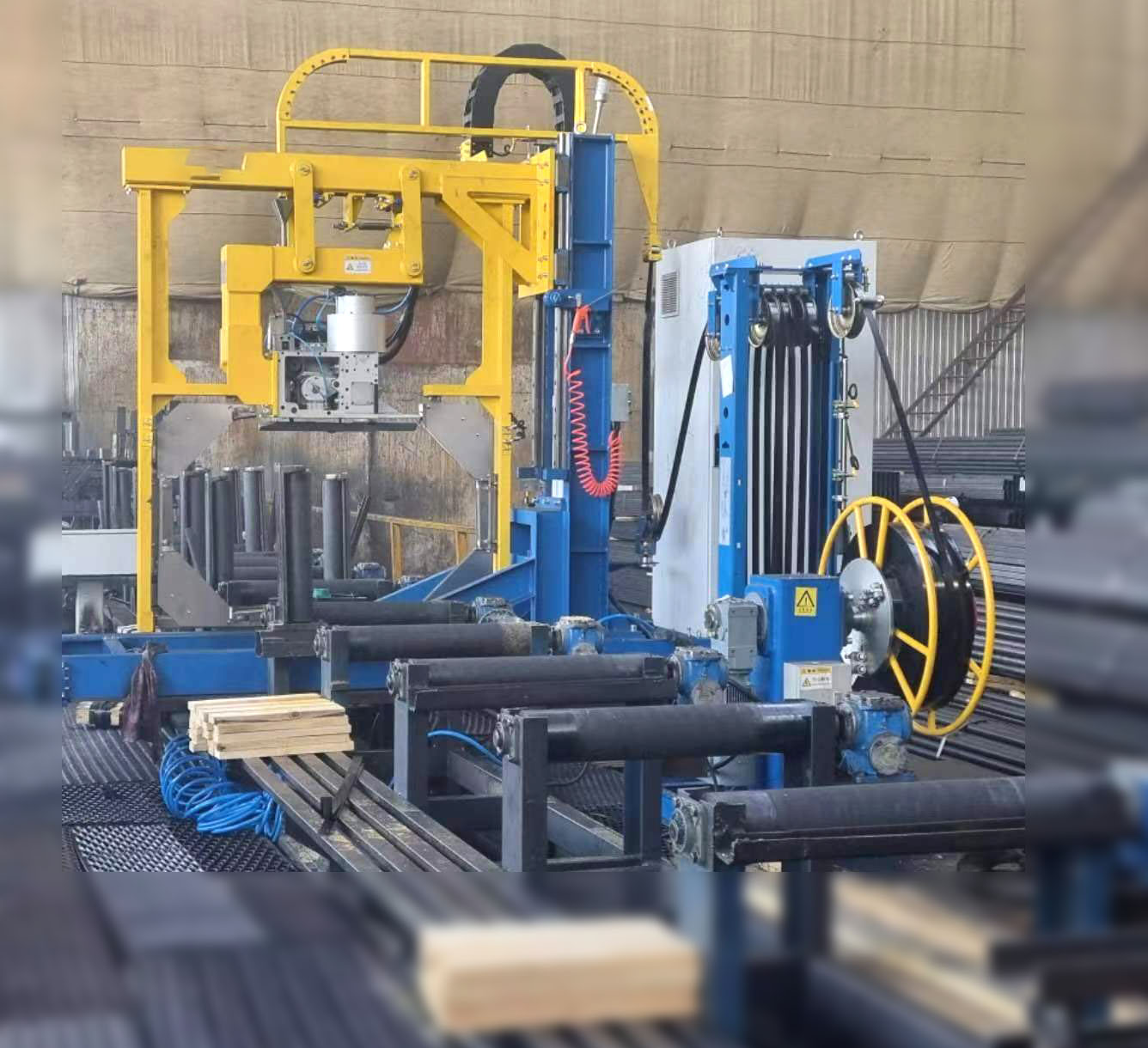
A precision decoiler straightener is your first line of
defense. By removing coil set and flattening the strip before it enters the
breakdown stands, this front-end system directly protects your weld integrity.
At SANSO, we design tube mill entry equipment that tackles these strip defects
before they reach the welding box, helping you stop scrap production before it
starts. Request a technical consultation with our
engineering team to review your line's incoming strip tolerances.
The Anatomy of the Problem: How Strip Imperfections Ruin ERW Welding
Electric Resistance Welding is an unforgiving process. It relies on pressing
two clean, parallel metal edges together while passing a high-frequency current
through them. If the edges meet at inconsistent angles, heights, or pressures,
your weld quality collapses. These issues usually stem from common coil
defects.
Coil Set and Cross Bow
Coil set is the longitudinal curve left in the strip after unspooling from a
tight coil. Cross bow is the transverse curvature across the width of the sheet,
turning flat metal into a shallow dish. When cross bow enters the forming
stands, the edges tend to rise or drop unevenly. This creates step misalignment
(offset edges) at the squeeze rolls, leading to weak joints and asymmetric
flash.
Camber and Edge Waves
Camber forces the strip to curve sideways like an archery bow. Edge waves
appear when the strip edges are longer than its center. As cambered material
runs through your tube mill, it wanders from side to side. The strip edges no
longer track along the mill centerline, which throws off the edge alignment
right before the welding apex.
The V-Angle Impact
High-frequency welding requires a stable, symmetric "V" shape where the strip
edges converge. The apex of this V must remain stationary. When uneven strip
edges flutter or twist, the convergence angle fluctuates wildly. This
instability causes several immediate defects:
- Fluctuating Heat-Affected Zone (HAZ): Shifting edges change
electrical contact resistance, causing overheating in some spots and cold welds
in others.
- Pre-Arcing and Splatter: Irregular gaps trigger localized
electrical arcing before the apex, generating metal spatter that settles into
the seam as inclusions.
- Inconsistent Bead Profiles: Uneven squeeze pressure leads
to uneven internal and external weld beads, making ID/OD scarfers chatter or
gouge.
The Solution: How a Heavy-Duty Decoiler Straightener Saves the Weld
Putting a plain uncoiler next to a tube mill does not solve these physical
defects. Raw hot-rolled or cold-rolled coils retain high internal stresses from
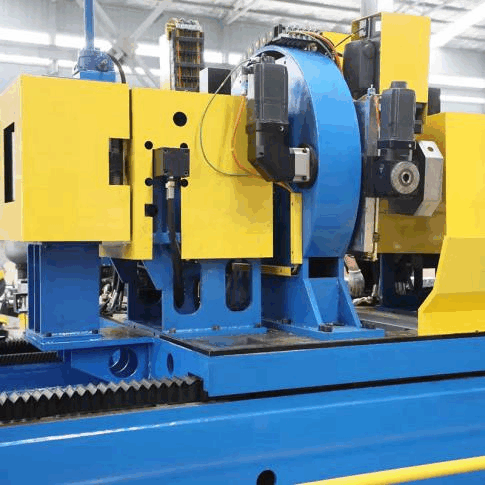
the steel mill. A combined decoiler straightener addresses
these problems mechanically before the strip enters the forming section.
Eliminating Residual Stress
A decoiler merely holds and feeds the coil. A straightener, however, subjects
the material to alternating plastic bending through staggered work rolls. By
stretching the inner and outer fibers beyond their yield point and bringing them
back to neutral, the machine neutralizes internal memory. This stress relief
prevents the strip from twisting or springing back as it gets cold-formed into a
hollow cylinder.
Ensuring Parallel Edge Presentation
For clean forge welding, the strip edges must meet flush, face-to-face. A
high-rigidity sheet metal straightener removes edge waves and eliminates cross
bow. When the edges enter the squeeze rolls, they contact each other across
their entire vertical face simultaneously. This balanced contact produces
uniform upsetting, even grain flow, and consistent weld strength.
Stabilizing Line Speed and Tension
Uneven feed tension causes strip flutter. When the strip jerks or sags
between the entry station and the first forming pass, the weld apex moves back
and forth. SANSO integrates synchronized drive motors and responsive loop
controls into every decoiler straightener system. This setup
delivers steady, uninterrupted material flow, keeping the weld point rock-solid
at high production speeds.
Key Features to Look for in an ERW-Specific Decoiler Straightener
Not every straightener can handle the demands of a high-speed tube mill.
Processing heavy-gauge carbon steel, HSLA, or stainless steel requires specific
structural and mechanical capabilities. Look for these critical engineering
features when upgrading your coil leveling machine:
- Roll Configuration and Pitch: Thin-gauge lines generally
need more rolls (typically 9 to 11) with smaller diameters and tighter pitch for
precision flattening. Heavy-wall structural tube lines demand fewer rolls
(typically 5 to 7) with larger diameters to exert deep plastic penetration
without deflecting.
- Structural Rigidity: High-strength steels generate massive
separating forces. Choose an uncoiler straightener built with thick,
stress-relieved steel side frames and robust backup bearings to stop roll
deflection under heavy loads.
- Motorized Roll Gap Adjustment: Manual handwheels slow down
changeovers and introduce human error. Motorized or hydraulic roll adjustments
with digital position readouts let operators recall exact roll settings for
every coil thickness and grade.
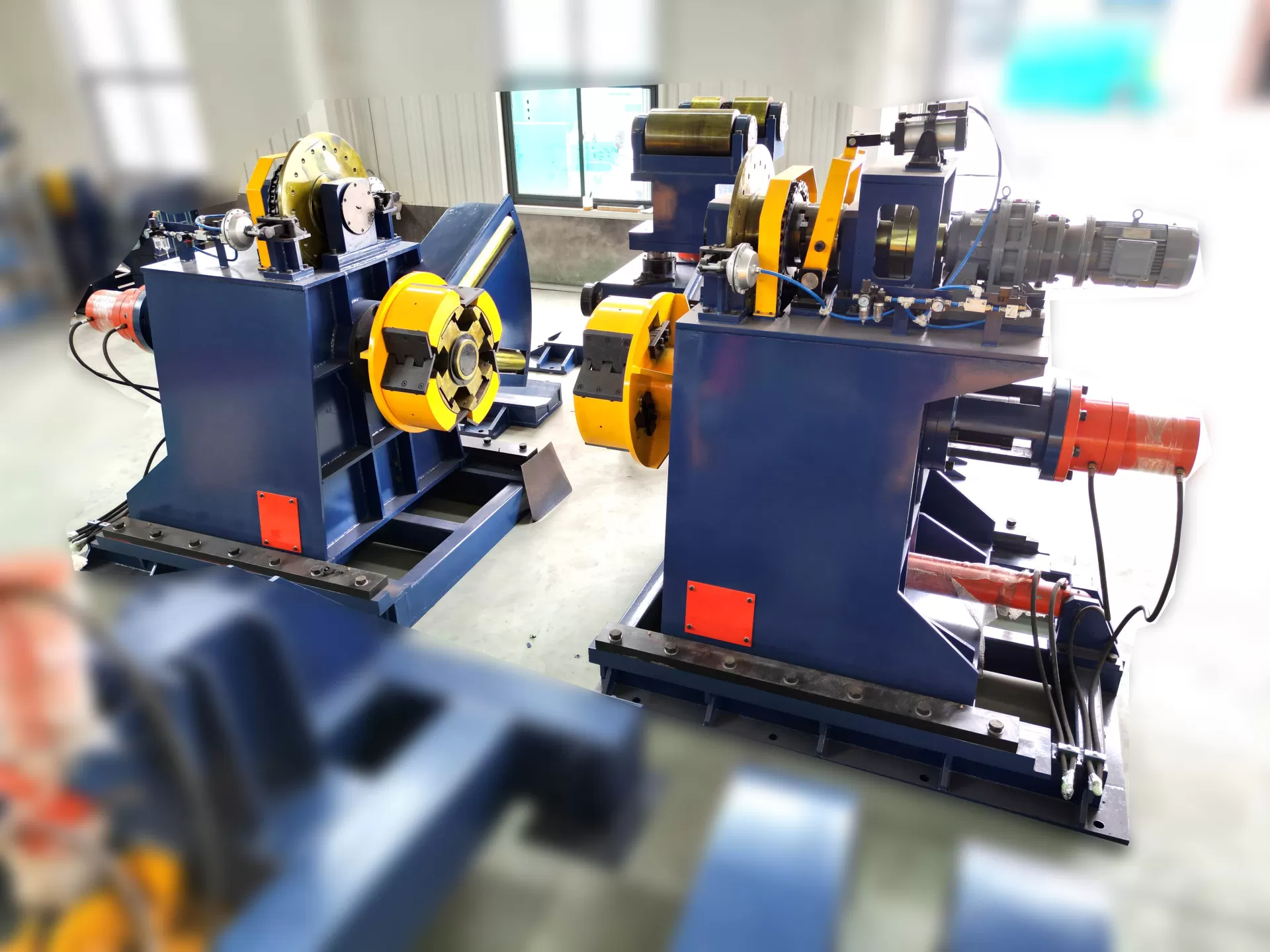
- Integrated 2-in-1 Base Design: Separate uncoilers and
straighteners take up excessive floor space and can suffer from tracking
misalignment. A combined 2-in-1 uncoiler straightener fixes both units to a
single rigid machine bed, preserving alignment and shrinking the footprint of
your entry section.
Real-World ROI: Beyond Just "Flat Metal"
Investing in a dedicated decoiler straightener is not just
about keeping your strip flat. It delivers measurable gains across your entire
tube mill operation:
Downtime Reduction
When the incoming strip is flat and predictable, your mill operators do not
have to stop the line to adjust fin-pass stands or realign squeeze rolls. Coil
changes run faster because the straightener feeds flat lead ends straight into
the shear and end welder without snagging.
Lower NDT Rejection Rates
Most ultrasonic and eddy current test failures come from lack-of-fusion
defects, hook cracks, and pinholes caused by shifting edges. Running flat,
parallel strip edges stabilizes the welding dynamic and slashes non-destructive
testing (NDT) rejection rates.
Extended Tooling Life
Cambered and warped strips grind hard against your forming rolls, side-guide
rolls, and welding shoes. This uneven side load wears down expensive roll
tooling prematurely. Feeding neutralized, flat stock balances roll contact wear
and extends the service life of your entire roll set.
Frequently Asked Questions
Q1: What is the main difference between a decoiler straightener and a
standard uncoiler?
A1: A standard decoiler (or
uncoiler) only holds, unspools, and feeds the coil into the line. It does not
alter the flatness of the metal. A decoiler straightener combines a decoiling mandrel with a motorized series of alternating flattening
rolls. This active roll system removes coil set, cross bow, and residual stress
from the metal before it reaches downstream tooling.
Q2: Can a straightener completely fix severe coil
camber?
A2: Straighteners primarily eliminate
longitudinal coil set and transverse cross bow. While they relieve the internal
stresses that worsen camber during forming, they cannot completely remove severe
edge curvature caused by poor slitting. For high-camber master coils, we
recommend combining your straightener with dedicated vertical guide rolls and an
edge preparation unit.
Q3: How many rolls should my straightener have for ERW tube
manufacturing?
A3: Roll count depends on material
thickness and yield strength. Heavy-wall tube production typically uses 5 to 7
large-diameter rolls to apply high bending forces. Medium-to-thin-wall
applications typically need 7 to 11 smaller-diameter rolls to work the metal
through more reverse-bend cycles for precise flatness.
Q4: Why does uneven strip thickness or flatness cause cold
welds?
A4: In high-frequency ERW welding, heating
relies on the proximity effect and skin effect. If the strip edges are bowed or
wavy, they do not approach each other parallel to the centerline. The gap
narrows unevenly, which changes the electrical path. As a result, the weld
interface receives inconsistent heat, causing cold, unbonded spots that split
under pressure tests.
Q5: Can I retrofit a compact decoiler straightener into an existing
tube mill?
A5: Yes. Modern 2-in-1 integrated
systems feature a compact footprint designed to fit tight plant layouts.
Upgrading an outdated, separate entry setup with a consolidated unit saves
space, simplifies electrical interlocks, and matches existing mill line
speeds.
Upgrade Your Tube Mill Entry System Today
Flawless high-frequency tube welding relies on a flat, stable strip edge.
Blaming your welding unit or roll tooling for weld defects often wastes time and
money while scrap piles up. Upgrading to a heavy-duty, high-precision
decoiler straightener addresses edge mismatch, cross bow, and
residual stresses at the true source.
SANSO manufactures industrial coil processing machinery designed for
demanding ERW tube and pipe mills. Whether you run thin-gauge precision conduit
or heavy structural steel tubing, our engineering team can build an uncoiler
straightener tailored to your exact coil widths, thicknesses, and line
speeds.
Ready to eliminate edge mismatch and cut tube
scrap? Contact the SANSO engineering team today for technical
specifications, machine layouts, and an equipment quote built around your
production targets.