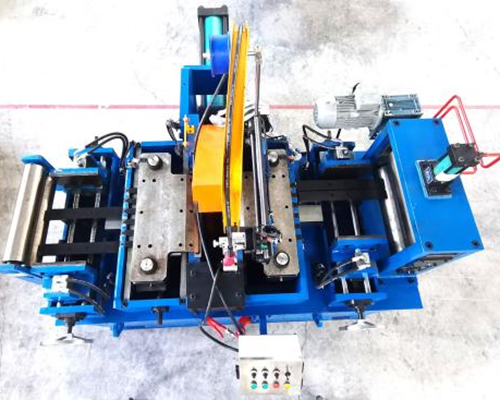
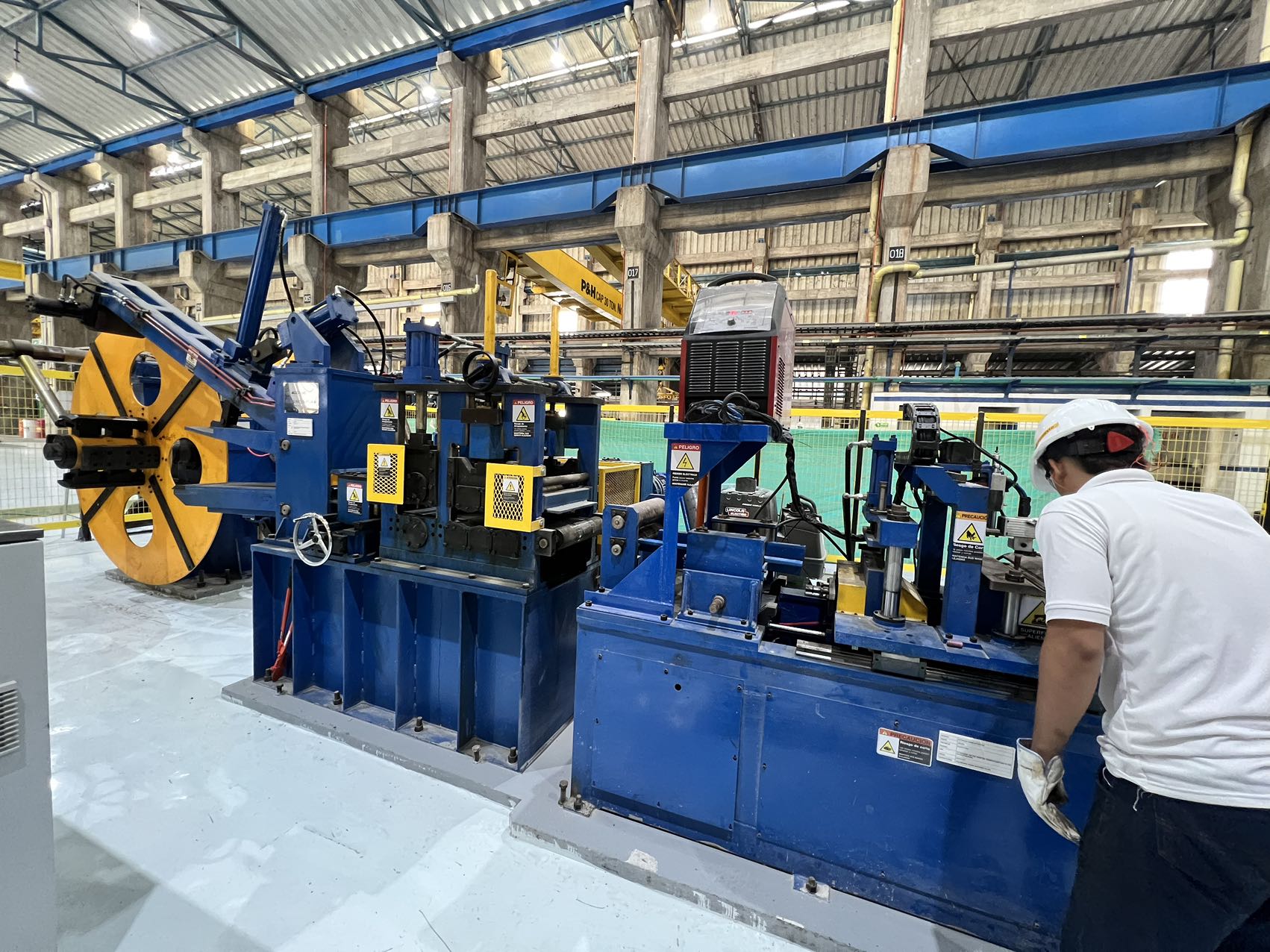
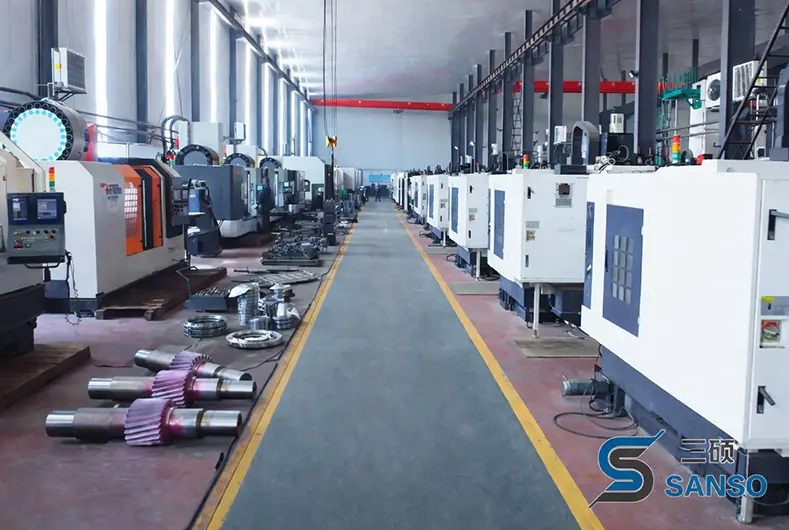
Operating a welded pipe manufacturing plant means walking a razor-thin line
between tight margins and demanding customer specifications. Steel coil costs
swing unpredictably. Energy tariffs continue to climb. At the same time, buyers
demand tighter dimensional tolerances, zero weld defects, and clean surface
finishes. In this operating environment, merely keeping your pipe
rolling mill running is no longer enough to protect your balance
sheet.
True profitability comes from maximizing Overall Equipment Effectiveness
(OEE). High-performing plants focus on three clear metrics: cutting unplanned
downtime, stabilizing the welding zone to eliminate scrap, and accelerating
product changeovers. Whether you operate a single workhorse line or an entire
bay of machinery, such as those engineered by SANSO, small adjustments across
the mill line compound into thousands of tons of extra salable production per
year.
Below are five plant-tested engineering practices that will help you
eliminate bottlenecks, reduce maintenance interventions, and extract peak
tonnage from your tube and pipe rolling mill.
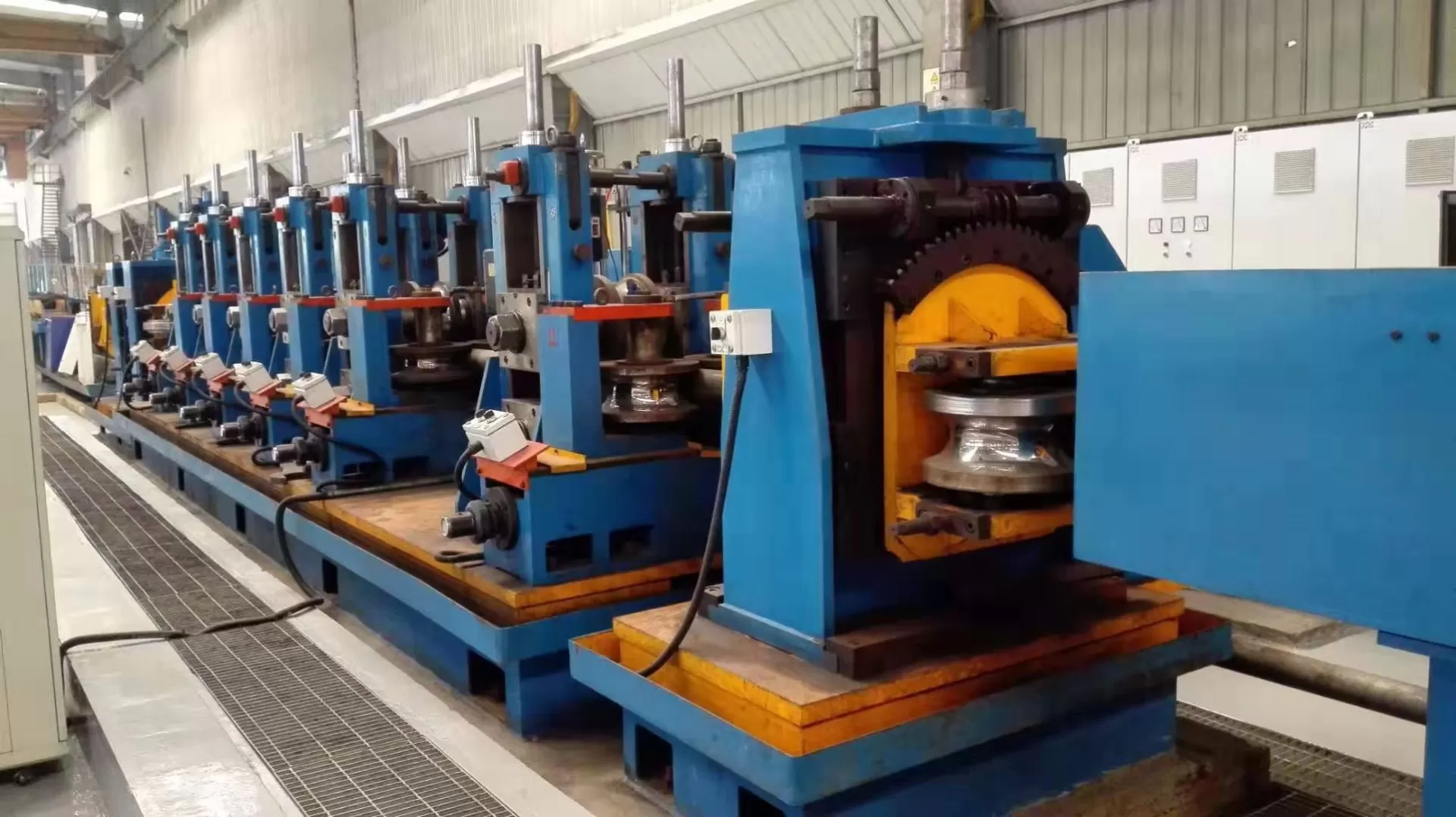
1. Implement Rigorous Roll Tooling Maintenance and Laser Alignment
Roll tooling absorbs enormous physical stress. Every meter of hot-rolled or
cold-rolled strip moving through your breakdown, fin pass, and sizing stands
exerts severe frictional and mechanical pressure on the roll surfaces. Over
time, uneven wear distorts the roll profile. When tool profiles wear out of
specification, the steel strip encounters uneven drag. This generates slip
marks, edge stretch, and severe camber issues inside the forming pass.
Too many operations treat roll regrinding as an emergency reaction rather
than a scheduled protocol. Waiting until you see scratches on finished pipes or
edge waves entering the weld box guarantees ruined material. Instead, set up an
aggressive tooling management system based on linear meters rolled.
The Problem with Visual Centerline Setup
Historically, mill hands aligned stands using piano wire, carpenter levels,
and straightedges. While these manual methods got the job done decades ago,
modern high-speed lines cannot afford the tolerance stack-up caused by visual
guesswork. A misaligned stand creates asymmetric drive torque, forcing the motor
drives to consume more kilowatts while grinding away side roll flanges.
Transition to Optical and Laser Verification
To keep your pipe rolling mill running at peak mechanical efficiency, invest
in periodic laser or optical alignment audits. Laser tracking systems verify
stand-to-stand centerline, shaft parallelism, and horizontal elevation down to
fractions of a millimeter. Aligning the breakdown stands directly with the fin
passes and weld box eliminates cross-stand side thrust.
Longer Tooling Life: Proper alignment distributes forming
loads evenly, extending roll life between re-grinds by 20% to 30%.
Reduced Energy Draw: Removing binding forces lowers the
electrical load on the main drive motors and gear reducers.
Surface Defect Prevention: Symmetrical material flow
prevents roll scrubbing and surface galling on structural and mechanical
tubing.
2. Fine-Tune High-Frequency (HF) Welding Parameters
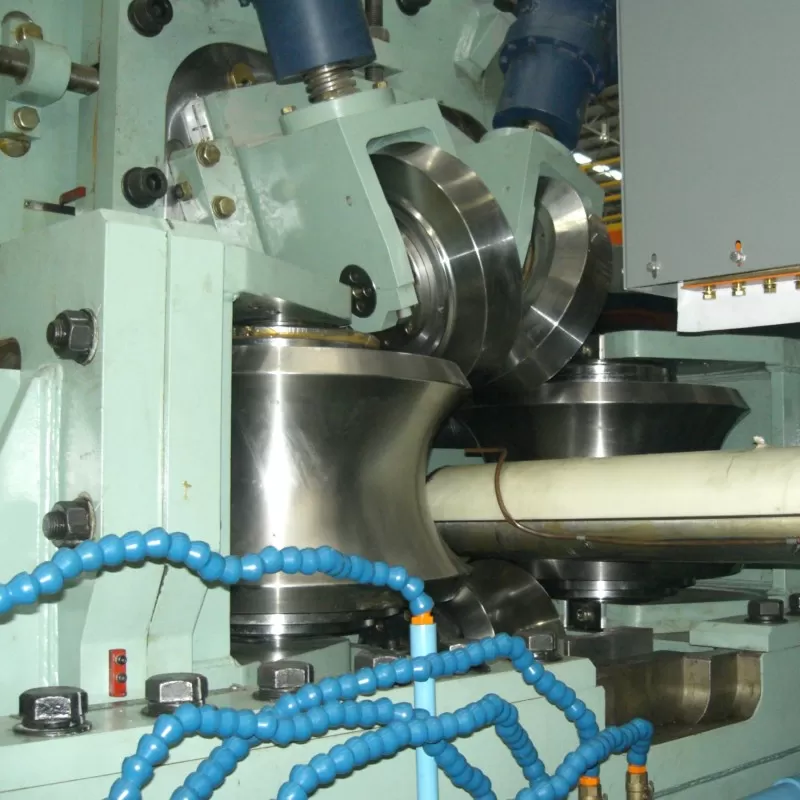
The welding station is the heart of any high-frequency welded pipe production
line. It is also the area where careless setups produce the highest volume of
scrap. A defective weld seam cannot be salvaged; once the seam fails an online
eddy current test or flattening test, the entire length gets dumped into the
scrap bin.
Maximizing efficiency in this zone requires strict control over three
interdependent factors: the vee-angle geometry, the condition of your impeders,
and the mechanical squeeze force.
Stabilizing the Vee-Angle and Squeeze Roll Pressure
The convergence angle of the strip edges (the vee-angle) should typically
measure between 2 and 7 degrees, depending on strip thickness and outside
diameter. If the angle is too wide, the high-frequency proximity effect weakens,
requiring you to crank up welder power. This over-heats the strip corners and
creates excess spatter. If the angle is too narrow, premature pre-arcing occurs,
causing intermittent cold weld defects.
Pair this geometric accuracy with strictly calibrated squeeze rolls.
Excessive squeeze pressure forces too much molten metal out of the joint,
creating brittle seams and thick internal beads that shorten the life of your
internal scarfer tools. Insufficient pressure leaves non-metallic oxides trapped
inside the bond plane, leading to joint splits during hydrotesting or downstream
bending operations.
Cooling and Positioning the Impeder
Your impeder directs high-frequency current along the strip edges toward the
weld apex instead of circulating uselessly around the back of the open tube. If
the ferrite cores overheat past their Curie point (typically above 200°C to
250°C), they lose magnetic permeability instantly. Welding efficiency drops
immediately, and operators compensate by dialing up power, which risks burning
through the strip.
Ensure cooling water pressure inside the impeder assembly stays clean, cool,
and continuous.
Locate the front tip of the impeder approximately 3 mm to 6 mm past the
theoretical weld apex for maximum induction concentration.
Check return-flow and through-flow impeder casings daily for split seams or
mechanical wear caused by strip flap.
By locking down your HF welding variables, you can shave 2% to 4% off total
coil scrap rates, directly lowering the processing cost per ton on your pipe
rolling mill.
3. Adopt Rafted Quick-Change Systems to Shrink Downtime
Customer orders are shifting toward smaller batch sizes, custom OD sizes, and
just-in-time delivery schedules. If your facility takes four to eight hours to
perform a complete size changeover, your plant capacity suffers dramatically. A
pipe rolling mill sitting idle while mechanics manually loosen nuts, slide rolls
off spindles, and set up side stands is burning profit every minute.
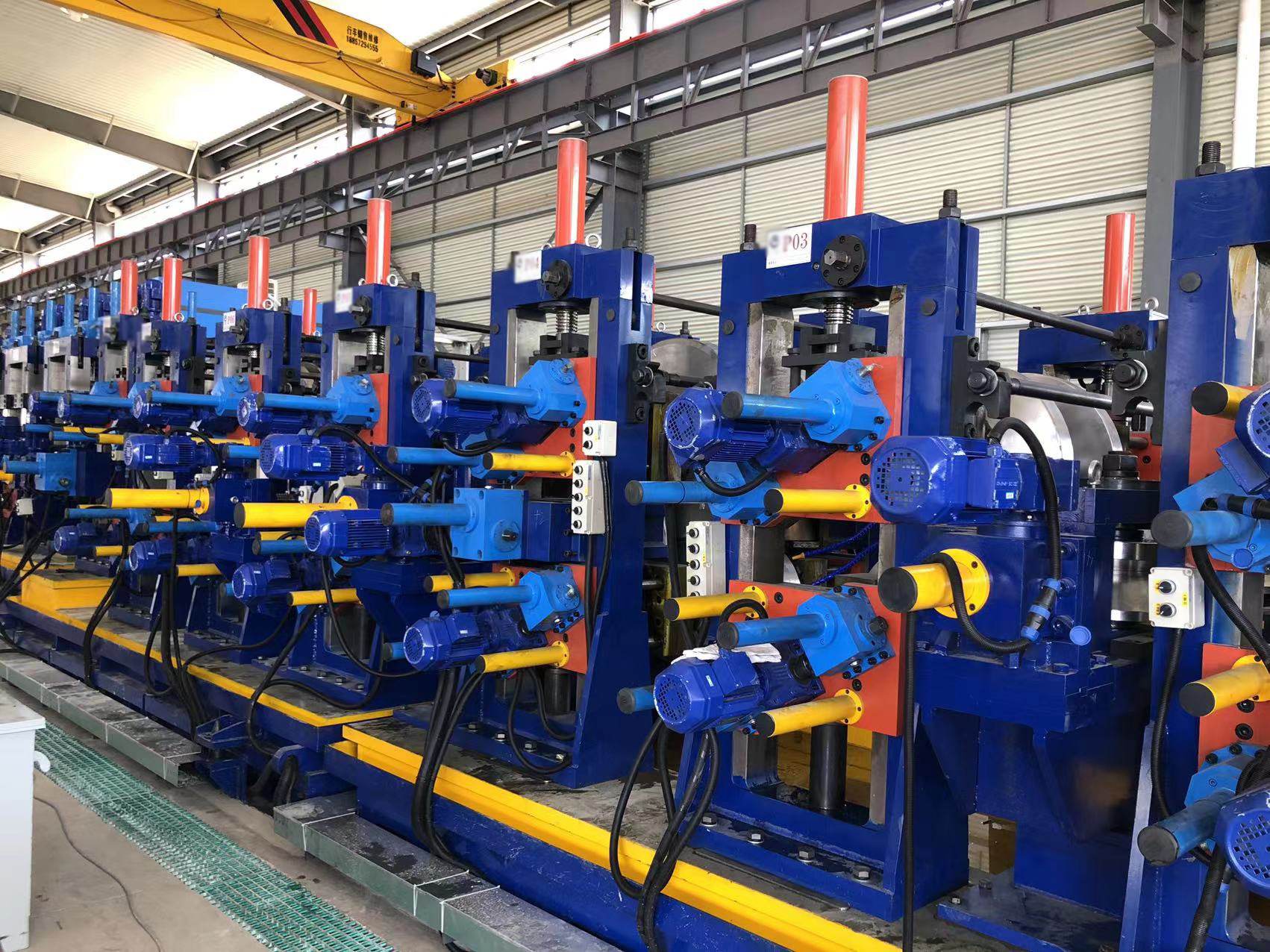
Modern equipment fabricators, including SANSO, emphasize modular rafted
designs to eliminate this bottleneck. In a rafted mill configuration, entire
clusters of forming, fin pass, and sizing stands sit mounted on heavy-duty,
pre-aligned base plates (rafts).
How Rafted Systems Transform Production Scheduling
Instead of rebuilding individual stands directly on the production line, your
maintenance crew pre-builds and adjusts the next tooling set on dedicated
off-line setup beds while the line is actively running the current order. When
the running coil ends, the process takes just minutes:
Disconnect the drive shafts and coolant lines via quick-release
couplings.
Unlock the pneumatic or hydraulic clamping systems securing the current
rafts.
Use an overhead crane to lift the entire set of stands off the line bed in
one or two lifts.
Lower the pre-aligned rafts for the next size into place, lock them down,
reconnect drives, and thread the new coil.
This approach slashes physical changeover times from multiple shifts down to
30 to 45 minutes. It transforms small-batch manufacturing from an operational
headache into a profitable competitive advantage, dramatically lifting your
overall plant utilization rates.
4. Shift from Reactive to Predictive Maintenance
Running a welded pipe production line until a component breaks inevitably
results in catastrophic failure. A seized roll spindle bearing can lock up at
line speeds exceeding 80 meters per minute, instantly shredding roll tooling,
snapping universal drive shafts, and twisting machine stands. Fixing that level
of damage can halt production for days.
High-efficiency operations replace emergency triage with modern predictive
maintenance techniques. By installing continuous condition monitoring hardware
on critical rotating equipment, you detect mechanical degradation long before
the line trips out.
Key Areas for Continuous Condition Monitoring
Main Drive Gearboxes: Place dual-axis vibration sensors and
thermal probes on main reduction gearboxes to monitor tooth wear and bearing pit
formation.
Flying Cut-Off Carriages: Cold saws and friction cut-offs
endure violent accelerations and decelerations. Track ball screw play, servo
motor temperatures, and rail alignment to avoid cut length inaccuracies.
Drive Shafts and Universal Joints: Periodic acoustic
lubrication monitoring ensures high-pressure grease reaches needle bearings,
preventing sudden cross-joint seizures.
Cold Saw Blade Management
Flying cold saws produce clean, burr-free ends that save downstream
chamfering and facing time. However, running a dull saw blade leads to tip
fractures, stalled cuts, and distorted pipe ends. Implement digital blade
tracking software that tallies cut counts against steel grades. Removing a blade
for automated resharpening after a defined number of cuts is far cheaper than
clearing a shattered carbide blade jammed inside a freshly rolled pipe.
5. Optimize Strip Quality and Entry Section Dynamics
A reliable pipe rolling mill requires consistent raw material feeding. You
cannot produce prime-grade structural, automotive, or API pipe out of
out-of-spec incoming steel strip without severe operational headaches. Problems
showing up in the sizing section often trace directly back to how strip enters
the mill entry table.
Managing Strip Geometry: Camber and Burr
Slit strip edge quality dictates whether your strip stays centered throughout
the breakdown section. Excessive slitting burrs scour your forming roll
shoulders, while deep strip camber forces the strip off-center, causing uneven
wall thinning and twisting in the fin passes. Insist that your slitting
department or master coil vendors keep blade clearances tight to minimize burrs,
and reject coils that exceed industry standards for edge camber.
Run strip through high-quality vertical edge-conditioning rolls or edge
scalpers before the first forming pass. Deburring and conditioning the raw steel
edges prepares the joint for uniform contact at the weld box, dampens edge
flutter, and protects your fin rolls from mechanical gouging.
Maximize Continuous Line Run Times with High-Capacity Accumulators
Every time your pipe rolling mill stops to shear and weld coil ends, you lose
production. The forming rolls sit stationary, water coolant pools on strip
surfaces, and starting up again often produces several meters of out-of-round,
cold-welded scrap. A robust, high-capacity horizontal or spiral accumulator
keeps the mill rolling at full line speed while your operators safely execute
the coil-end joint.
Reliable accumulators must handle high strip speeds without marking the
surface or introducing strip twist. Ensuring smooth strip payout from the
accumulator guarantees that the forming stands experience a steady,
uninterrupted flow of material, keeping drive torque steady and weld temperature
completely stable.
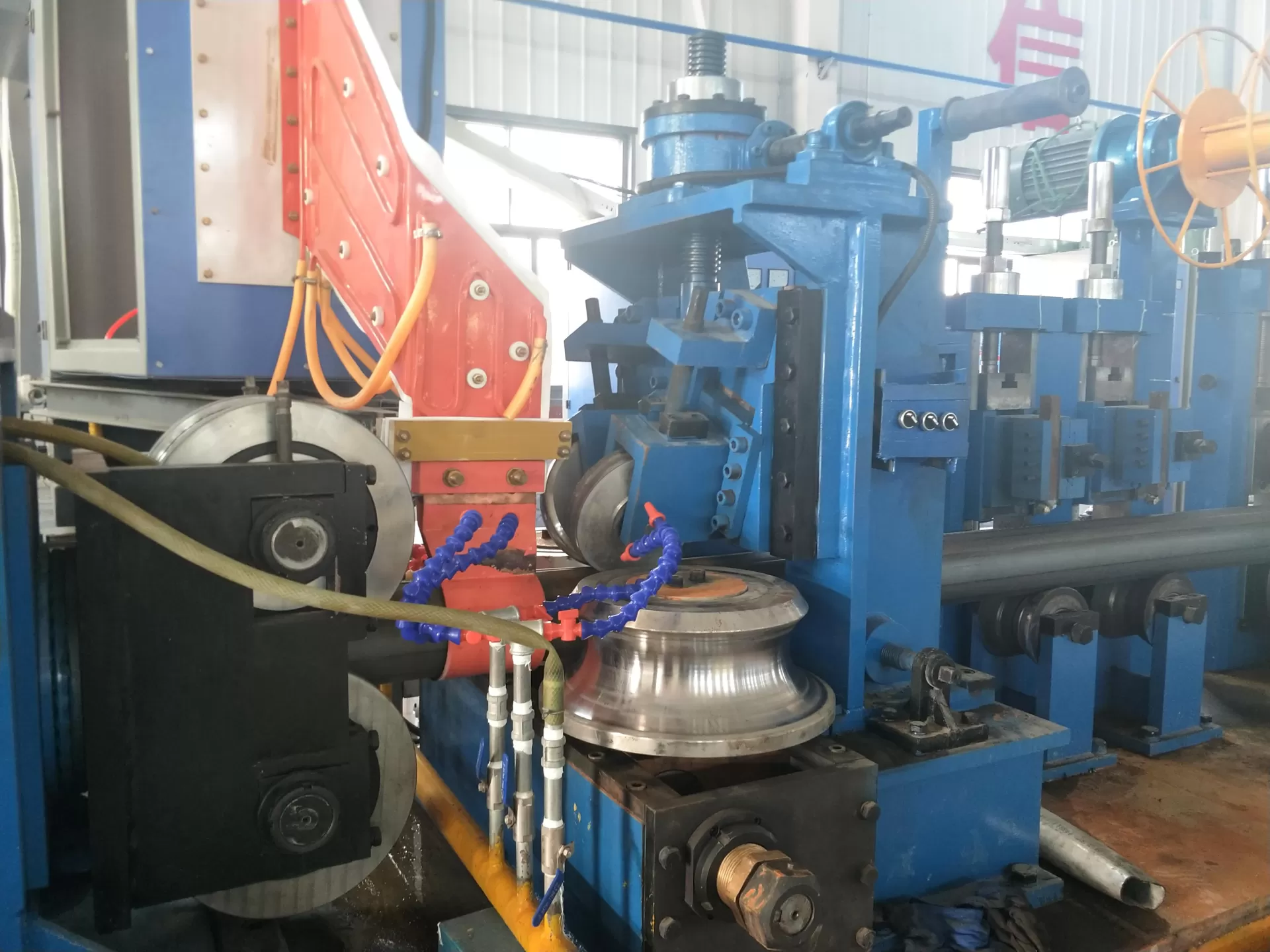
Summary: Compounding Gains Across the Entire Mill
Maximizing throughput on your pipe rolling mill does not
rely on a single miracle cure. Instead, it is a matter of systematic process
control:
Maintaining roll tooling geometry and precise stand alignment.
Balancing high-frequency electrical parameters with hydraulic squeeze
controls.
Slashing changeover durations through modular rafted mill mechanics.
Stopping mechanical breakdowns before they start via predictive
monitoring.
Feeding clean, deburred, continuously accumulated strip into the breakdown
stands.
By executing these five strategies, tube manufacturers regularly recover
hundreds of lost production hours and improve line yield by 15% or more per
year. Modern equipment builders like SANSO design heavy-duty forming systems,
rapid-change cassettes, and precise welding tables specifically to help
industrial producers capture these operating advantages day after day.
Frequently Asked Questions (FAQ)
Q1: How often should we check the centerline and stand alignment on our pipe
rolling mill?
A1: Conduct a quick baseline check of critical fin-pass and weld-box roll
gaps every week during routine maintenance shifts. For comprehensive structural
alignment—verifying stand-to-stand parallelism and bed elevation using precision
laser trackers—schedule checks every six to twelve months, or immediately
following any severe line crash or drive binding incident.
Q2: What is the fastest way to reduce weld scrap during line startups?
A2: Install an automated weld control loop that ties your high-frequency
welder's power output directly to the line tachometer. This prevents overheating
when the line slowly ramps up up from a dead stop. Additionally, use an entry
horizontal accumulator to avoid stopping the mill during coil changes, which
cuts startup scrap almost entirely.
Q3: What causes premature wear on the side shoulders of roll tooling?
A3: Shoulder wear on forming and fin rolls typically stems from strip camber,
unequal side-roll clearances, or stand misalignment. When the incoming strip
tracks off-center, it rides heavily against one roll flange, creating extreme
friction, edge thinning, and rapid metal-on-metal abrasion.
Q4: Why should a plant invest in a rafted mill setup over conventional
individual stands?
A4: Rafted mill setups are ideal for plants handling diverse order books
requiring frequent tooling changes. Conventional changeovers take between 4 to 8
hours of dead time, while rafted quick-change systems drop this window to 30 to
45 minutes. The resulting gain in machine availability quickly pays back the
initial capital investment.
Q5: How can we tell if an impeder is failing during production?
A5: The clearest sign of a failing impeder is a sudden demand for increased
HF welder plate power to achieve your normal weld seam temperature. You might
also notice an erratic, shifting internal weld bead, increased weld spatter, or
physical swelling and cracking of the impeder's epoxy-fiberglass outer casing
due to internal cooling failure.
Ready to eliminate bottlenecks and optimize your pipe production
line?
Whether you need custom-engineered roll tooling, high-precision quick-change
rafted stands, or a turnkey pipe rolling mill designed for demanding production
cycles, SANSO engineering teams are ready to assist. Contact our plant
specialists today to schedule an OEE optimization assessment.
Email:
International Business:info@sansohftubemill.com
Domestic Business: sanshuojidian@163.com
Web: www.sansotubemill.com