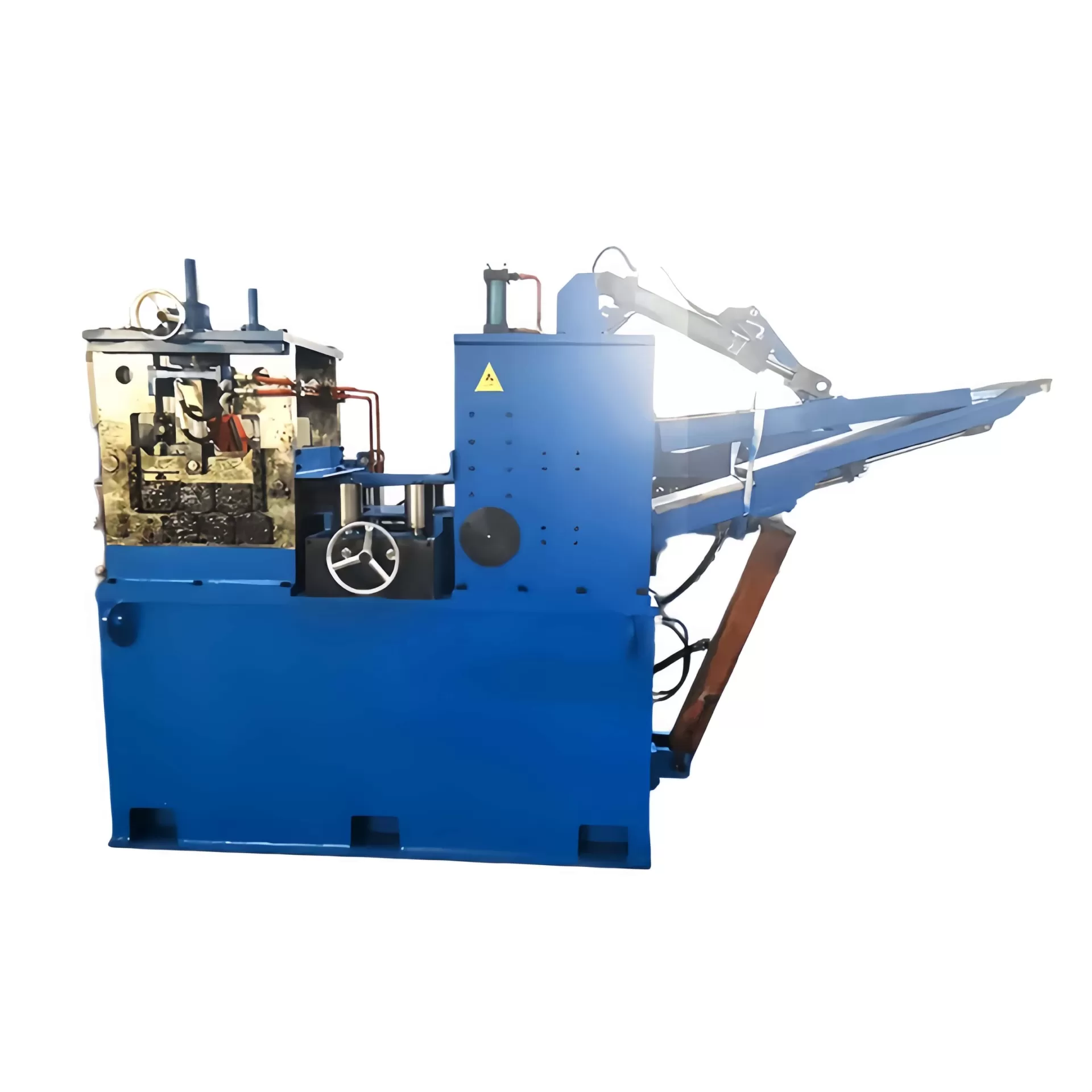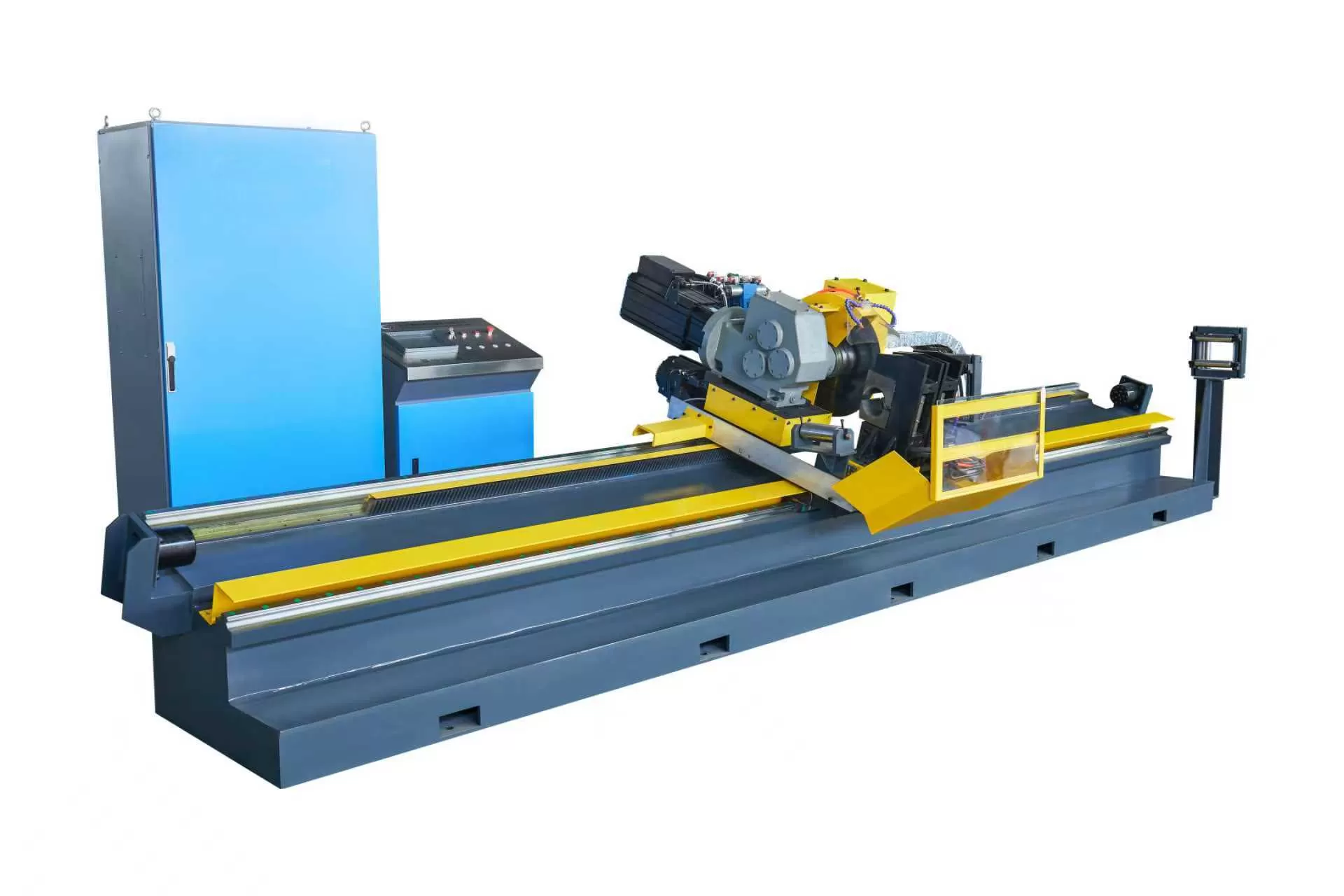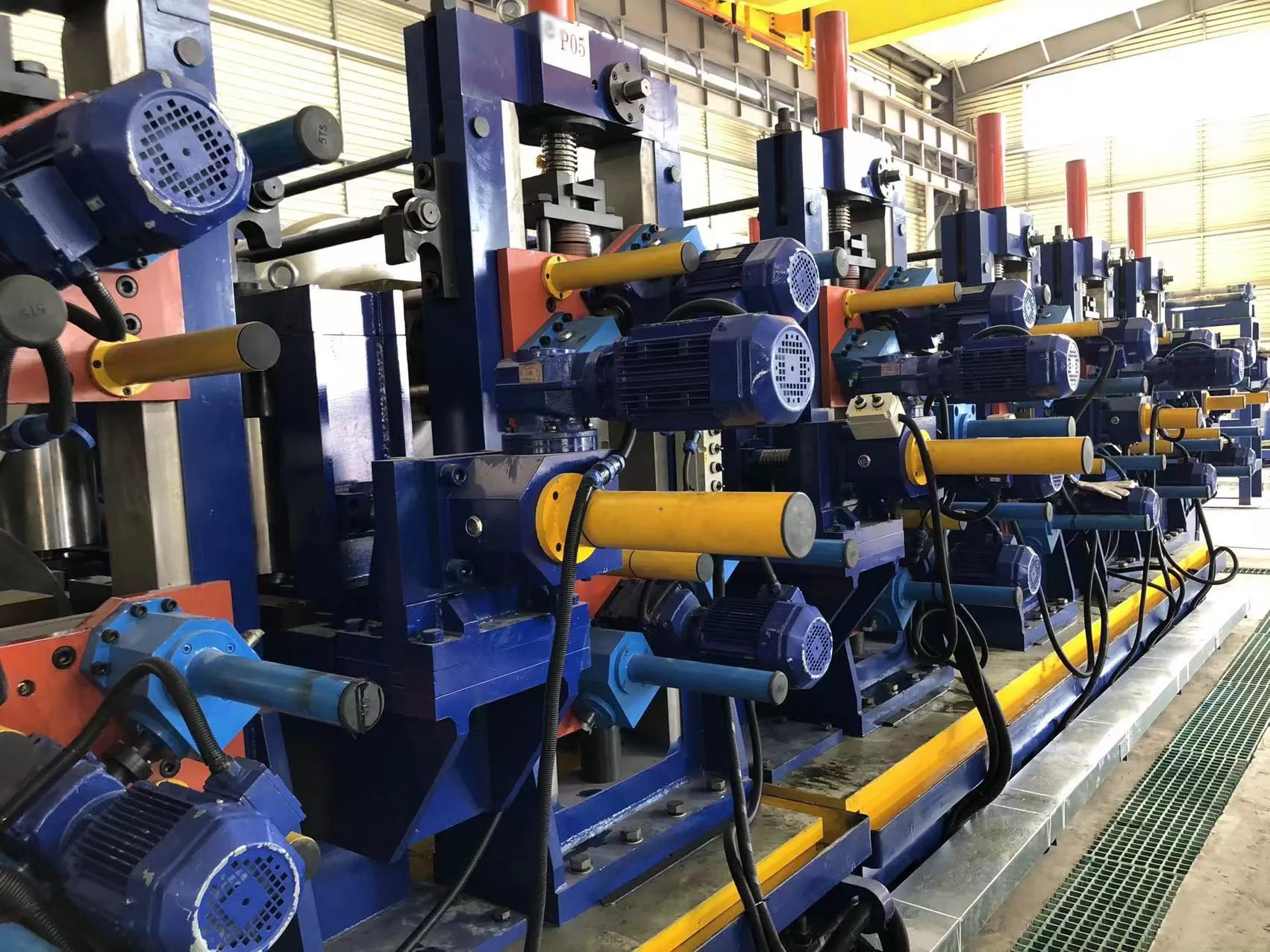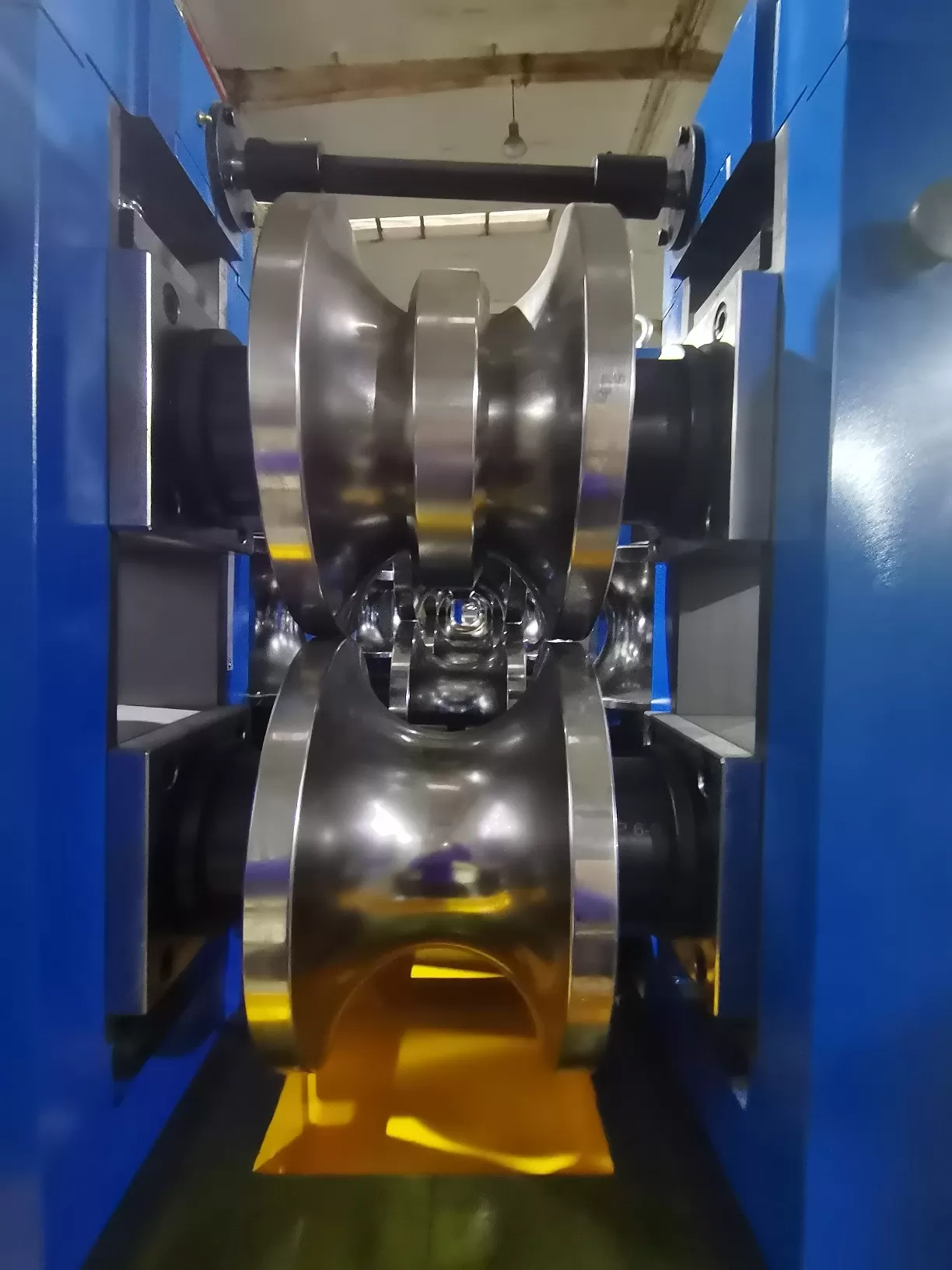
In high‑frequency (HF) induction welding of tubes, the ferrite rod used as an impeder core directly influences weld quality, energy consumption, and production stability. Despite its small size, this component must withstand extreme thermal and magnetic stresses. This article examines the engineering parameters that define a high‑performance ferrite rod, its failure mechanisms, and how modern mill builders like SANSO integrate these materials to achieve repeatable weld seams.
1. Magnetic properties that define ferrite rod performance
The suitability of a ferrite rod for induction welding is determined by three interlinked magnetic characteristics.
1.1 Initial permeability and frequency response
Initial permeability (µi) indicates how easily the material magnetises. For HF welding (typically 200–500 kHz), a µi of 800–1500 is common. Too low a permeability reduces the impeder’s ability to concentrate the magnetic field; too high may lead to excessive core losses. Measurements per IEC 60404 show that MnZn ferrites maintain µi > 1200 up to 300 kHz, while NiZn grades are used above 1 MHz.
1.2 Saturation flux density (Bs)
The impeder core must not saturate during the welding current cycle. Saturation causes a drastic drop in inductance, leading to unstable heating. Typical Bs for power ferrites is 400–500 mT at 25 °C, but it decreases with temperature. A grade with Bs > 450 mT at 100 °C ensures headroom even under continuous operation.
1.3 Resistivity and eddy current losses
Ferrites are ceramic semiconductors; their high resistivity (1–10 Ω·m) minimises eddy currents. However, impurities or micro‑cracks can create localised conducting paths. Core loss (Pcv) at 200 kHz / 100 mT should be below 300 kW/m³ for efficient operation. Loss data from the manufacturer must be verified under actual weld cycle conditions.
2. Ferrite rod grades and selection criteria for welding inductors
Not all ferrite rod compositions are equal. The choice between MnZn and NiZn families depends on the welding frequency and thermal environment.
2.1 MnZn versus NiZn for different frequency bands
MnZn ferrites: Higher µi (1500–3000) and Bs (~500 mT), suitable for 20–500 kHz. Preferred for heavy‑wall tube welding where high field strength is needed.
NiZn ferrites: Lower µi (50–500) but extremely high resistivity, used above 1 MHz. In thin‑wall tube mills running at > 600 kHz, NiZn avoids excessive heating.
2.2 Core loss curves and thermal management
A ferrite rod’s loss factor (tan δ/µi) should be below 10⁻⁶ at operating frequency. Data sheets often provide power loss density versus flux density at various temperatures. Selecting a grade where the minimum loss occurs at the expected core temperature (typically 80–120 °C) extends rod life. Water‑cooled impeders require a grade with consistent properties up to 150 °C.
2.3 Mechanical tolerances and coating requirements
Ferrites are brittle. For a ferrite rod used as an impeder, length tolerance of ±0.5 mm and diameter tolerance of ±0.1 mm are typical to ensure proper fit inside the coil. Many rods are coated with parylene or epoxy to resist moisture and chemical attack from cooling water.
3. Role of ferrite rod in tube mill induction welding systems
In a typical tube mill, the ferrite rod is placed inside the welded tube (as an impeder) to concentrate the magnetic field on the seam edges. Its performance dictates the efficiency of the weld.
3.1 Impeder design and the need for high‑permeability rods
The impeder increases the inductance of the work coil, raising the Q‑factor. A high‑µ ferrite rod allows a shorter impeder length, reducing the heat‑affected zone. Finite‑element simulations show that a µr of 1000 can double the induced current density at the seam compared to air‑core operation.
3.2 Impact on weld quality and energy efficiency
Consistent seam temperature requires stable magnetic coupling. Variations in ferrite rod permeability due to temperature drift cause power fluctuations. Modern mills use closed‑loop power control, but the rod’s Curie temperature (typically > 200 °C) must not be approached. Field data from a 6‑inch pipe mill using SANSO’s HF welder demonstrated that replacing a degraded MnZn rod with a new one (µi = 1300) reduced power consumption by 12 % while eliminating cold welds.
3.3 Case study: retrofitting a SANSO mill with optimized ferrite rods
A Middle Eastern tube producer operating a SANSO ERW mill faced frequent impeder failures every 200 hours. Analysis revealed thermal cracking due to a mismatch between the ferrite’s coefficient of thermal expansion (CTE) and the stainless‑steel holder. Switching to a MgZn‑based ferrite rod with CTE = 9 ppm/°C (matching the holder) and a higher Curie temperature extended impeder life beyond 800 hours, with consistent weld bead geometry.
4. Common failure modes of ferrite rod in industrial environments
Understanding why ferrite rods fail helps in specifying the right grade and protection.
4.1 Thermal cracking and stress relief
Rapid heating and cooling cycles induce tensile stresses. Ferrites have low tensile strength (≈30 MPa). Cracks usually initiate at corners or machining marks. Solution: specify rods with chamfered ends and use a resilient mounting that accommodates expansion.
4.2 Partial discharge and insulation breakdown
In high‑voltage welders, the intense electric field can cause partial discharges through micro‑porosity. This degrades the material locally and leads to runaway failure. Vacuum‑impregnation with varnish or the use of fully dense ferrites (porosity < 2 %) mitigates this.
4.3 Solutions: material selection and protective coatings
For heavy‑duty applications, a ferrite rod with a fine‑grain microstructure (grain size < 10 µm) offers higher mechanical strength. Additionally, a 50 µm parylene‑C coating provides electrical insulation and moisture barrier without affecting magnetic performance.
5. Quality assurance and testing methods for ferrite rods
When procuring ferrite rods, buyers should request evidence of these tests.
Permeameter measurement (IEC 60404): Confirms µi and Bs at 25 °C and 100 °C.
X‑ray fluorescence (XRF): Verifies the Fe₂O₃, MnO, ZnO ratio; deviations of > 0.5 % can alter magnetic properties.
Mechanical strength testing: Three‑point bend test to ensure fracture force > 150 N for a typical 20 mm diameter rod.
Thermal shock test: 10 cycles from 25 °C to 200 °C within 5 minutes; no visible cracks.
6. Sourcing ferrite rods: what to specify to your supplier
To achieve repeatable welding performance, the specification should include:
Dimensional tolerances (e.g., diameter 25 ± 0.1 mm, length 500 ± 0.5 mm).
Magnetic properties: µi min. 1200 at 10 kHz, Bs min. 450 mT at 25 °C.
Coating type and thickness.
Batch traceability with mill certificates.
Many tube mills now partner with equipment manufacturers like SANSO to integrate pre‑qualified ferrite rods into their welder design. For example, SANSO offers a complete impeder assembly with a custom‑grade ferrite rod matched to the mill’s power supply and tube dimensions.
7. Future trends: soft magnetic composites and ferrite alternatives
While ferrites dominate today, research into soft magnetic composites (SMCs) – iron powder insulated with polymer – may offer higher saturation (1.5 T) and isotropic properties. However, their higher losses at > 50 kHz limit current use. For now, the MnZn ferrite rod remains the most cost‑effective solution for HF welding. Improvements in manufacturing (hot isostatic pressing) are yielding rods with near‑theoretical density, further reducing losses.
Frequently Asked Questions
Q1: What is a ferrite rod and why is it used in tube welding?
A1: A ferrite rod is a ceramic magnetic component placed inside the tube during high‑frequency induction welding. It concentrates the magnetic field on the seam edges, increasing heating efficiency and ensuring a consistent weld. Without it, much of the magnetic energy would be wasted.
Q2: How do I select the right ferrite rod grade for my mill?
A2: Consider your welding frequency: for 200–500 kHz, MnZn ferrites with initial permeability 1200–2000 are typical. For frequencies above 600 kHz, NiZn grades may be needed. Also check the saturation flux density (should exceed the peak field) and thermal stability (Curie temperature > 200 °C). Suppliers like SANSO can recommend a grade based on your tube size and power settings.
Q3: What causes a ferrite rod to crack during operation?
A3: Thermal shock and mechanical stress are the main culprits. Rapid heating creates temperature gradients that induce tensile stress. Using a rod with a coefficient of thermal expansion (CTE) matched to the holder, and ensuring gentle start‑up ramp, can prevent cracking. Also, avoid clamping the rod too tightly.
Q4: Can a worn ferrite rod affect weld quality?
A4: Yes. As the rod degrades—through micro‑cracks or surface erosion—its effective permeability drops, reducing the induced current. This leads to cold welds or inconsistent penetration. Regular inspection (every 200 hours) and replacement when cracks are visible is recommended.
Q5: Are there alternatives to ferrite rods for impeders?
A5: Some high‑power mills use laminated iron‑silicon cores, but these are bulky and have higher losses at HF. Ferrites remain the standard because of their high resistivity and low loss at typical welding frequencies. Research continues on soft magnetic composites, but they are not yet commercially widespread for this application.
Q6: How does the flux calcium cored wire machine relate to ferrite rods?
A6: In tube mills that produce pipes for oil and gas, the welding process may use flux‑cored wire for the seam. The ferrite rod ensures a stable induction weld, while the flux‑cored wire provides the necessary metallurgy. SANSO manufactures both the mill and the ancillary equipment, including flux calcium cored wire machines, ensuring seamless integration of the entire production line.
Q7: Can I repair a cracked ferrite rod?
A7: No, cracks cannot be effectively repaired—they alter the magnetic circuit and will propagate under thermal cycling. Replacement is the only reliable option. To extend life, consider rods with a protective coating and a holder designed to minimise stress.
Selecting and maintaining the correct ferrite rod is a small but critical part of efficient tube production. With documented material properties and robust integration into the mill design—expertise offered by companies like SANSO—producers can achieve consistent weld quality and lower operating costs.