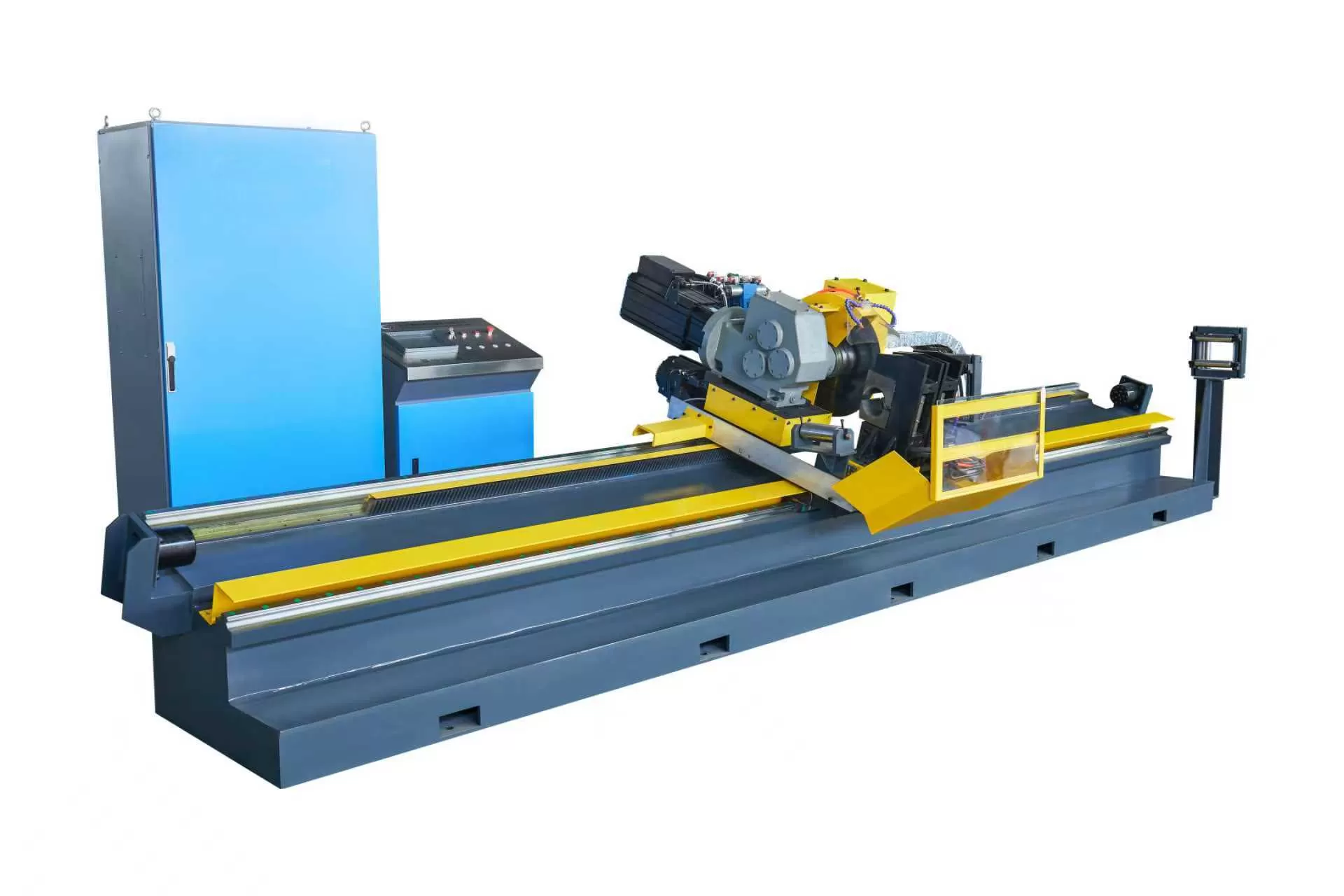
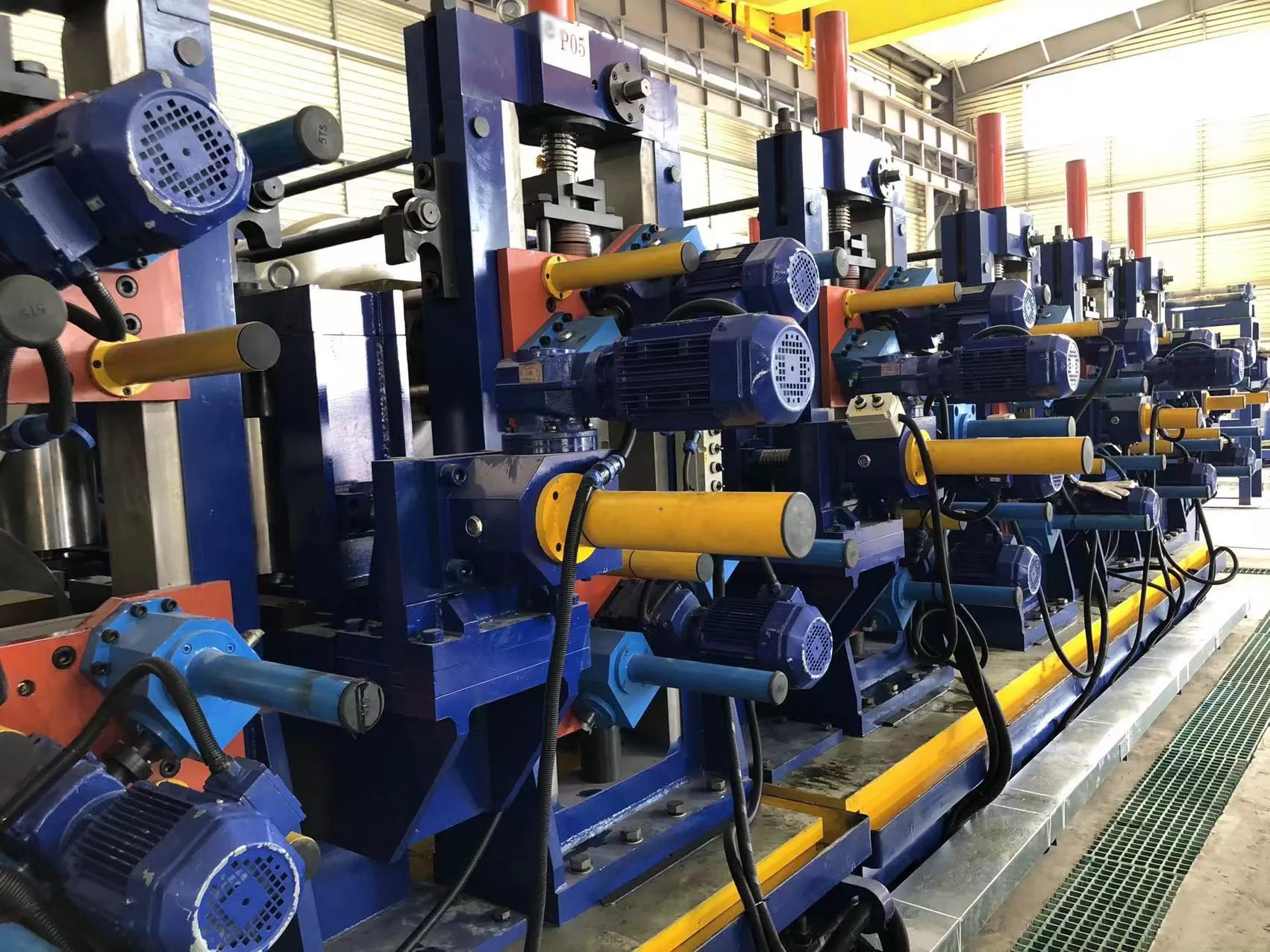
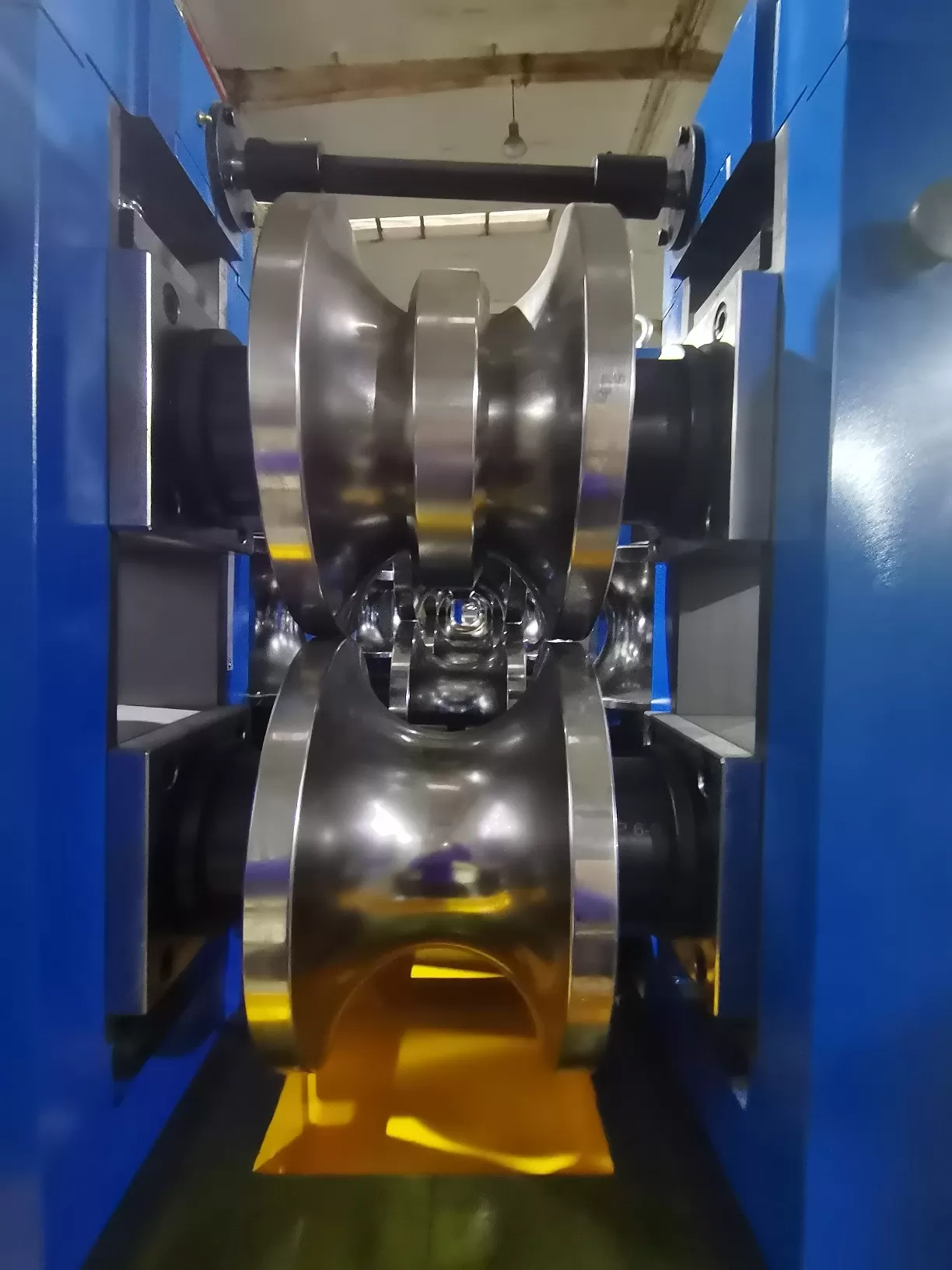
In the competitive landscape of welded pipe manufacturing, not every production line requires massive, automated heavy machinery. For many workshops specializing in furniture tubes, light-gauge decorative pipes, or small-diameter conduits, the heavy capital investment of hydraulic systems is unnecessary. This is where the manual decoiler machine proves its worth. It is a fundamental piece of equipment that balances cost, simplicity, and functionality.
While the industry often highlights fully automated systems, the humble manual decoiler machine remains a bestseller for specific applications. It serves as the starting point for the raw material, holding the steel strip coil and allowing it to unwind smoothly into the forming section.
Choosing the right equipment is about matching the machine to the job. Manufacturers like SANSO have extensive experience in outfitting factories of all sizes. They often recommend manual units for lighter lines where speed and massive coil weights are not the primary concerns. Understanding the capabilities and mechanics of this machine will help you decide if it is the right fit for your factory floor.
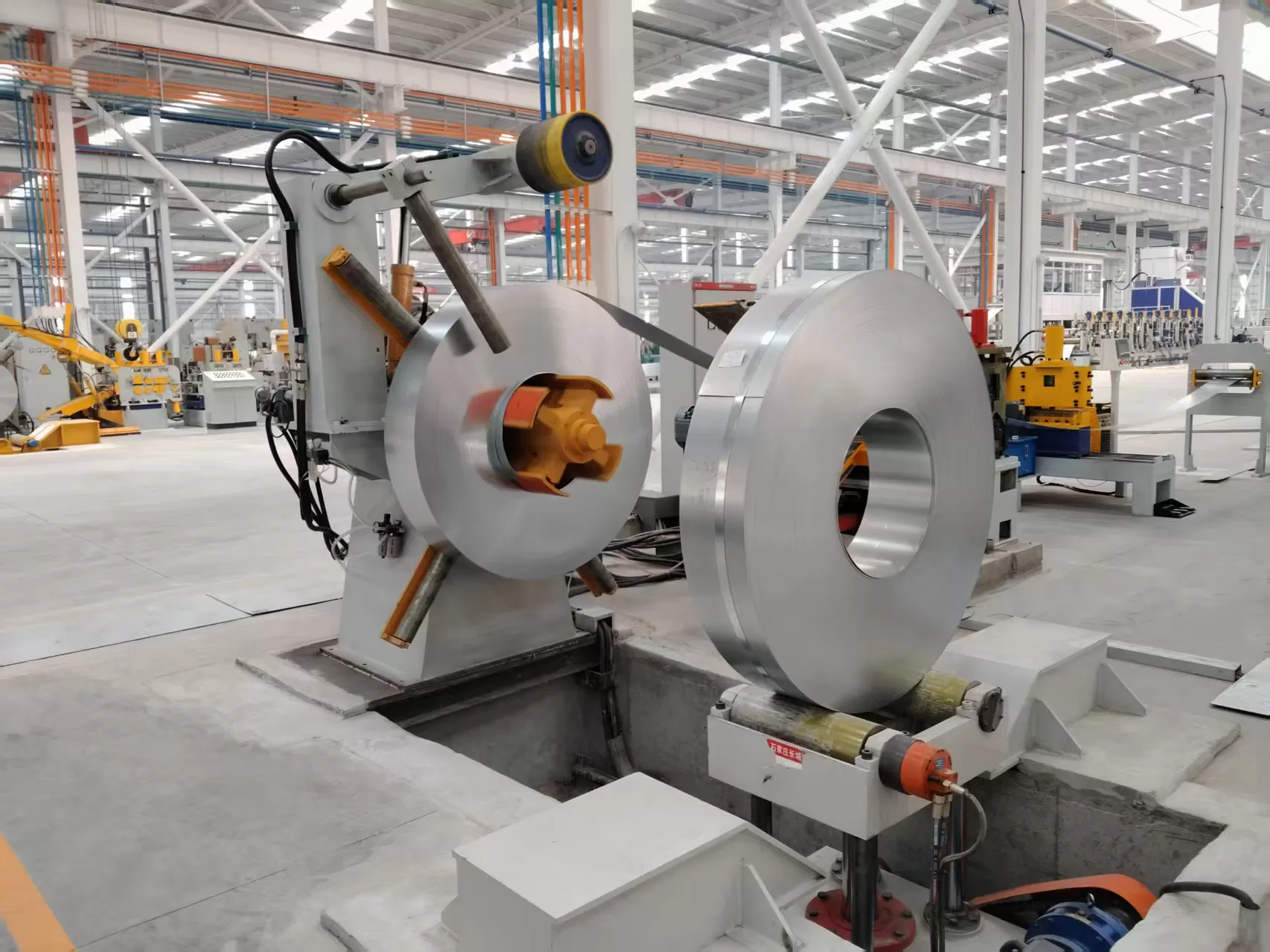
A manual decoiler machine is a mechanical device designed to hold a coil of metal strip. Its primary function is to expand continuously to grip the inner diameter of the coil. Unlike its hydraulic counterparts, this expansion is achieved through physical manpower.
The operator rotates a handwheel or a crank handle located at the back or side of the machine. This handle is connected to a central screw rod or a scroll plate mechanism inside the main shaft. As the operator turns the handle, the internal linkage pushes the mandrel segments (leaves) outward.
This outward pressure secures the coil effectively. Once the coil is gripped, the manual decoiler machine allows the strip to pay off into the accumulator or directly into the forming mill. The rotation of the coil is usually passive, meaning the pulling force comes from the tube mill itself, though motorized versions exist to assist with the unwinding process.
The Cost Benefits of Choosing a Manual Decoiler Machine
The most obvious advantage of installing a manual decoiler machine is the cost savings. The initial purchase price is significantly lower than that of a hydraulic unit. You are not paying for hydraulic power packs, complex valve banks, or high-pressure cylinders.
For a startup tube mill or a secondary line running small batches, this difference in capital expenditure is crucial. It frees up budget for other critical components like high-frequency welders or cutting saws.
Maintenance costs are also drastically reduced. A manual decoiler machine does not require hydraulic oil changes, filter replacements, or seal kit repairs. There are no solenoids to burn out and no hoses to leak. The simplicity of the design means that with basic greasing, the machine can run for decades with minimal investment.
Weight Capacity Limitations of the Manual Decoiler Machine
It is vital to understand the physical limits of a manual decoiler machine. Because the expansion force relies on the operator's arm strength and the mechanical advantage of a screw thread, there is a limit to how much weight the mandrel can support without slipping or deforming.
Typically, a manual decoiler machine is rated for coils weighing between 1 ton and 3 tons. Some heavy-duty manual versions can handle up to 5 tons, but this is usually the upper ceiling. Attempting to load a 10-ton or 20-ton coil onto a manual unit is dangerous and mechanically unsound.
For factories running standard large-bore pipes, a hydraulic unit is mandatory. However, for manufacturers producing 1-inch or 2-inch furniture tubes, the raw material coils rarely exceed 2 or 3 tons. In these scenarios, the manual decoiler machine is perfectly sized for the task.
The Mechanical Linkage System Design
The internal engineering of a manual decoiler machine is a study in mechanical efficiency. Most high-quality units use a four-bar linkage system or a sliding wedge design driven by a central trapezoidal screw.
When you turn the handle, the screw rod moves a central hub forward or backward. This hub is connected to the mandrel segments via steel link arms. As the hub moves, it forces the arms to push the segments outward.
Top-tier manufacturers like SANSO use hardened steel for these link arms and pins. This ensures that the manual decoiler machine maintains concentricity. If the links wear out or bend, the mandrel will not expand in a perfect circle, leading to a "wobbly" coil rotation that causes tension problems downstream.
Tension Control and Braking on a Manual Decoiler Machine
Even though the machine is simple, tension control is non-negotiable. If the strip is too loose, it will sag and hit the floor. If the mill stops suddenly and the decoiler keeps spinning, the coil will unravel into a mess.
To prevent this, every manual decoiler machine is equipped with a mechanical brake. This is usually a friction brake system. It typically involves a brake band that wraps around a drum on the main shaft, or a simple disc brake caliper.
The operator adjusts the tension by tightening a knob or a bolt on the brake band. This creates constant drag. This drag ensures that the strip remains taut between the manual decoiler machine and the next stage of the mill. It acts as a passive back-tension generator, which is essential for stable tube forming.
Loading a Coil onto a Manual Decoiler Machine
Loading a coil requires a specific procedure when using a manual system. Since there is no hydraulic car to lift and center the coil automatically, operators usually use an overhead crane or a forklift with a C-hook.
The operator must collapse the mandrel of the manual decoiler machine to its smallest diameter by turning the crank in the reverse direction. The crane then positions the coil over the mandrel.
This step requires skill. The alignment must be precise because the machine cannot "shift" to meet the coil. Once the coil is slid onto the mandrel, the operator manually cranks the handle to expand the pads until they bite firmly into the coil's inner metal wrap.
Comparing Motorized Pay-Off vs. Passive Pull
While the expansion is manual, the rotation of the manual decoiler machine can be either passive or motorized. In a standard setup, the machine is passive. The straightening machine or the pinch rolls of the tube mill pull the strip, causing the decoiler to spin.
However, for very thin materials (like 0.3mm or 0.5mm thickness), the pulling force might stretch or tear the strip. In these cases, a motor and gearbox can be attached to the manual decoiler machine to drive the rotation.
This "active pay-off" reduces the tension on the strip itself. Even with a motor added for rotation, the machine is still classified as a manual decoiler machine because the core function—gripping the coil—remains a manual mechanical operation.
Why a Support Arm is Sometimes Necessary
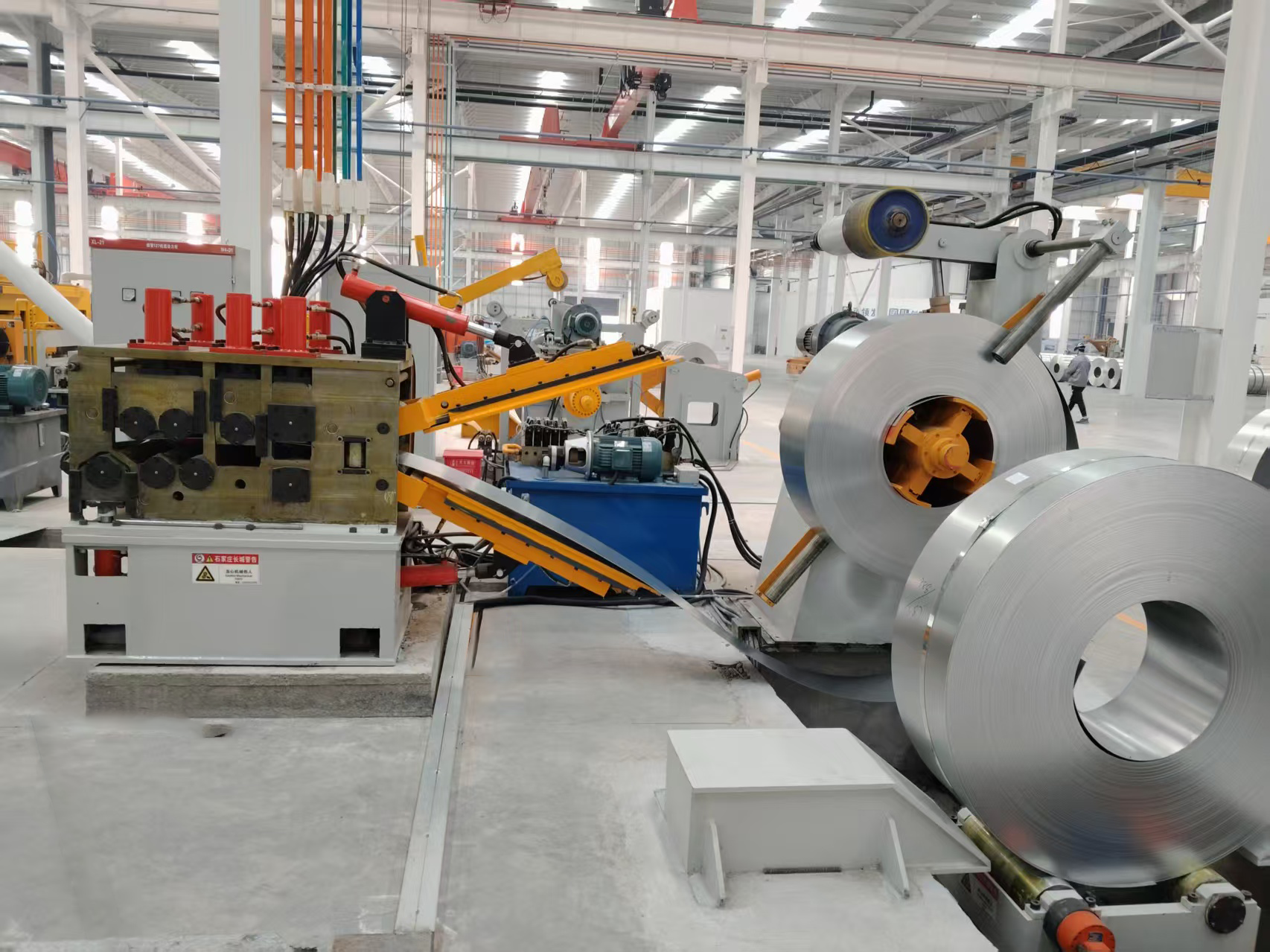
Just like hydraulic units, a manual decoiler machine can suffer from shaft deflection if the coil is too heavy or too wide. The main shaft is a cantilever beam, supported only on one side.
To mitigate this, many units come with a manual support arm. Once the coil is loaded, the operator swings a heavy steel arm up to support the free end of the shaft.
This effectively turns the cantilever setup into a simply supported beam, doubling the stability. If you are running coils near the maximum weight limit of your manual decoiler machine, using the support arm is critical to prevent the main shaft from bending permanently.
Durability and Maintenance Requirements
One of the reasons brands like SANSO continue to sell so many of these units is their durability. A manual decoiler machine is essentially a heavy steel frame with simple rotating parts. There is very little that can go wrong.
Maintenance routines are straightforward. The primary task is greasing the expansion mechanism. There are grease nipples located on the sliding hub and the rotating bearings.
Operators should apply high-pressure grease once a week. They should also inspect the brake band for wear. Over time, the friction material on the brake will wear down. Replacing a brake band on a manual decoiler machine is a cheap and quick job that can be done in-house without specialized technicians.
Applications in Different Industries
While we focus on welded pipe mills, the manual decoiler machine is versatile. It is widely used in the stamping industry, roll forming lines for roof panels, and slitting lines.
In the context of tube mills, it is the standard choice for "ornamental" pipe lines—those making stainless steel handrails or curtain rods. These products use thin gauge steel and smaller coils, which matches the specifications of a manual decoiler machine perfectly.
It is also the preferred backup machine. Large factories often keep a spare manual decoiler machine in storage. If their main hydraulic unit fails, they can swap in the manual unit to keep production running, minimizing expensive downtime.
Safety Considerations for Operators
Despite its lack of high-pressure hydraulics, safety is still paramount. The energy stored in a steel coil is immense. Operators must ensure the manual decoiler machine is bolted securely to the concrete floor.
When cutting the steel straps that bind the coil, the outer layer can spring open violently. Even on a manual machine, it is advisable to use a "snubber" or a hold-down arm if available. If not, operators must use proper clamps.
Furthermore, because the cranking requires physical effort, ergonomic safety is important. The handle should be at a comfortable height. A well-maintained manual decoiler machine should expand smoothly; if the operator has to struggle significantly to turn the handle, it indicates that the internal screws or links are dry or damaged
The manual decoiler machine is a testament to the idea that simpler is often better. For light to medium-duty applications in the welded tube industry, it offers an unbeatable return on investment. It removes the complexity of hydraulics while providing reliable, sturdy performance.
It allows smaller workshops to compete by lowering overhead costs. While it lacks the push-button convenience of fully automated systems, its reliability makes it a favorite among experienced mill operators.
When sourcing your equipment, look for robust construction and quality steel components. A manufacturer like SANSO understands the stresses placed on these machines and engineers them to last. By choosing the right manual decoiler machine