In the fast-paced world of international welded pipe mill manufacturing, efficiency starts at the very beginning of the production line. If you cannot feed raw material smoothly, the best welding and cutting stations in the world will not save your productivity. This is where the hydraulic uncoiler becomes the most valuable asset on your factory floor.
Handling heavy steel coils is dangerous and difficult work. A standard manual decoiler often lacks the power and safety features required for modern high-speed tube mills. A heavy-duty hydraulic uncoiler provides the muscle needed to handle massive tonnage while maintaining the precise tension control required for quality tube forming.
Whether you are setting up a new line or upgrading an old one, selecting the right equipment is critical. Industry leaders like SANSO have long understood that the reliability of the uncoiling process sets the pace for the entire shift. This article breaks down everything you need to know about this essential machine.
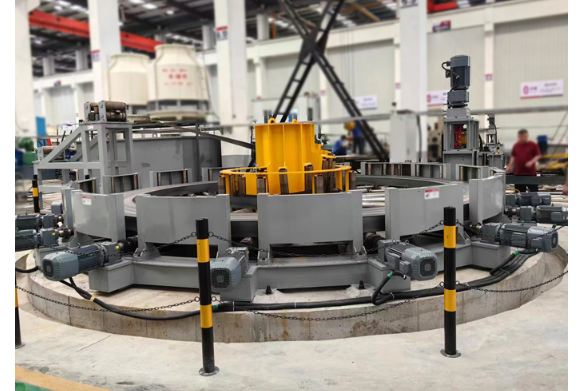
A hydraulic uncoiler is a machine designed to hold and unwind master coils of steel or other metals. Unlike manual versions, it utilizes hydraulic power to expand the mandrel (the central shaft) and often to rotate the coil. This hydraulic expansion is crucial for gripping the inner diameter of the coil securely.
The core mechanism involves a hydraulic cylinder located inside the main shaft. When activated, this cylinder pushes a wedge system that expands the segments of the mandrel. This ensures that the heavy coil does not slip during operation.
Once the coil is secured, the hydraulic uncoiler feeds the metal strip into the next stage, usually a leveler or a shear welder. The rotation can be passive (pulled by the line) or active (motorized pay-off), depending on your specific line speed requirements.
For heavy-duty applications, a hydraulic uncoiler is almost always paired with a coil loading car. This allows operators to stage the next coil while the current one is running, significantly reducing downtime between coil changes.
The Role of the Hydraulic Uncoiler in Tube Mill Lines
In a welded pipe mill, consistency is currency. If the metal strip enters the forming section with uneven tension, it leads to defects in the pipe’s seam. The hydraulic uncoiler is responsible for generating "back tension."
Back tension ensures that the strip remains flat and taut as it travels through the accumulator and into the forming rolls. Without a high-quality hydraulic uncoiler, the strip might sag or jerk, causing ripples in the material.
Furthermore, safety is a major concern in pipe manufacturing. Steel coils possess a tremendous amount of potential energy. If a coil band is cut without proper containment, the metal can spring back violently. A hydraulic uncoiler typically features a pneumatic or hydraulic hold-down arm (snubber arm) that presses on the top of the coil.
This arm prevents the outer layers of the coil from springing open ("clock-springing") when the straps are cut. This feature alone makes the hydraulic uncoiler a mandatory safety upgrade for many facilities.
Understanding Weight Capacity and Coil Widths
When sourcing a hydraulic uncoiler, the first two numbers you need to look at are weight capacity and width. In the pipe industry, coils can range from small, narrow strips for furniture tubes to massive, wide coils for structural piping.
A standard hydraulic uncoiler usually starts at a 5-ton capacity and can go up to 20 or 30 tons for heavy industrial lines. Overloading a machine is the quickest way to destroy the main bearings and the hydraulic expansion wedges.
Width is equally important. The cantilevered shaft of a single-end hydraulic uncoiler experiences significant torque. If you run a wide coil at the very end of the mandrel, the leverage can bend the shaft.
Manufacturers like SANSO often recommend double-cone uncoilers for extremely wide or heavy applications. However, for most standard pipe mills, a single-mandrel hydraulic uncoiler with a support arm is sufficient. The support arm swings up to hold the free end of the shaft, creating a stable, two-point support structure.
Hydraulic Expansion vs. Manual Expansion
Why pay extra for a hydraulic uncoiler when manual versions exist? The answer lies in speed and grip. Manual expansion requires an operator to physically crank a lever to expand the mandrel pads. This is slow, physically exhausting, and often fails to achieve the tight grip needed for heavy coils.
If the mandrel grip is loose, the heavy coil will slip on the shaft. This slipping damages the inner diameter of the coil and causes the hydraulic uncoiler to lose brake control.
With a hydraulic uncoiler, the operator simply pushes a button. The hydraulic system exerts tons of pressure outward, digging into the coil's ID (Inner Diameter). This guarantees zero slippage.
Additionally, hydraulic systems allow for automatic re-centering. If a coil is slightly telescopic or loose, the hydraulic pressure can adjust dynamically, whereas a manual system is static. This feature of the hydraulic uncoiler ensures smooth feeding even with imperfect raw materials.
Braking Systems on the Hydraulic Uncoiler
The brake is the unsung hero of the hydraulic uncoiler. When the tube mill stops—whether for a blade change, a weld fault, or an emergency—the uncoiler must stop immediately.
If the hydraulic uncoiler continues to spin after the line stops, the heavy coil will keep unwinding. This results in a "bird's nest" of loose metal strip on the floor, which is a nightmare to clean up and a waste of material.
There are generally two types of brakes used: pneumatic disk brakes and magnetic particle brakes. For general pipe mills, a pneumatic disk brake on the hydraulic uncoiler is standard. It provides strong stopping power.
For lines requiring very sensitive tension control, magnetic particle brakes are used. However, for a rugged environment like welded pipe manufacturing, a robust pneumatic brake on your hydraulic uncoiler is usually the preferred choice for durability and ease of maintenance.
Integrating the Hydraulic Uncoiler with Loading Cars
You cannot discuss the efficiency of a hydraulic uncoiler without mentioning the coil car. Loading a 10-ton coil onto a mandrel using a forklift is dangerous and slow. It creates a bottleneck every time a coil runs out.
A hydraulic coil car moves on rails perpendicular to the uncoiler. It lifts the coil and aligns it perfectly with the mandrel of the hydraulic uncoiler.
The operator drives the car forward, slews the coil onto the collapsed mandrel, and then activates the hydraulic expansion. The entire process takes minutes.
Brands that prioritize throughput, such as SANSO, design their hydraulic uncoiler and coil car systems to communicate. This ensures the height alignment is precise, preventing damage to the mandrel segments during loading.
Maintenance of Your Hydraulic Uncoiler
To keep your production line running, regular maintenance of the hydraulic uncoiler is non-negotiable. The most common failure point is the hydraulic system itself.
You must check the hydraulic fluid levels and filter condition regularly. Dirty oil can clog the valves that control the expansion cylinder. If the expansion fails, the hydraulic uncoiler becomes useless.
Greasing the moving parts is also vital. The sliding wedges inside the mandrel operate under extreme pressure. Without grease, they will seize up. A seized mandrel on a hydraulic uncoiler often requires a complete teardown to fix.
Check the brake pads. Since the hydraulic uncoiler provides back tension by dragging the brake, the pads wear down over time. Replacing them is cheap; replacing a scored brake disc is expensive.
Finally, inspect the hold-down arm wheel. This wheel runs on top of the moving strip. If the bearings seize, the wheel will drag and scratch your material. A well-maintained hydraulic uncoiler delivers scratch-free material to the mill.
Why the Wedge Type Expansion is Superior
When shopping for a hydraulic uncoiler, you may encounter different internal designs. The wedge-type expansion is the industry standard for pipe mills.
Some cheaper models use a link-arm system. While cheaper, link-arms have more moving parts and "slop." They are less rigid than wedges.
A wedge-type hydraulic uncoiler uses a solid steel pyramid shape that pushes the segments out. This design is incredibly robust. It can withstand the heavy shock loads that occur when a crane or coil car loads a heavy weight onto the machine.
For high-precision applications, the concentricity of the wedge system is superior. It ensures the coil rotates in a perfect circle. An off-center rotation creates a pulsing tension effect, which can ruin the weld consistency downstream. Always insist on wedge-type construction for your hydraulic uncoiler.
The hydraulic uncoiler is the anchor of the welded pipe production line. It dictates the maximum weight you can handle, the speed at which you can change coils, and the safety of your workforce. From the hydraulic expansion that grips the coil to the braking system that controls tension, every component plays a vital role.
Investing in a high-quality unit ensures that your levelers, accumulators, and welders can operate at peak efficiency. Cutting corners on the uncoiler leads to slippage, material damage, and frequent downtime.
Whether you are looking for a standard 5-ton unit or a custom heavy-duty solution, remember that quality manufacturing partners like SANSO can provide the durability required for international markets. By understanding the mechanics and maintenance needs of your hydraulic uncoiler