
Understanding the Pipe Mill Machine: A Guide to Production and Selection
2026-07-11
In industrial manufacturing, the creation of welded pipe requires specialized and efficient equipment. Central to this operation is the pipe mill machine. This integrated system transforms flat steel strip or plate into a continuous, strong, and precise pipe through a sequence of forming and welding processes.
For producers of structural and mechanical pipe, selecting the right mill is a major decision. It defines production capacity, product quality, and operational efficiency. Leading manufacturers in this field, such as SANSO, provide advanced technology designed to meet the rigorous demands of global markets.
What is a Pipe Mill Machine?
A pipe mill machine is an automated production line. It performs several key functions in sequence: it forms the metal, welds the seam, sizes the tube, and cuts it to length. The term often encompasses the entire line from the uncoiler to the final cut-off saw.
Core Functions and Output
The primary purpose is to produce longitudinally welded pipe. The machine takes raw material—typically coiled steel strip—and progressively shapes it into a cylindrical form. The open seam is then welded shut to create a continuous, strong pipe.
Key outcomes of this process include:
- High-volume production of consistent pipe.
- Precise control over diameter and wall thickness.
- A strong, reliable longitudinal weld.
- Efficient material use with minimal waste.
Key Components of a Modern Pipe Mill Line
A complete pipe mill machine is composed of several integrated stations. Each station has a specific role in the transformation process.
Entry and Feeding Section
This section prepares the raw material. It typically includes a decoiler to hold and pay out the steel coil, a leveling machine to flatten the strip, and entry guides to feed the material accurately into the forming section.
Forming Section
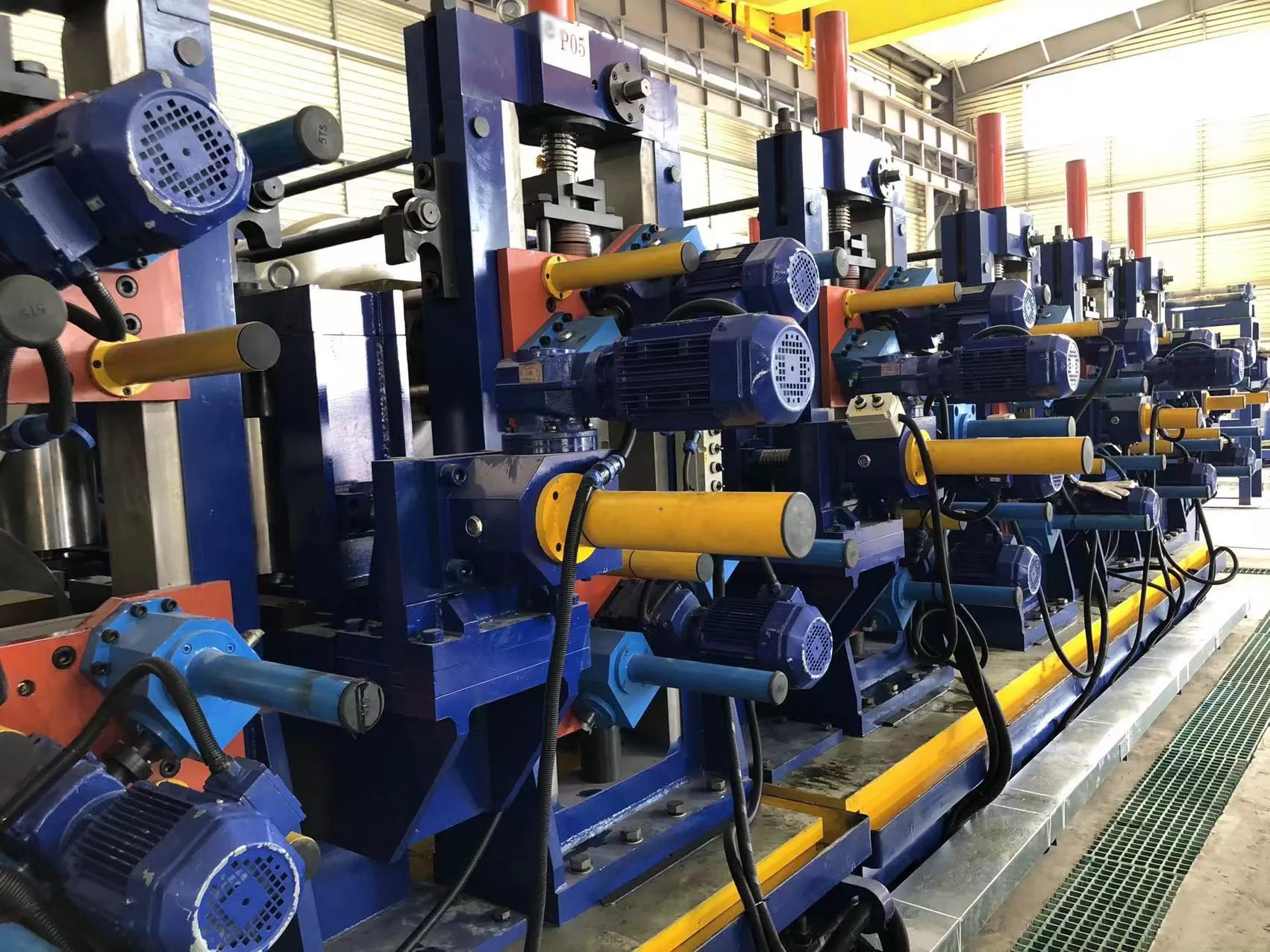
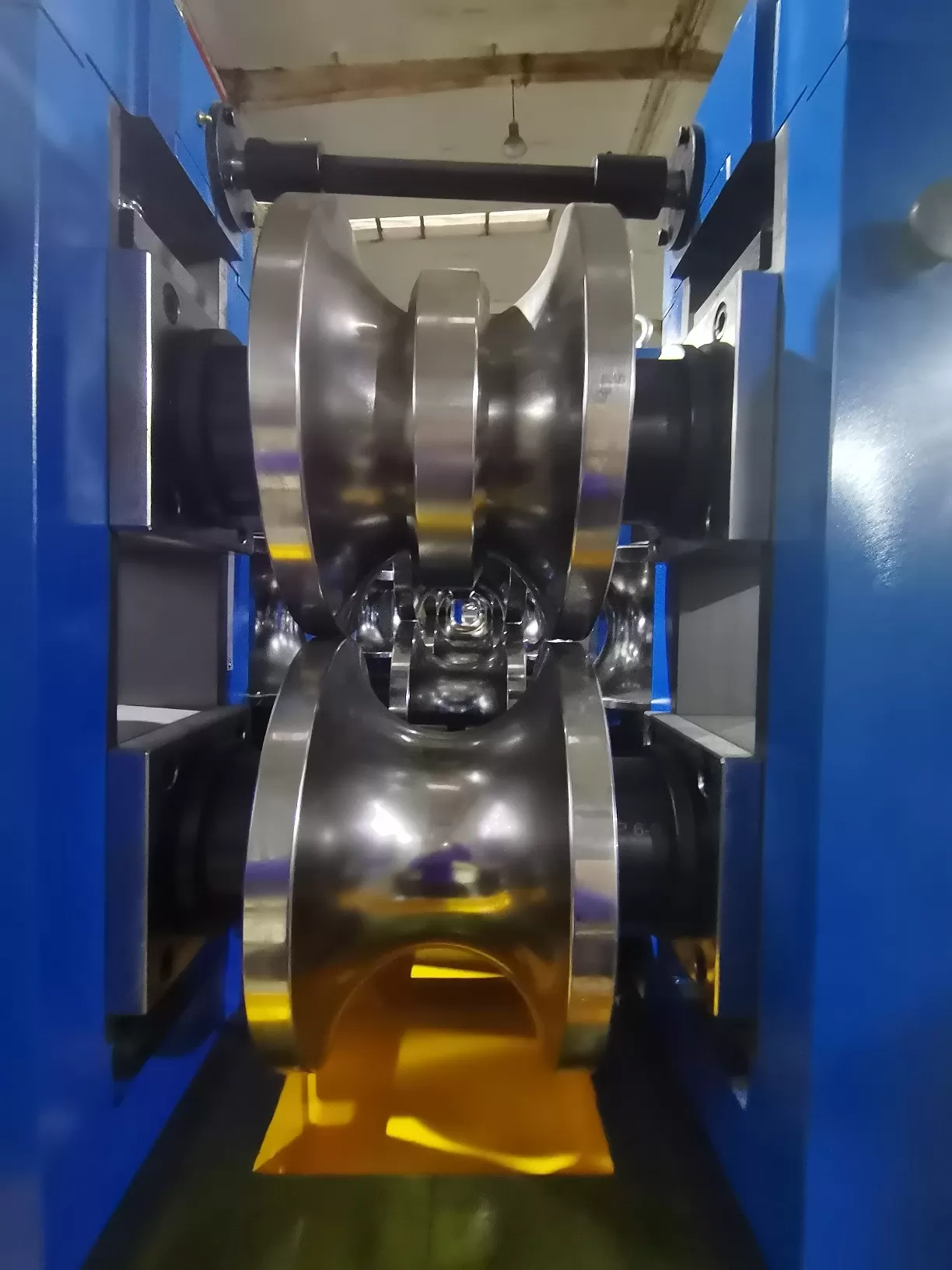
This is where the flat strip is gradually shaped into a circular profile. A series of driven roll stands, each with carefully contoured rolls, incrementally bend the steel edges upward until they meet.
- Initial stands create a rough "U" shape.
- Intermediate stands close the "U" into an "O".
- The final forming stand brings the edges together for welding.
Welding Station
This is the core of the pipe mill machine. The most common technology is High-Frequency (HF) Induction or Contact Welding. It creates a forge weld by heating the edges to a molten state and applying pressure to fuse them without filler material.
Sizing and Cut-Off
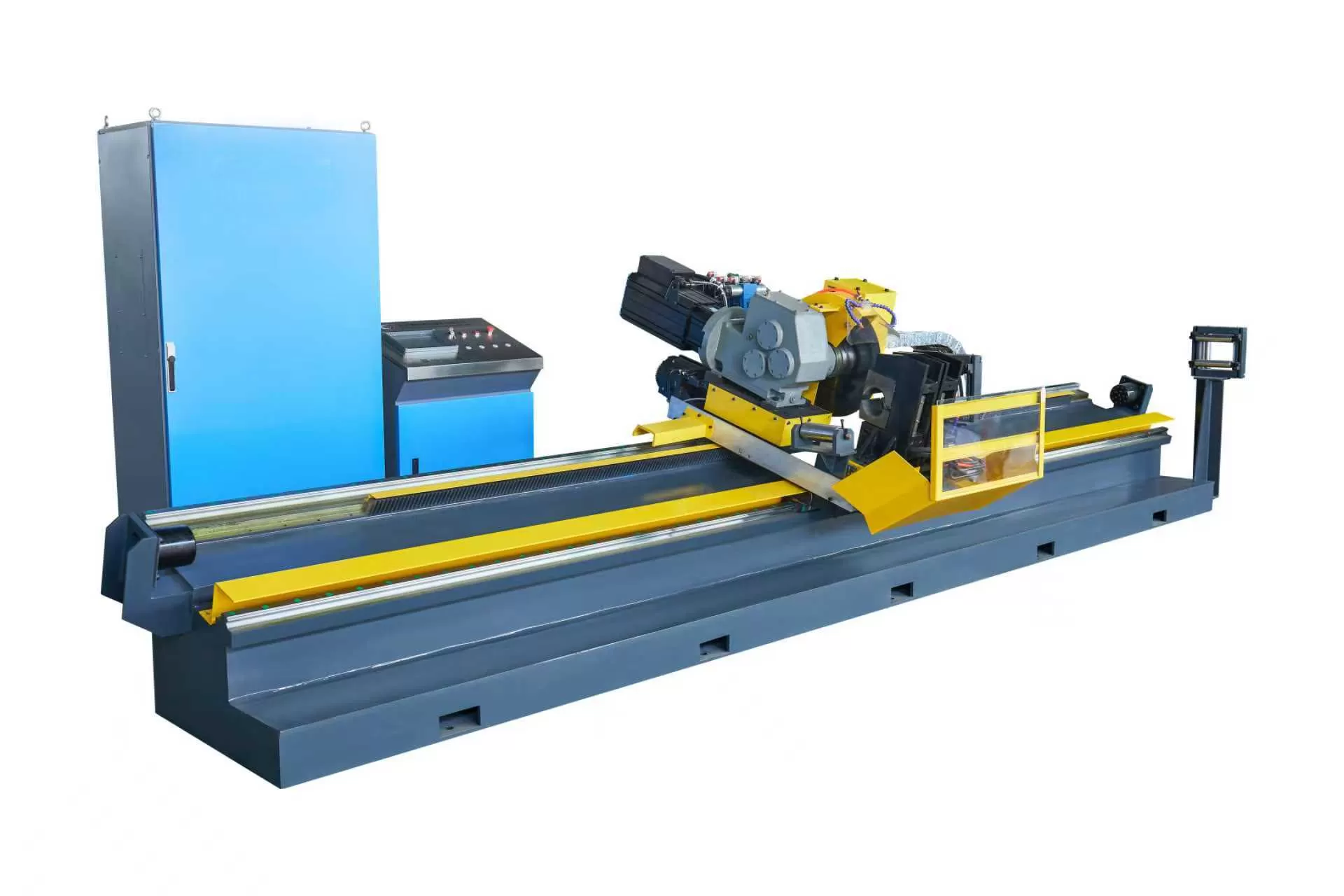
After welding, the pipe passes through sizing stands. These ensure perfect roundness and exact final diameter. A flying cut-off saw then cuts the continuous pipe into predetermined lengths without stopping production.
Different Types of Pipe Mills
Not all mills are the same. The design depends on the intended product and production volume.
HFI Welded Pipe Mills
High-Frequency Induction mills are the standard for carbon steel pipes. They are fast, efficient, and produce a clean, strong weld. They are suitable for a wide range of diameters and thicknesses used in structural and mechanical applications.
TIG and Laser Welding Mills
These are used for high-precision or stainless steel pipes. TIG (Tungsten Inert Gas) and laser welding offer exceptional weld quality and finish. They are often used for thinner walls and applications requiring a superior cosmetic appearance or high purity.
Spiral Pipe Mills
While not a longitudinal mill, its a key alternative. Spiral mills form pipe by helically winding and welding a steel strip. They are excellent for producing large-diameter pipes from narrower coils. This is a different class of pipe mill machine.
Factors to Consider When Selecting a Machine
Choosing the right mill requires a detailed analysis of your production goals and constraints.
Material and Product Specifications
Define the steel grades, strip width and thickness, and the final pipe dimensions (OD, wall thickness, length) you need to produce. The machine must be designed to handle your specific material yield strength and required tolerances.
Required Production Capacity
Calculate your target output in meters or tons per shift. This determines the necessary line speed. Higher speeds require more robust engineering, advanced controls, and potentially different welding technology.
Level of Automation
Modern mills offer various automation levels. Consider what you need:
- Basic: Manual coil loading, semi-automatic operation.
- Intermediate: Automatic seam tracking, digital controls.
- Advanced: Fully automated coil handling, robotic packing, integrated QA systems.
Suppliers like SANSO can guide you to the right level of automation based on your labor costs and quality requirements.
Space and Utility Requirements
A pipe production line is long. You must have adequate floor space for the mill itself, plus room for material handling and storage. Also, verify power, water, and compressed air needs for the specific pipe mill machine.
The Importance of Quality and Support
The machines construction and the manufacturers backup are as important as its specifications.
Machine Build Quality and Durability
Look for heavy-duty frame construction, precision-machined forming rolls, and reputable brand components (motors, drives, PLCs). A well-built machine ensures consistent product quality, less downtime, and a longer operational life.
Technical and After-Sales Service
Reliable support is critical. Before purchasing, understand the manufacturers offering:
- Availability of spare parts and delivery time.
- On-site installation and commissioning services.
- Comprehensive operator and maintenance training.
- Access to technical assistance for troubleshooting.
Frequently Asked Questions (FAQs)
Q1: What is the difference between a tube mill and a pipe mill machine?
A1: The terms are often used interchangeably. Technically, "tube" often refers to products with precise dimensions for structural or mechanical use, while "pipe" is associated with fluid conveyance. However, the fundamental machinery, a pipe mill machine, can manufacture both.
Q2: What materials can a standard HFI pipe mill process?
A2: HFI mills are primarily designed for low-carbon and mild steels. They can also process some low-alloy steels. For stainless steel, aluminum, or other non-ferrous metals, TIG or laser welding mills are typically required.
Q3: How often do the forming rolls need maintenance or replacement?
A3: It depends on production volume and material. Rolls are subject to wear. Regular inspection for scoring and dimensional accuracy is needed. High-production mills may need roll polishing or re-profiling annually, with replacement every few years.
Q4: Can one mill produce multiple pipe diameters?
A4: Yes, but with changeover. A flexible mill is designed with quick-change roll stands. Changing the pipe diameter requires changing the set of forming and sizing rolls, which can take several hours. The range of diameters one mill can handle is limited by its original design.
Q5: What safety features are essential on a modern pipe mill?
A5: Key safety features include emergency stop cables along the entire line, interlocked guards on all moving parts and pinch points, safety light curtains at loading zones, and proper grounding and shielding for the high-frequency welder to prevent electrical hazards.
Investing in a pipe mill machine is a significant step for any metal fabricator. The right equipment transforms raw steel into a valuable product efficiently and consistently. Understanding the machines components, the different technologies available, and the critical selection factors is key to making a sound decision.
A well-chosen mill improves product quality, increases output, and reduces operational costs. It forms the backbone of a profitable pipe production business. The partnership with a knowledgeable and supportive manufacturer is invaluable for long-term success.
For companies evaluating their options, considering established manufacturers with a proven track record is advisable. Firms like SANSO, which specialize in designing and building reliable pipe mill machine systems, can provide the technology and support needed to compete effectively in the global market.
article tags:
Related News
More Category
Hot Articles
-
 How to Choose the Right Reel Uncoiler for Your Welded Pipe Manufacturing Plant
 -
 High-Precision Decoiler and Straightener Systems: Industrial Selection & Setup Guide
 -
 Flying Cold Saw vs. Friction Saw: Which is Right for Your Tube Mill?
 -
 ERW Tube Mill: The Complete Engineering & Process Guide
 -
 Top 7 Global ERW Tube Mill Machine Manufacturers: Who Builds the Best?
New Articles
Hot Tags