Composite Cored Wire Production Line
Product Tags:
×
Get a Quote
Please fill in all * fields below, we will get back to you as soon as possible.



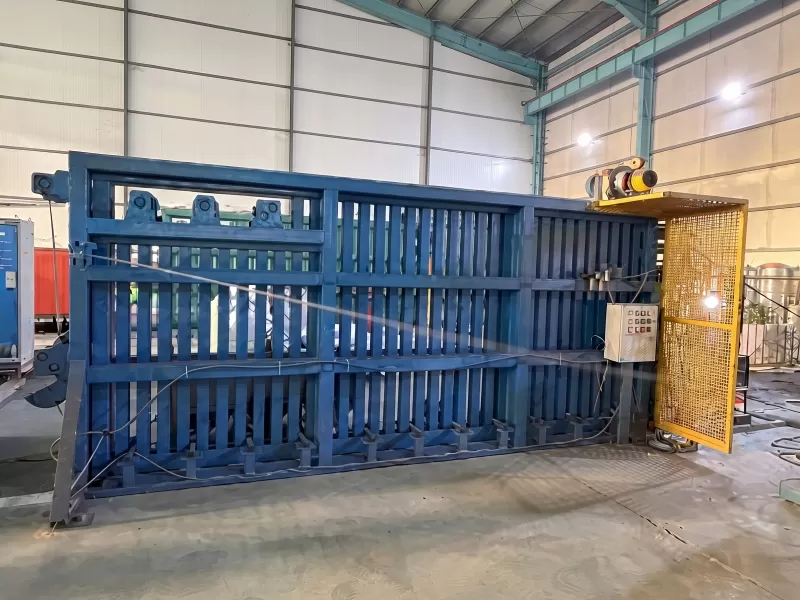
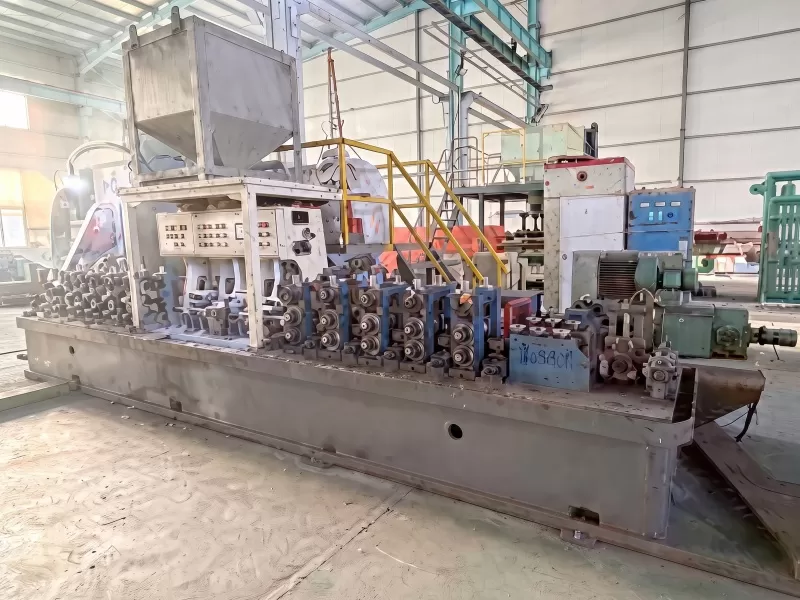
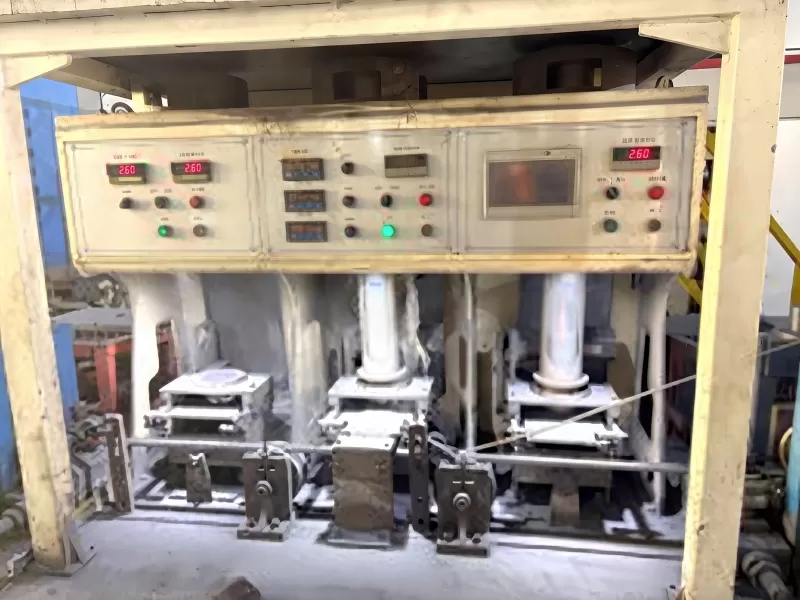
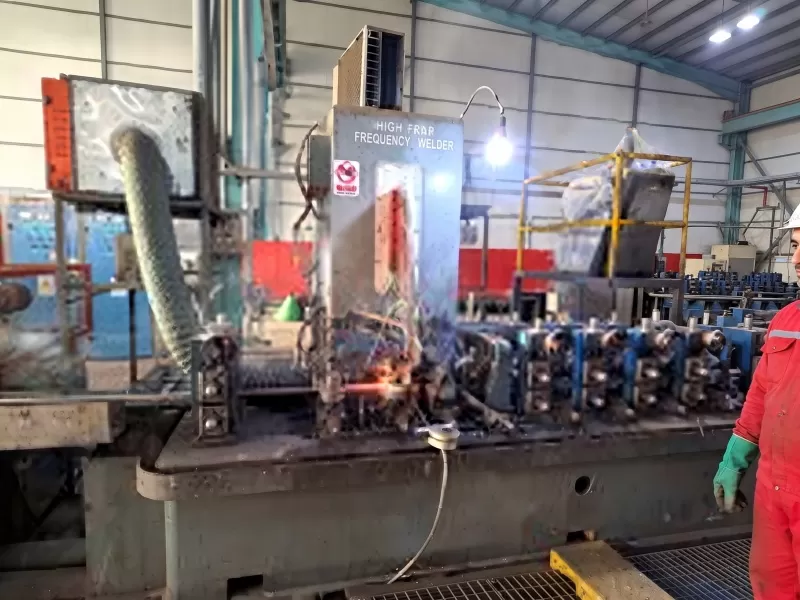
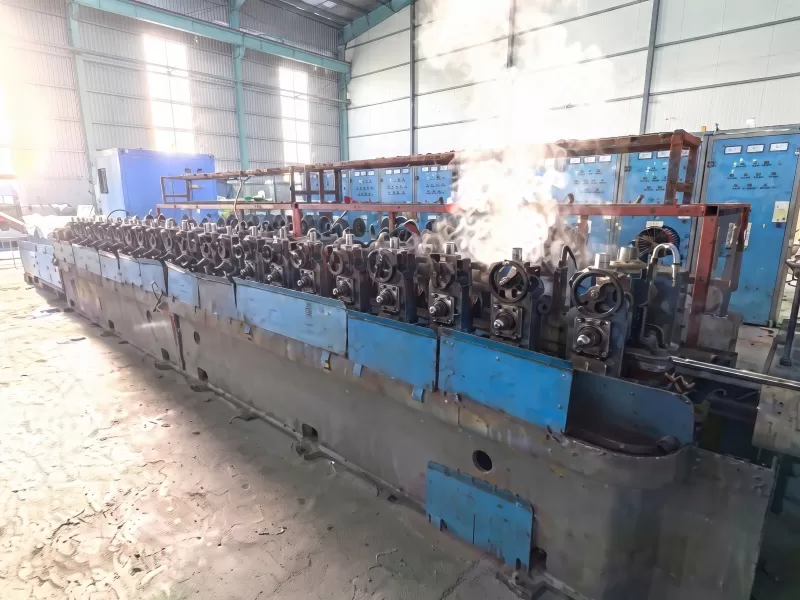
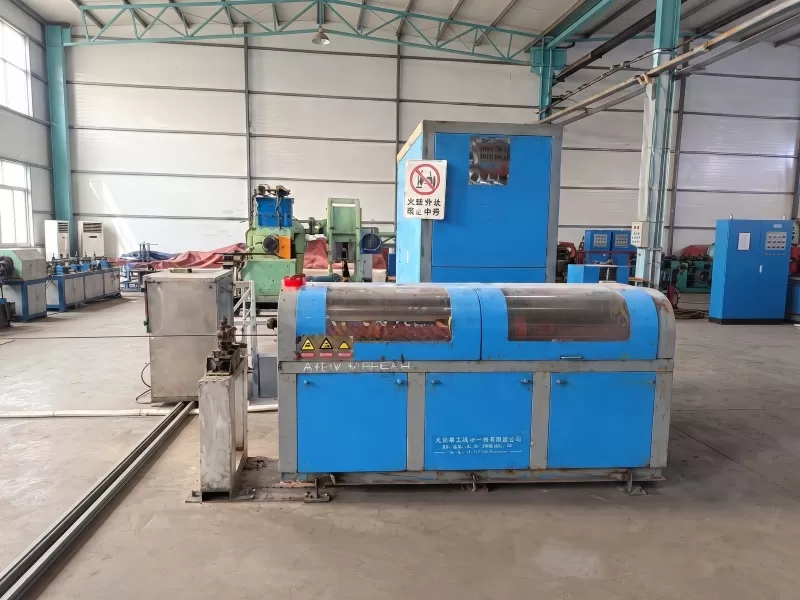
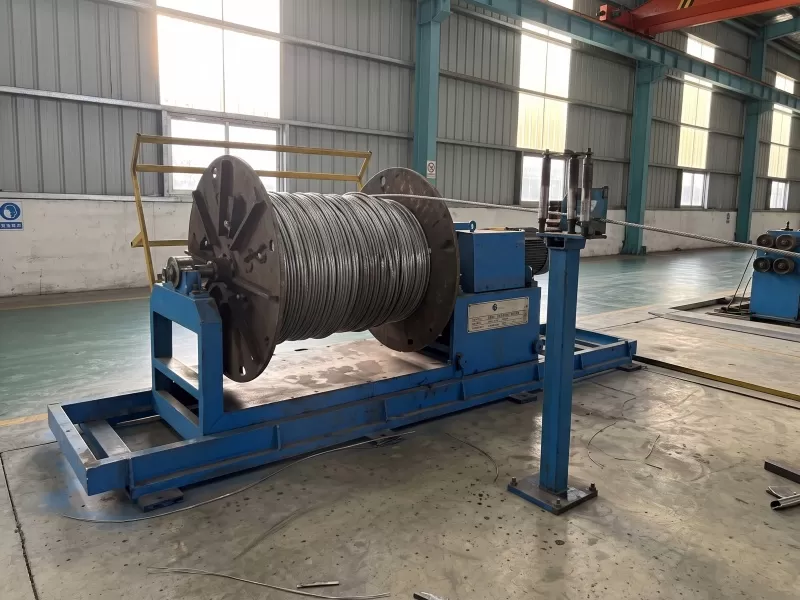
A composite cored wire production line is an automated industrial production line specifically designed for manufacturing "composite cored wire."Composite cored wire itself is a core material widely used in steel making,metallurgy and foundry (casting) applications.
In simple terms, this production line uses a precision process to tightly wrap alloy powders and calcium wire of various functions within a steel strip, producing a ready-to-use "wire-like" additive.
The process flow of the composite cored wire production line is as follows:
Steel coil uncoiler → Shear and end welder → Calcium wire uncoiler → Cage accumulator → Preforming machine → Calcium wire feeding unit and hopper feeder → HF welder → Calibration machine → Annealing equipment → Rewinder
Each section is arranged to support continuous production, stable filler feeding, reliable seam sealing, and consistent finished wire rewinding.
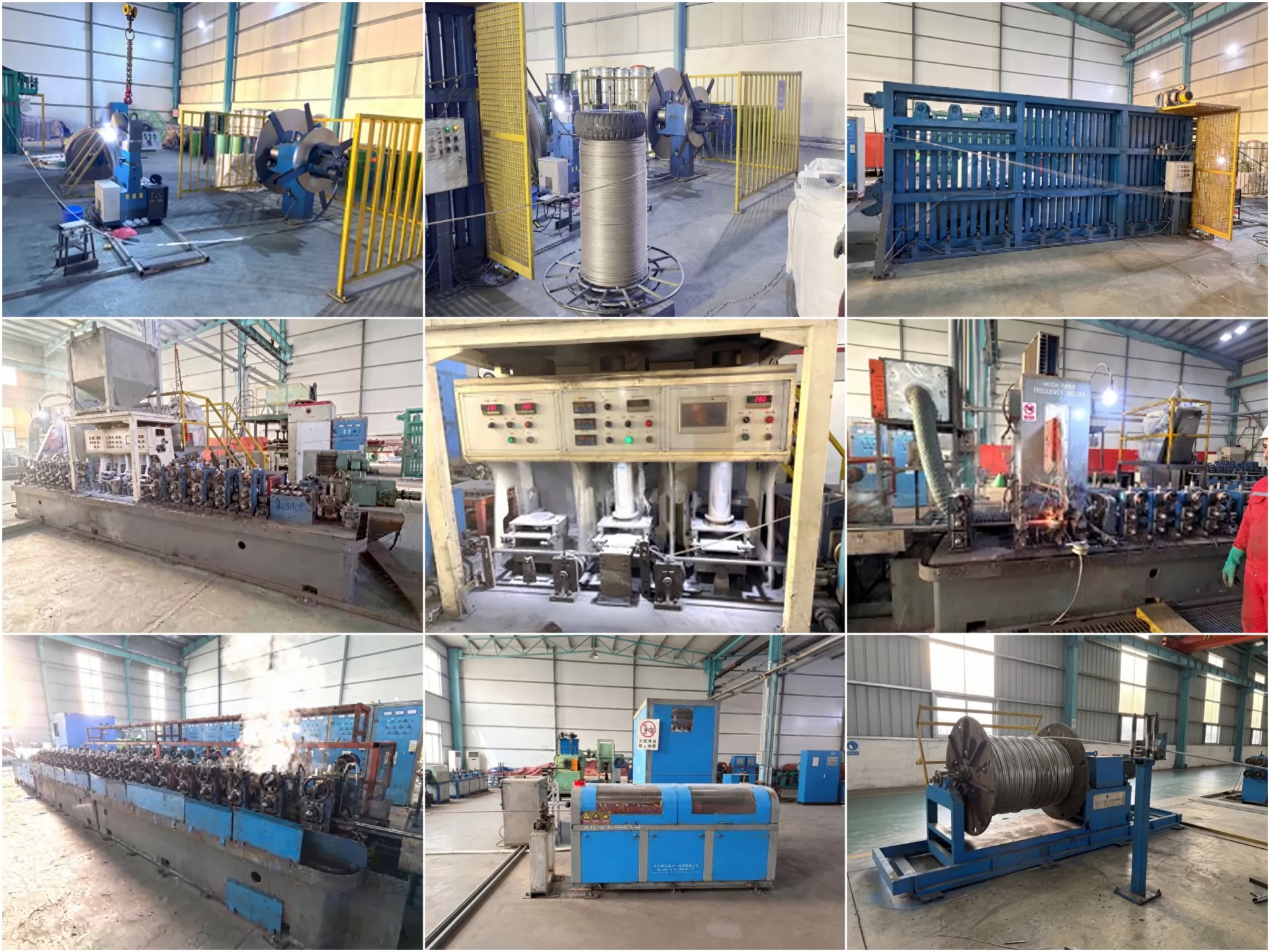
The steel coil uncoiler releases the steel strip used as the outer sheath of the cored wire. Stable strip feeding is the first step for maintaining smooth production and consistent wire forming.
The shear and end welder is used to cut and join steel strip ends when changing coils. This helps reduce downtime and supports more continuous line operation.
For solid cored wire or flux & solid composite cored wire, the calcium wire uncoiler releases the calcium wire filler and sends it toward the feeding section.
The cage accumulator stores a certain length of steel strip during operation. It helps balance coil changing and continuous production, reducing unnecessary line stoppage.
The preforming machine gradually shapes the steel strip before the filler is fully enclosed. Proper preforming is important because the strip must wrap around the filler smoothly before HF welding.
This is one of the key sections of the composite cored wire production line.
The calcium wire feeding unit is used when the product requires solid calcium wire as the filler. The hopper feeder is used when the product requires powder filler, such as CaSi powder, iron powder, CaSiBa powder, or other powder combinations.
For flux & solid composite cored wire, both feeding systems may work together. The calcium wire is fed into the formed strip, while powder material is added through the hopper feeder according to the required product structure.
Stable filler feeding is very important. If the feeding is uneven, the finished cored wire may have inconsistent filling, poor performance stability, or difficulty during later wire feeding in steel plants or foundries.
The HF welder seals the formed steel strip after the filler is added. High-frequency welding is used to close the seam and form a stable cored wire structure.
A reliable welded seam helps keep the filler inside the steel sheath and supports later rewinding, storage, transportation, and use.
The calibration machine controls the final wire shape and diameter after welding. This section helps improve dimensional consistency and makes the finished cored wire easier to handle and rewind.
Annealing equipment is included in the production line to improve the condition of the finished wire after welding and calibration. The exact annealing requirement depends on the cored wire type, steel strip material, production process, and customer application.
The rewinder collects the finished cored wire into coils. Stable rewinding is important for packaging quality and for later use in wire feeding equipment.
The 3 type cored wire can be manufactured by the composite cored wire production line
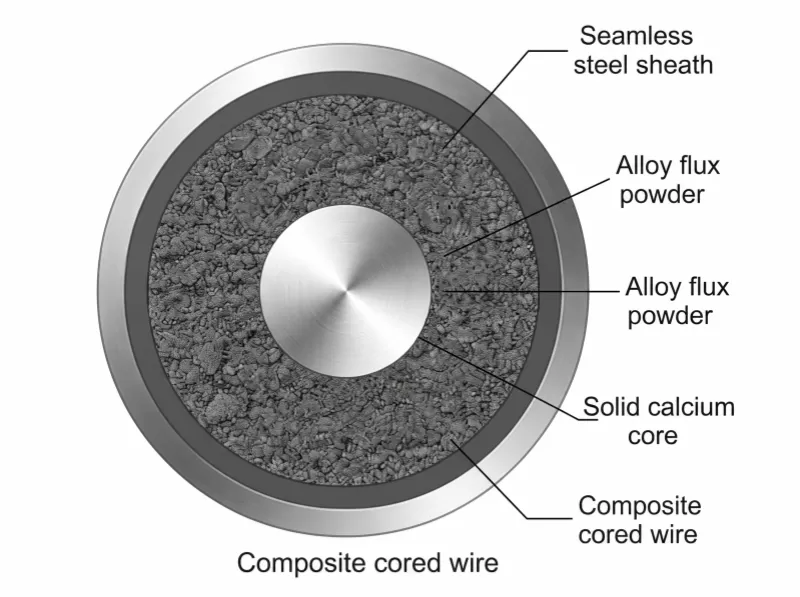
(1)The steel trip thickness :1.0mm
(2)The flux&solid cored wire diameter 13mm
(3)The filler : calcium wire and one or multiple powders (CaSi Powder,Iron Powder and CaSiBa Powder)
(4)Seal type : HF welding
(5)Application:foundry industry ,steel making
Solid cored wire is commonly used for calcium treatment in molten steel. It can support deoxidation, desulfurization, inclusion modification, and smoother continuous casting under suitable refining conditions.
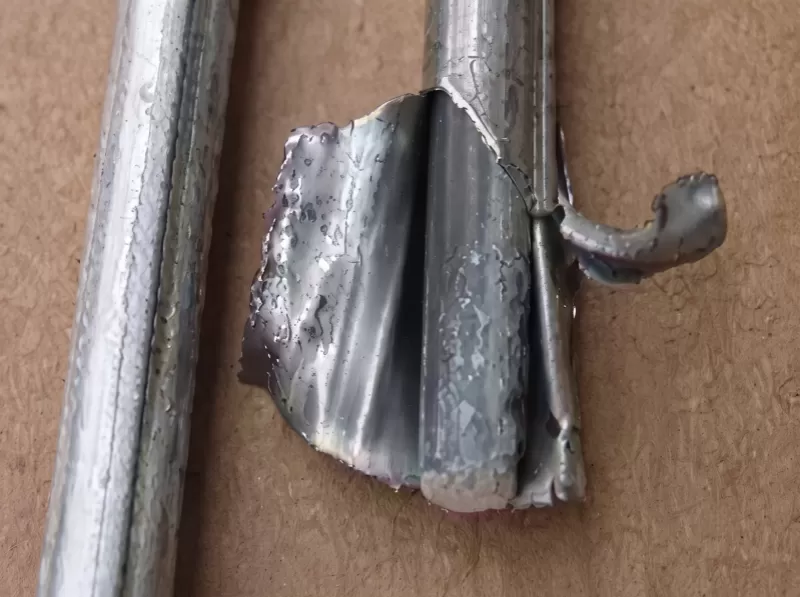
(1)The steel trip thickness :1.0---1.5mm
(2)The solid cored wire diameter :9.5mm,10.5mm( dimension accuracy:±0.5mm)
(3)The filler : Calcium wire
(4)Seal type :HF welding
(5)Application steel making
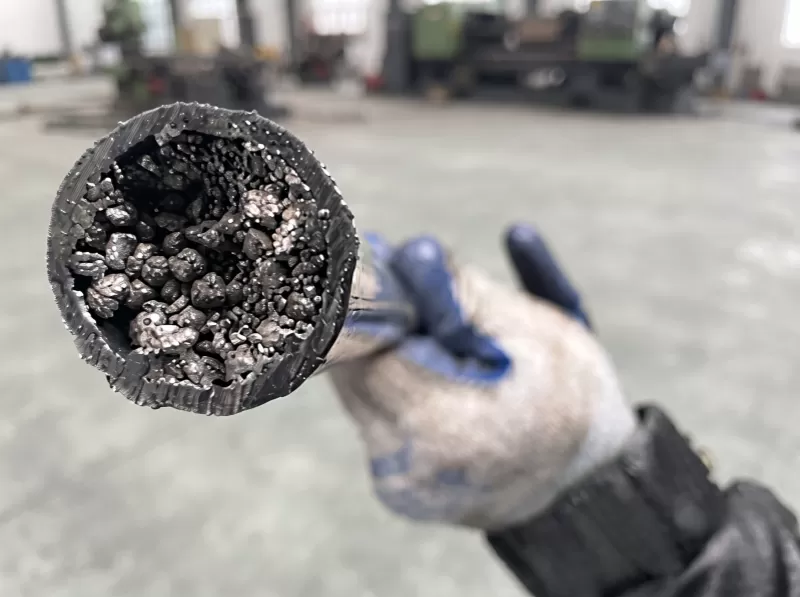
(1)The steel trip thickness :1.0mm
(2)The flux cored wire diameter :13--16mm( the popular diameter:13mm,16mm)
(3)The filler : one or multiple powders (CaSi Powder,Iron Powder and CaSiBa Powder)
(4)Seal type : HF welding
(5)Application:foundry industry
Remark: the composite cored wire production line can manufacture composite cored wire ,solid calcium cored wire and flux cored wire, However ,considering the time of commissioning(downtime) and rejection cost during commissioning,the composite cored wire production line only manufacture composite cored wire.even one size of composite cored wire.
Composite cored wire and solid calcium cored wire are mainly used in steel making and metallurgy.
their function in steel making and Metallurgy is as below:
(1)Refining the molten steel: Deep deoxidation and desulfurization to remove harmful inclusions.
(2)Optimizing the microstructure: Modifying inclusion morphology to enhance the comprehensive mechanical properties of the steel.
(3)Ensuring smooth production: Solving the problem of tundish nozzle clogging during continuous casting to guarantee production continuity.
(4)Improving cost-effectiveness: Compared with traditional methods, it offers higher elemental yield, more stable treatment performance, and lower overall costs.
This technology is an indispensable key process for producing high-quality steel grades, such as pipeline steel, automotive steel, and other critical applications.